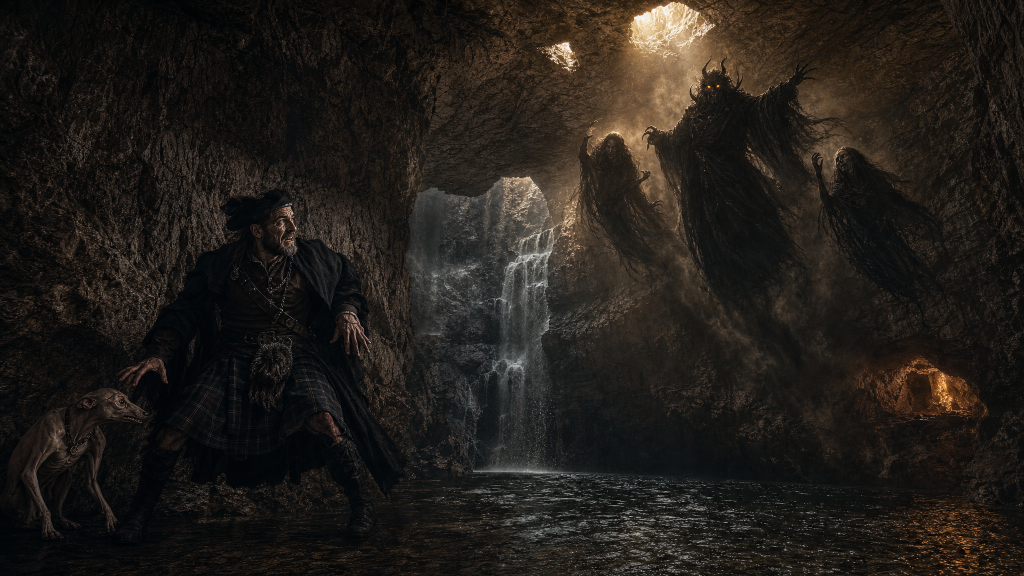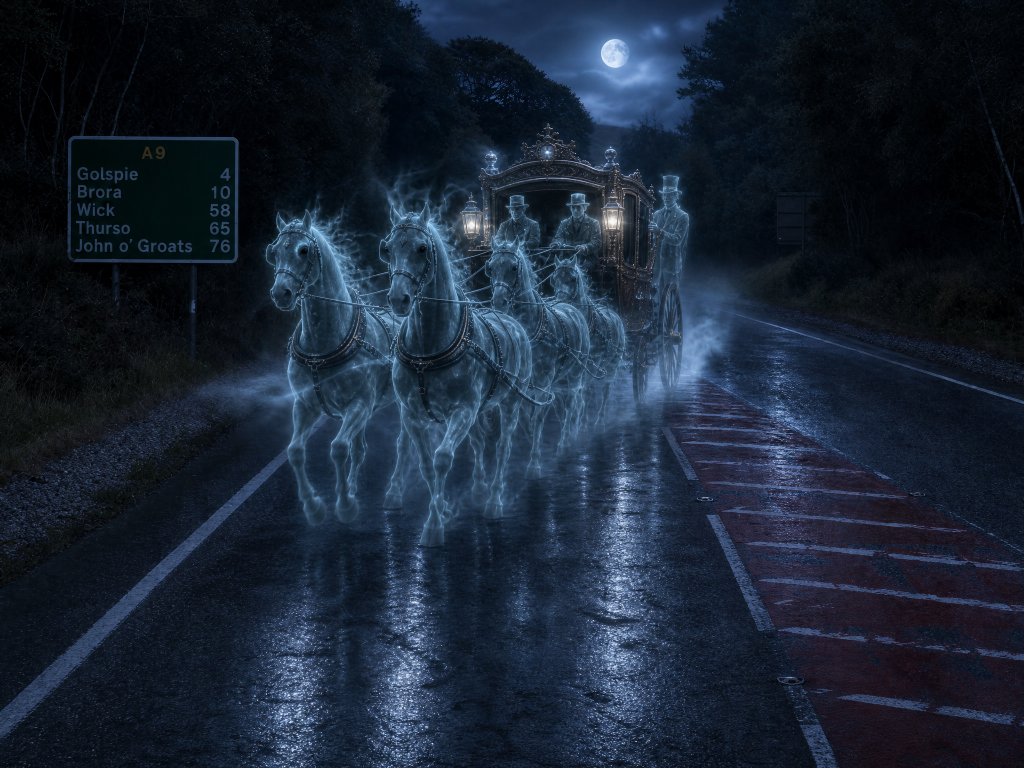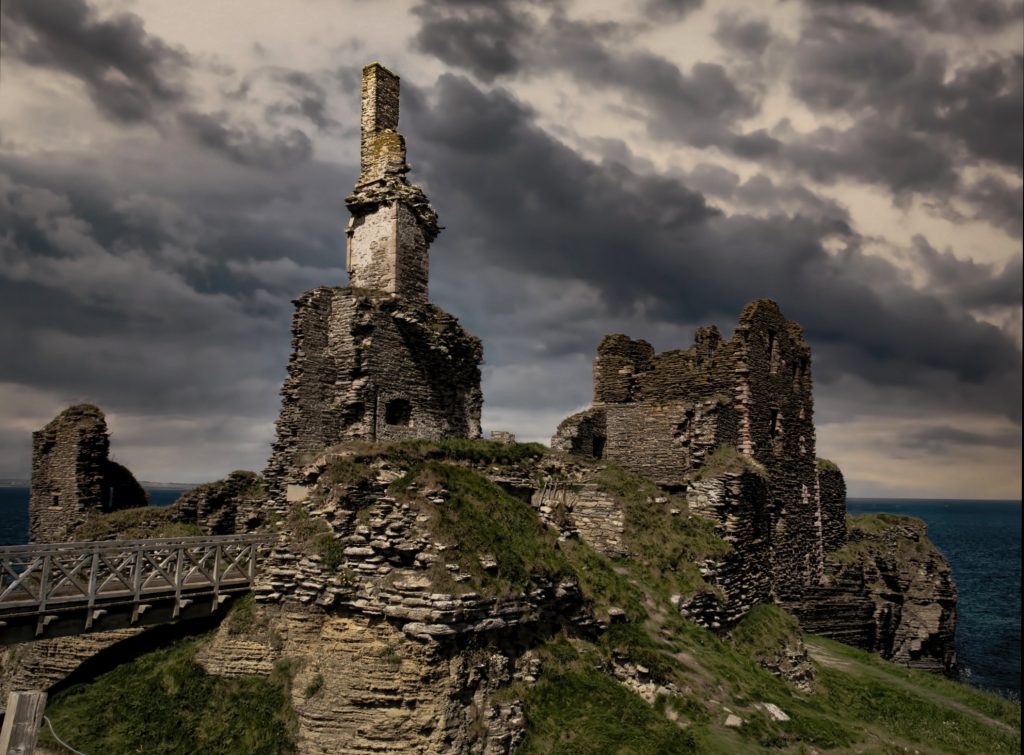
Wester Ross is a wild and enchanting corner of the Scottish Highlands. It is a land of water and ancient mountains, some of which are over two billion years old. Heather-clad mountains dip their feet in sea lochs and disappear when the mists descend. It is a liminal place where sea, land and skies converge and where the aching beauty belies a dark and often brutal history. Clan wars, Jacobites and the Clearances have left their mark. For centuries, this was a heartland of the Gàidhealtachd. These were people who livelihood depended on the land. Consequently, their beliefs were strongly steeped in the elemental forces: ghosts, demons, spirits and the second sight. It seems it was more than just eagles and deer that lived amongst the creatures said to inhabit the rocky peaks and lochs of Wester Ross.
The Second Sight (An Dà Shealladh)
The Second Sight is a famous Highland phenomenon. It is often described as a heavy burden rather than a gift. Locally, it was known as An Dà Shealladh or the Two Sights.
Sir George MacKenzie was a stanch follower of Charles II and was in the Highlands raising troops to support the King. While lodging on the North side of Loch Broom, close to where the loch joins the sea, he found himself stormbound during a blizzard. His servant, an Old Highlander, with the gift of the Sight, was outside attending to the group’s horses.
When the servant returned indoors, he immediately ordered MacKenzie out of his seat, for he could see a dead man sitting in the chair next to him. The dead man apparently had a broken arm and a blood-soaked bandage around his head.
The next day, MacKenzie departed, but another party of men on horseback were in the area. One of the riders was thrown from his horse. He sustained head injuries and a broken arm. He was taken to the little cottage, which had housed MacKenzie the day before, and set down upon the chair where the apparition had appeared. Alas, the wounded man succumbed to his injuries some hours later.
Myths and Monsters
Scotland’s most famous mythical creature is the Loch Ness Monster or Nessie as we fondly call her. But she is not alone in Scotland’s mythscape. Most Lochs and sea lochs are said to be home to a monster, a water horse or at the very least a water spirit. However, local folklore give rise to a range of creatures.
Loch Monsters
Loch Maree is said to be the home of the malevolent water-serpent, the Muc-sheilche. This Gaelic name translates into “turtle-pig” or “shelled-sow” in English. Local tradition describes it as a dark, gargantuan shape that rolls through the water like a submerged log. At nearby Loch na Bèiste—the “Loch of the Beast”—a local proprietor named Mr Banks reportedly spent a fortune attempting to drain the water to find the creature. When that failed, he resorted to tipping vast quantities of quicklime into the depths in a desperate bid to poison the monster.
In August 1906, newspapers across the UK recorded “An extraordinary sea monster has been observed on several occasions during the last few days in Loch Broom. lt would appear to have taken up its abode in the deep caverns of the Summer Isles …” The accounts record that two excise men shot at a 90-foot monster that was charging towards them at 60 miles per hour.
It dived under the water after being shot at. In another account, the beast lifted a 100-tonne yacht out of the water.
Water Spirits and Guardians
The Fideal
The Fideal was a malevolent water demon said to haunt depths of Loch na Fìdeil near Gairloch. It was classified as a subspecies of the fuath, a category of Highland water spirit. It was commonly described as a female entity, but lacked a fixed physical form, instead manifesting as the very weeds that act as a lethal trap for those at the shoreline. Its behaviour is predatory and focused, primarily targeting women and children by dragging them beneath the surface to drown and devour them.
The most prominent oral tradition concerning the creature, recorded by W.J. Watson, details a fatal struggle between the demon and a hero named Eòghainn (Ewen). The combat was a rhythmic and mirrored encounter where Ewen eventually succeeded in slaying the Fideal, though he succumbed to his own wounds in the process. This outcome is immortalised in the Gaelic grim conclusion: “Ewen killed the Fideal, and the Fideal killed Ewen.”
Bodach Beag an Caman
According to tradition in Applecross, Bodach Beag an Caman lives under the bridge at Caman. He is feared because he is the bringer of bad news.
The Merfolk of Loch Torridon
In the middle of Loch Torridon lies a lonely Island upon which few people have set foot. This is known as Eilean-nan-Sìthean or the ‘Fairy Isle.’ There was a long -held belief that it was haunted by an evil spirit. It was here that many of the merfolk were said to gather.
A local fisherman came upon a mermaid in these waters and was instantly beguiled. She had long blonde hair and crystal blue eyes and was sitting upon a rock, combing her hair and singing a plaintive song. Of course, the fisherman fell madly in love with her. The two met regularly on the rock, but with the passing of time, his ardour dwindled, and soon a local farm girl became the object of his dreams.
The mermaid was deeply hurt and her love turned to hatred. One overcast day, the mermaid took her chance. She was able to create currents that pulled the fisherman’s boat onto some rocks. The boat smashed. Watchers on the mainland saw the fisherman’s struggle. Then the mermaid surged up through the foam, clasping her arms around his neck and pulling him under. His body was never recovered.
Then in 1851 an unusual event made its way into the Edinburgh-based newspaper, the Caledonian Mercury, reporting that the women of Shieldaig had seen a woman sitting on a rock, combing her hair and singing a plaintive song. No boats set sail for sometime after the incident.
Creatures of Land and Forest
Ghillie Dhu
The Ghillie Dhu is a solitary guardian spirit or faery of the forest around Loch Gairloch. He takes care of the animals and plants and although he is evasive of human contact, he as been known to rescue children who are lost in the forest.
The Dhu-Guisch or the Beast of the Charred Forest
In one version of this tale, the King of Lochlann (Norway) was jealous of the Scots Pines in the Caledonian Forest. He sent his daughter to destroy them. A witch turned her into a massive white bird, capable of raining down smoke on the Highland forests. Such was the intensity of the smoke that her feathers turned black. Eventually, she was lured to the ground, by the distress calls of the forest animals, where she was put to death. Her body is said to be buried at the head of Little Loch Broom.
Folk Magic in Wester Ross
The Annat Skull
The Annat skull belonged to Mary MacLeod from Loch Broom, who lived during the 18th century. The poor woman committed suicide, and at the time, suicide victims were not allowed to be buried on consecrated ground. Thus, she was laid to rest on the hill above the Old Annat Cemetery. Years later her skull surfaced above the ground. The skull was said to possess supernatural powers and was effective in curing epilepsy. It was last used in the 1950s.
The Healing Well at Torridon
Often, wells were associated with healing. One such well from the Torridon area. In a book called ‘Old Scottish Customs’ it says:
“In a churchyard on Loch Torridon there is a well where, it used to be said, from time immemorial three stones have been perpetually whirling round and round. All kinds of sickness and disease have been cured by carrying one of these stones in a bucket of water to the invalid, who was required to touch the stone to be restored to health. Its mission accomplished, the Talisman was restored to its place, when it commenced as before! But alas! One of these healing stones now lies quietly at the bottom of the well, refusing any longer to whirl like the others, simply because a woman, great in her faith, once took it home with her to perform a cure on her sick goat.”
However, neither of the two churchyards in Torridon currently have wells. It is possible that as they have drained in modern times or perhaps the authors may have gotten mixed up in their details of local lore. There is another tale in which the stones swirled in a pool in a stream called Allt nan Corp. In this version, the stones stopped working because the gravediggers from the nearby cemetery washed their tools in the pool. The stones disappeared forever.
The Healing Well at Loch Maree
Isle Maree is also home to an ancient Holy Well. The island became the primary destination for those seeking a miraculous cure for “lunacy” through harrowing rituals. Patients were bound and jerked into the cold loch water three times. Then, they were forced to drink from the holy well while kneeling before the saint’s altar in a desperate bid for sanity.
The ritual persisted for generations, blending Christian intercession with the primal shock of the “cold water cure.” However, the well reportedly dried up in the 19th century after a shepherd attempted to cure his mad dog in the sacred water. Both the dog and the shepherd died shortly after, leading to whispers of a permanent curse upon the desecrated site.
Allt nan Corp and the Effigies
Allt nan Corp, meaning ‘Stream of the Bodies’, derives its name from the Gaelic folklore practice of the Corp Crèadha—a clay effigy used to cast lethal curses. This specific Highland legend involves a Mackenzie Laird of Torridon who fell mysteriously ill after his Lowland fish-warden died in a tidal accident. Because the warden had aggressively stopped local poaching, the villagers were suspected of sorcery.
The Laird’s life was saved only after Tormod Mór Mac Iain Lèith, a man from Kinlochewe gifted in cnaimh luirg (divination), was recruited to locate the source of the malady. Using his supernatural art, Tormod discovered a clay body dissolving in the stream, which acted as a sympathetic link to the Laird’s declining health. Upon the effigy’s removal, the Laird recovered, and the family responsible for the curse fled to Applecross.
Witches and Sorcerers of Wester Ross
The Scottish Witch Trials were more a phenomenon of Lowland Scotland. Belief in witches and fairies was more accepted in the Highlands and those suspected of dabbling in magic were not persecuted as severely as those in the rest of the country. With a few exceptions such as the Brahan Seer and Janet Horne, most ‘witches’ were left alone.
The Great Yellow Goat of Druim Buie
The Great Yellow Goat of Druim Buie was a malevolent, supernatural entity that once terrorised travellers on the route between Diabeg and Gairloch. According to local folklore, this formidable beast was responsible for numerous attacks and fatalities among those journeying to Communion. Specifically, the legend centres on a skilled hunter from Braebeg who encountered the creature while traversing the haunted ridge.
Despite being armed with a gun and sword, the hunter found his conventional weapons useless against the goat’s hide. Consequently, he was nearly trampled to death before remembering a small dirk concealed in his stocking. He managed to strike two desperate blows, causing the beast to flee in agony. After staggering back to a nearby cottage for aid, the hunter discovered the local tailor lying mortally wounded with identical stabbings.
Investigation revealed that the tailor was a practitioner of witchcraft who had been using shape-shifting magic to manifest as the goat. By questioning guests about their armaments, he was able to magically immunise himself against their specific weapons in advance. However, because he was unaware of the hidden dirk, his supernatural protection failed. The hunter’s final strike ended the reign of the Great Yellow Goat, ensuring the safety of future Highland travellers.
John MacLennan of Torridon and the Lewis Witches
The Lewis Witches is a folklore account concerning John Maclennan of Torridon and his encounter with shape-shifting sorceresses. Specifically, the legend begins at John’s home when he provided food and warmth to three bedraggled cats—two black and one one-eyed ginger. Because John was a compassionate man, he shared his herring dinner with the animals despite their voracious appetite. Subsequently, the creatures departed after being revived by the fire.
Years later, John encountered the same entities while seeking lodgings during the herring fishing season at Loch Roag on the Island of Lewis. Surprisingly, a local woman welcomed him warmly, claiming he was the kindest man she had ever met. She eventually revealed that she and two companions—including the one-eyed woman—were the “cats” John had assisted in Torridon. Furthermore, she explained that they were witches who had transformed into whales to drive fish into the nets of Lewis fishermen.
The three women had come ashore as cats to rest after their oceanic exertions. Although the witches treated John with gratitude for his earlier kindness, the discovery of their true nature left him deeply unsettled. Consequently, the fisherman spent a sleepless night in the cottage and avoided the area from that day forward. This tale reinforces the common Highland theme of supernatural entities existing in plain sight through animal transformation.
Hauntings and the Restless Dead
The Ghosts of Torridon
The Ghosts of Torridon include several chilling apparitions, most notably the headless spirit known as Bodach Stàbhais. This entity famously appeared to Murdo McKenzie, a postman nicknamed “Stàbhais,” at the location now called Glac a’ Bhodaich. Specifically, the headless apparition claimed he had been murdered and buried upon the hill. Furthermore, the spirit prophesied he would return only three more times, manifesting exclusively to individuals named Murdo. Although his neighbours initially ridiculed the story, they were horrified when a subsequent excavation at the site revealed the victim’s remains.
Another tragic haunting occurs at Craig, a remote settlement abandoned in the 1930s. Centred on the tortuous path between Craig and Diabaig, the legend tells of a pregnant traveller who was caught in a lethal winter storm. Consequently, she and her newborn perished from exposure within sight of the village houses. Residents frequently reported seeing her ghost descending the steep hillside in broad daylight. This apparition consistently vanishes into a natural hollow at the foot of the hill, serving as a permanent reminder of the area’s harsh history.
The Kirkyard of Saint Máelrubha
The Kirkyard of Saint Maelrubha in Applecross is the site of several hauntings, one of them being of Saint Mael Rubha himself. Saint Mael Rubha was an Irish monk from Bangor who founded a Monastic Community at Applecross in 673 CE. At the time, this would have been a Pictish Territory. There is some discrepancy about how he died. Local folklore suggests he was killed by Danish Vikings at Teampull in Strathnaver. Specifically, he was buried near his monastic cell by the River Naver, marked by a cross-marked stone. However, historians argue that the date 722 CE is too early for Viking raids, which typically began in the 790s. Alternatively, the Aberdeen Breviary suggests he died at Urquhart and was interred at Abercrossan. However, contemporary Irish annals record that he simply died at Applecross in his 80th year.
He is said to have established a hermitage on Isle Maree in the centre of Loch Maree. In the 17th century, the church was disturbed to discover locals sacrificing of bulls, on an island in Loch Maree. This apparently revolved around a debased memory of Máel Rubha, who the people had mixed up with an ancient pre-Christian cult of ‘God Mourie’.
His ghost appears as a man dressed in a monk’s clothes walking quietly over the graves. Those seeing the apparition feel an overwhelming sense of peace and calm.
The spectre of a child has also been seen. This is the ghost of a child, which supposedly drowned in a nearby river centuries before. Witnesses claim to have seen the child running and giggling between the gravestones, but when he is approached he vanishes into thin air. Mysterious lights, which resemble glowing orbs, have also been seen in the graveyard.
The Ghost of Eilean Donan and the Jacobites
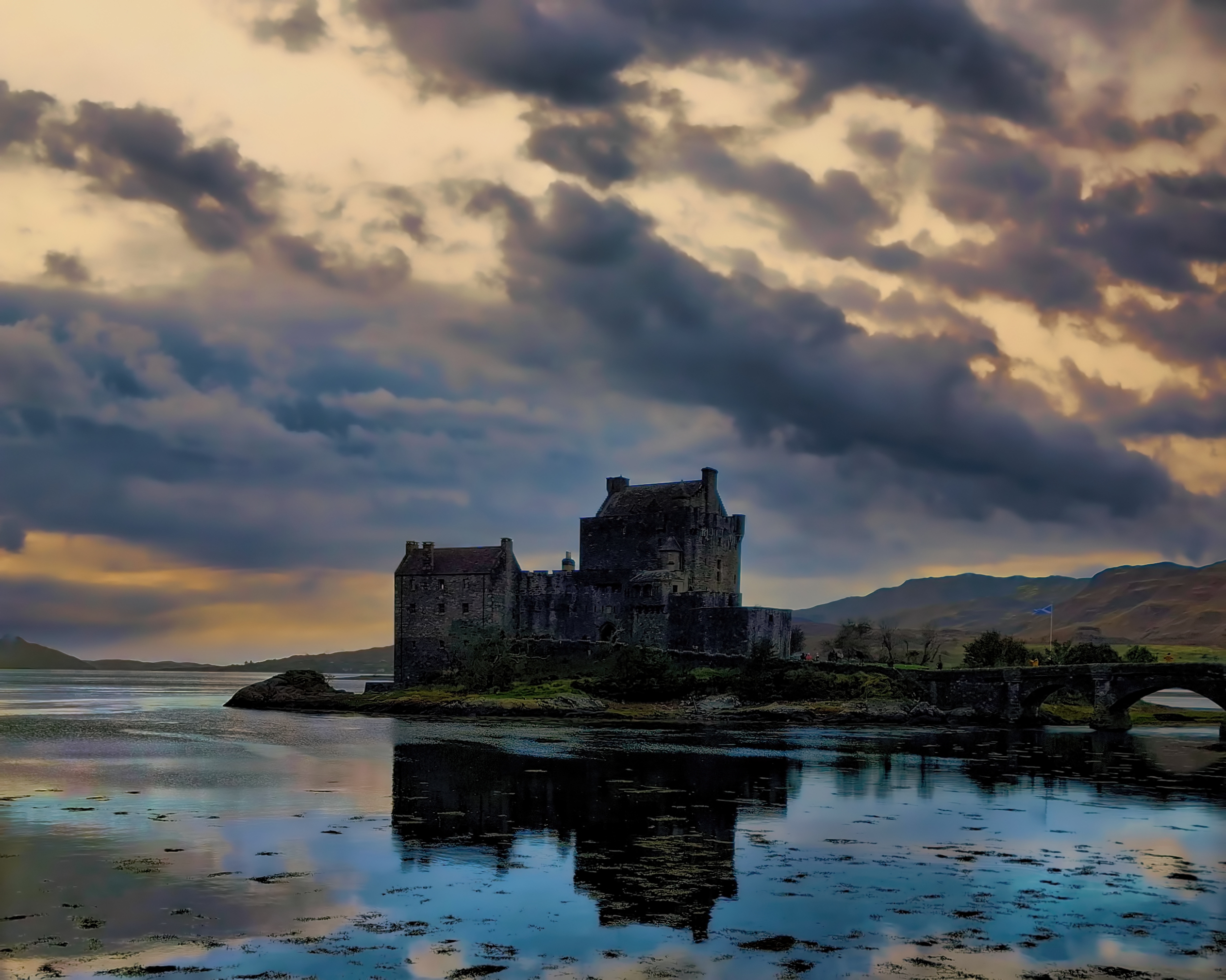
Eilean Donan Castle is said to be haunted by a Spanish soldier who died during the Jacobite Rising of 1719. The castle stands where Loch Duich, Loch Long and Loch Alsh meet, and it was then a Mackenzie stronghold.
In 1719, Spain backed a Jacobite attempt to restore James Francis Edward Stuart to the British throne. Only around 300 Spanish troops reached the west coast after storms scattered their fleet. Forty-six Spanish soldiers later held Eilean Donan while the main Jacobite force moved south.
Government warships bombarded the castle for three days in May 1719. Although its thick walls initially resisted the attack, troops from HMS Enterprise eventually captured the garrison. They found large stores of gunpowder and used them to destroy the castle. Eilean Donan remained a ruin for almost 200 years.
After the castle was restored in the early twentieth century, stories emerged of a Spanish soldier haunting the building. He is reportedly seen in the area now used as the gift shop, carrying his head beneath his arm. The ghost is linked in local tradition to the Spanish defenders of 1719, making him a lasting reminder of Eilean Donan’s brief but dramatic role in the Jacobite cause.
The Wraith of Kintail
According to Wagstaff, Eoin MacKenzie of Kintail was a peaceful man. However, the MacDonalds of Glengarry were keen to extend their influence and their lands. Eoin had proposed his daughter Ailsa to Donald MacDonald’s son, hoping to unite the clans. But Glengarry had no intention of honouring the truce between the two clans. He plotted to destroy the MacKenzies and attacked the settlement at Kintail. During the ensuing battle, Eoin was slain and his daughter taken captive.
Soon the MacDonalds began to sicken. Glengarry himself was smitten. His fever dreams were haunted by Mackenzie. Donald’s final movements were marked by a deathly eerie howl that echoed through the mountains of Kintail, the sound of the vengeful spirit of Eoin MacKenzie. As Donald died, the waters of Loch Duich darkened, and the loch began to churn. From then on, the ghostly figure of Eoin has roamed the shores of Loch Duich, where he acts as a harbinger of doom.
Clan Battle
However, folklore can take some massive detours from actual history. There was indeed a clan feud between the MacKenzies of Kintail and the MacDonells of Glengarry. The Mackenzie and Macdonell feud began in 1580 after a revenge killing in Lochcarron sparked a long-standing war between the two clans. Specifically, the Macdonells of Glengarry attacked Mackenzie lands, murdering a man in his bed and burning a family alive in Applecross. Consequently, Kenneth Mackenzie took the fight to the law in Edinburgh. He showed the King’s council a blood-stained shirt to prove the Macdonells’ cruelty. This smart move made Glengarry an outlaw and gave Mackenzie legal permission to use “fire and sword” against his enemies.
Military raids followed as both sides fought for control of the Highlands. Mackenzie eventually defeated the Macdonells at Morar and captured a massive amount of cattle. Furthermore, he formed a strong alliance with the Macleans of Duart to surround his rivals. During a sea battle near Kyleakin, Mackenzie’s men killed Glengarry’s son. This loss broke the spirit of the Macdonell clan and shifted the power to the Mackenzies.
One of the darkest moments occurred in 1603 during the Burning of Kilchrist. A Macdonell leader locked a congregation inside a church and set it on fire. While the church burned, the clan piper played a tune that became a famous family pibroch. However, violence was not enough to win the war. Therefore, Mackenzie used his political influence to buy up the legal rights to the disputed lands. By 1607, he had officially secured the territory, making the Macdonells his subjects.
Dark History and Dangerous Places
Clan battles are part of the dark history of Wester Ross, and a Jacobite Battle took place here. However, perhaps one of the most sinister warfare events took place on the island of Gruinard during World War II.
The Battle of Bealach nam Broig
The Battle of Bealach nam Broig is a significant Highland conflict fought between the clans of north-west Ross and those of the north-east who supported the Earl of Ross. Although historically debated, the battle likely took place in 1452 within the parish of Fodderty, approximately 20 miles northwest of Inverness. Specifically, the site occupies a pass between Ben Wyvis and Carn Mòr, overlooking the route towards Ullapool. In contrast to historical records, some early sources suggest the conflict occurred as far back as 1299.
Specifically, the “Pass of the Brogue” takes its name from a supernatural legend involving the Mackenzies and the Dingwalls. According to folklore, the Mackenzies were vastly outnumbered until they received aid from a mysterious bodach (old man). The old man instructed the warriors to reverse their footwear by placing the left brogue on the right foot and the right on the left. Consequently, this magical adjustment allowed the smaller Mackenzie force to achieve a total victory over their enemies.
The Battle of Glen Shiel: A Jacobite Uprising
The Battle of Glen Shiel, fought on 10 June 1719, was a pivotal conflict during the Jacobite Rising of 1719. Specifically, the battle occurred in the Highlands between a Jacobite force of Highland levies and Spanish marines against British government troops. Although Spain backed the rebellion to destabilise the British crown, the Rising ultimately failed after a decisive government victory. Consequently, the defeat at Glen Shiel is widely regarded by historians as having dealt a fatal blow to the Jacobite cause in the early 18th century.
Tactically, the Jacobite army occupied a strong defensive position near the Five Sisters hills, with Spanish regulars in the centre and clan warriors on the flanks. However, General Joseph Wightman’s government forces utilised superior technology, including Coehorn mortars, to dislodge the defenders. Because the Highlanders had never encountered such artillery, the mortars caused confusion and forced them to retreat into the failing light. Furthermore, the Spanish marines were eventually surrounded and forced to surrender the following morning.
In the aftermath, the mountain peak Sgurr nan Spainteach (Peak of the Spaniards) was named to commemorate the fallen marines. Historically, the battle also marked the end of significant Spanish involvement in the Jacobite Risings. Therefore, the site is now a protected historic battlefield, preserved for its rare surviving stone breastworks. This conflict remains a stark chapter in Highland history, blending international geopolitics with local clan warfare.
The Hector and the People of Loch Broom
The Hector carried Highland emigrants from Loch Broom and Greenock to Nova Scotia in 1773. The ship collected passengers from both places before beginning its Atlantic crossing. Of the 189 people aboard, many were poor Gaelic-speaking crofters and artisans from Loch Broom in Wester Ross. They left Scotland hoping for land and security in Pictou. For many families, poverty and the loss of opportunity after Culloden made emigration feel like their only option.
The human cost of the voyage was severe. The Hector was an ageing, overcrowded vessel, with families packed into cramped conditions alongside children and babies. Illness spread quickly during the eleven-week crossing. A gale and headwinds delayed the ship, leaving the passengers at sea for longer than expected. By the time the vessel reached Pictou on 15 September, dysentery and smallpox had killed 18 people, most of them children.
Survival did not become easier when the emigrants reached Nova Scotia. They had reportedly been promised a year’s provisions and farms, yet the food did not appear. Instead, grieving families had to build rough shelters and find food before the Canadian winter began. The Hector is often remembered as a symbol of Scottish settlement in Nova Scotia. However, for the people who sailed from Loch Broom, it was also a journey marked by bereavement, sickness and an uncertain future.
Gruinard Island: The Anthrax Trials
Gruinard Island, located less than a kilometre off the coast of Wester Ross, remains one of Scotland’s most chilling examples of dark history. Though it appears as an idyllic Highland outcrop, the island was the site of “Operation Vegetarian” during World War II. Specifically, British scientists used the remote location to test biological warfare agents, specifically the highly resilient Bacillus anthracis (anthrax). Because the bacterium forms dormant, incredibly hardy spores, the site was rendered lethally contaminated for decades.
Testing involved detonating canisters and dropping bombs filled with a virulent anthrax broth over tethered sheep. Consequently, the animals succumbed within days, demonstrating that a large-scale release could kill millions in a targeted city. Furthermore, the experiments backfired when a contaminated carcass washed ashore at Mellon Udrigle, causing a local outbreak. For years, the island remained a restricted “forbidden zone,” with experts predicting it would stay uninhabitable for centuries.
The situation only changed in 1981 after a militant group launched “Operation Dark Harvest.” They delivered contaminated soil from the island to government facilities to demand a cleanup. Subsequently, the Ministry of Defence conducted a massive decontamination logic in 1986 using 280 tons of formaldehyde diluted in seawater. Although the island was finally declared safe in 1990, it stands as a grim reminder of how scientific advancement can scar the natural landscape.
The Clearances: The Lost Villages
Throughout Wester Ross, many settlements lie in ruins. This includes the village of Badanluig in Gruinard Bay and Inverleal and Balblair at the foot of Loch Broom.
Badanluig
The Badanluig settlement ruins in Gruinard Bay represent one of the most tragic examples of the Highland Clearances due to the double displacement of its people. Specifically, these families had already been driven from the fertile inland soils of Glen Gruinard between 1800 and 1803 to make way for massive sheep farms. They were forced to resettle on the coast at Badanluig, where they eked out a meagre survival on thin, rocky soil. Consequently, these hardy tenants built new lives from nothing, only to face a second, even more ruthless wave of evictions decades later.
Meyrick Bankes, a coal mine owner from Wigan, initiated this second clearance after purchasing the estate in 1835. Furthermore, he systematically cleared these secondary coastal settlements during the height of the potato famine (1846–1856), a time when his tenants were already facing starvation. Bankes showed no loyalty to the families, choosing to evict them just before their crops were ready for harvest. Therefore, the people of Badanluig were left twice destitute, having been hunted from “pillar to post” by landlords who prioritised sheep over human life.
The struggle for Badanluig eventually led to a violent confrontation in 1860, where the community fought back against land agents and police. Although this resistance and the later Crofting Act eventually secured rights for others, it came too late for families like the Mathesons and MacAulays. Today, the “Clump of the Hollow” remains a silent graveyard of stone. It serves as a grim historical reminder of a population cast aside in the name of heartless enterprise.
Inverleal and Balblair
The Highland Clearances at Balblair and Inverlael erased two of the most significant townships in the north-west Highlands during the early 19th Century. Inverlael, dating back to at least the 13th Century, was traditionally the largest settlement north of Dingwall before the establishment of Ullapool. Specifically, the community was a bustling hub of commercial activity, supported by numerous families who worked the land and sea. However, this ancient social fabric was destroyed when the landowner, Sir George Steuart Mackenzie of Coul, prioritised large-scale sheep production over human habitation.
In March 1819, the first wave of “brutal” evictions forced 56 families to abandon their ancestral homes at the onset of a harsh winter. A second wave followed in early 1820, involving another 21 families, which effectively snubbed out nearly a millennium of history within a year. Consequently, over 300 people were scattered to the four winds, leaving the once-vibrant glen a silent landscape of stone ruins. While the young and strong sought work elsewhere or emigrated to Canada, the most vulnerable members of the community faced a grim fate. Specifically, many of the elderly died from the sheer trauma of displacement and the lack of adequate shelter.
Those who remained in Scotland often faced a desperate struggle for survival on the barren fringes of Loch Broom. Furthermore, the historical record of this tragedy was deliberately obscured when parish records were reportedly destroyed to hide the shame of the local ministry’s complicity. Today, the remains of Balblair and Inverlael are increasingly hidden within modern forestry, though oral traditions still preserve the names of those cast out. Therefore, these ruins serve as a poignant witness to the travesty of the Clearances. They represent a time when human lives were sacrificed for the sake of estate profit and “modern” reform.
Haunted Wester Ross
From the haunting scenery to a landscape filled with dark and haunting experiences, Wester Ross is a land rich in myths, lore, ghosts, and a brutally dark history.
Sources:
Gairloch in North-West Ross-Shire- John H Dixon (1886)
Ghost Galore! 100 great Stories of Haunted Scotland by George Forbes (2024)
Ghostly Tales of the NC500 by W J Gilbert (2024)
The Haunted Highlands by Gavin Wagstaff (2025)