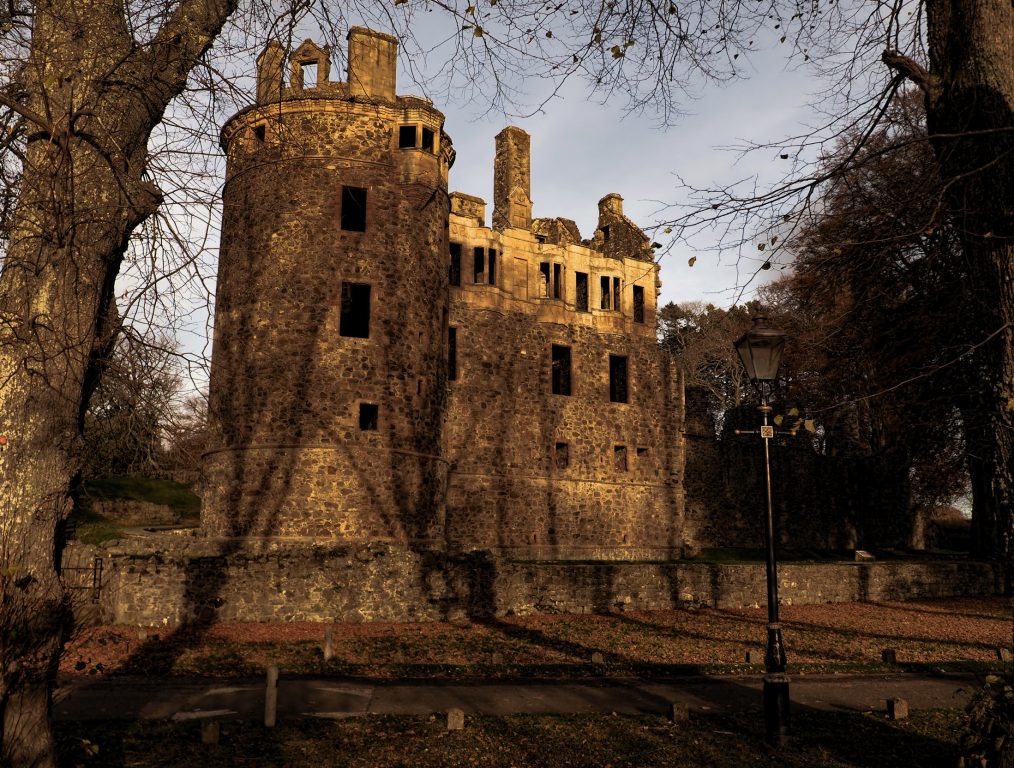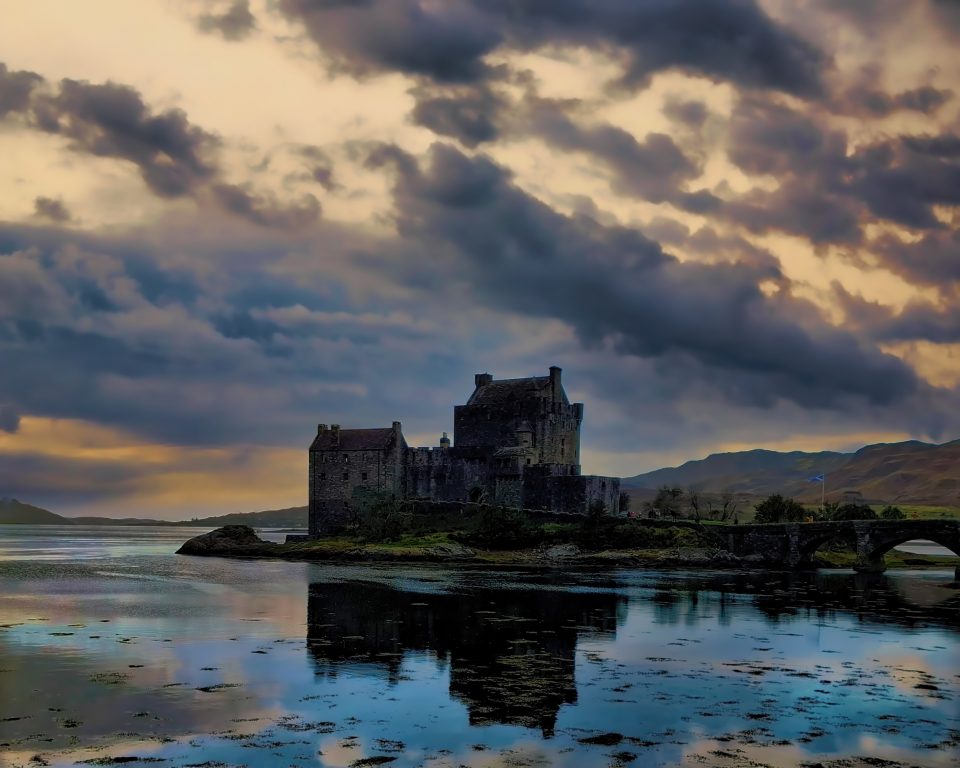
The haunted castles of Caithness stand on Scotland’s far northern coast. Here, salt, wind, and isolation join forces with bloody history, unrequited love, and violence. On the clifftops of Caithness, life existed in the raw. Death was never far away, and in some cases, the dead never left.
Castle Sinclair Girnigoe: A Legacy of Betrayal
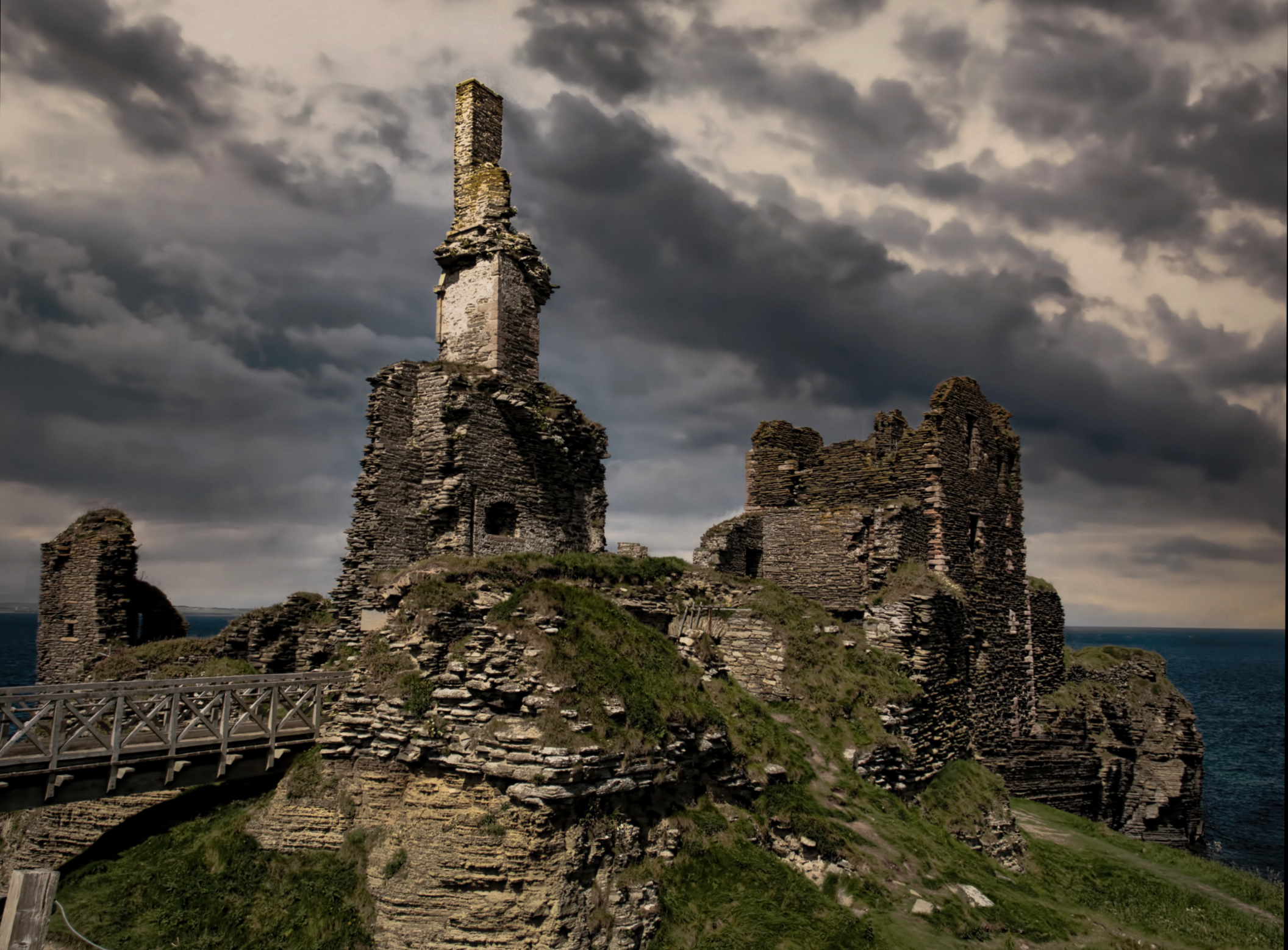
Castle Sinclair Girnigoe is a site where documented historical cruelty provides the foundation for its hauntings. Consequently, it is regarded as one of the most atmospheric ruins in the north. Perched on a narrow promontory, it served as the seat of the Earls of Caithness until its destruction in 1680. The most disturbing chapter of its history involves George Sinclair, the 4th Earl, and his son John, the Master of Caithness.
John was an active and noble figure in his youth. However, the clan politics of the north were merciless. After his father feuded violently with rival clans, John was imprisoned by his own father in 1570. His crime was the simple act of making peace with the Murrays. This imprisonment lasted seven years, culminating in a death of calculated, unimaginable cruelty.
History records that John died in 1576 of “famine and vermine.” According to primary accounts, the Earl withheld food from his son before supplying him with abundantly salted beef. This induced a raging, agonising thirst. John was then denied water and left to die in agony. Therefore, his spirit is said to have never left the promontory. Visitors report an overwhelming sense of unease and sightings of a male apparition within the great hall. Additionally, a woman in grey is frequently seen looking out toward the sea.
Ackergill Tower: The Beauty of Braemore
Haunted Caithness castles are often defined by the collision of warring clans. Ackergill Tower carries the weight of a tragedy born from such a feud. Its most enduring presence is Helen Gunn, remembered as the Beauty of Braemore. Her life was destroyed by the obsession of Dugald Keith, who abducted her after she rejected his proposal.
Dugald Keith led a raid on the family home at Braemore on the eve of her wedding. Subsequently, Helen was imprisoned within the high walls of Ackergill Tower. She was kept isolated and subjected to the brutality of her captor. Faced with continued confinement, Helen eventually reached the top of the tower and threw herself from the battlements.
Ever since her death, Helen has been seen as the Green Lady. Occasionally, she appears as a dark-haired woman wearing a red gown. Witnesses frequently describe a fleeting shadow moving through the tower. Furthermore, the haunting is often sensory. Visitors report the rustle of a dress and the quiet sound of a woman crying. At Braemore, an ancient rowan tree stands as a living monument. This is known as the ‘Ellen Tree,’ named in her memory.
The Castle of Mey: The Ghost of Barrogill
The Castle of Mey was originally known as Barrogill Castle. Its foundations are linked to the same familial cruelty found at Girnigoe. It was built by the 4th Earl of Caithness for his son, William. However, William was murdered by his brother, John, in 1573. This violent lineage frames the haunting of the Green Lady, though her identity remains a point of contention.
In one tradition, she is Elizabeth, the granddaughter of the murdered John. In another, she is Fanny Sinclair, who died in 1883 at twenty-nine. Regardless of her name, the essence of her tragedy is consistent. She fell in love with a stable hand and was denied the union by her father’s pride. Consequently, she was confined to the upper floors to prevent her from seeing him.
She died in isolation, perhaps jumping from a window that has since been blocked up. Therefore, visitors to the castle often report a chilling presence. Doors have been known to shut on their own, and lights often extinguish without explanation. Whether the spirit is Elizabeth or Fanny, the haunting carries the same emotional signature. The physical structure, with its blinded window, serves as a permanent monument to a broken heart.
Keiss Castle: The Weeping Lady
Keiss Castle stands as a skeletal ruin overlooking the North Sea. It is an essential site when exploring the haunted castles of Caithness. The ruin is haunted by a Weeping Lady, a Sinclair ancestor doomed to eternally wander the castle in sorrow for a lost love. Ultimately, her presence remains a final, solitary image of grief on the northern edge of the world.