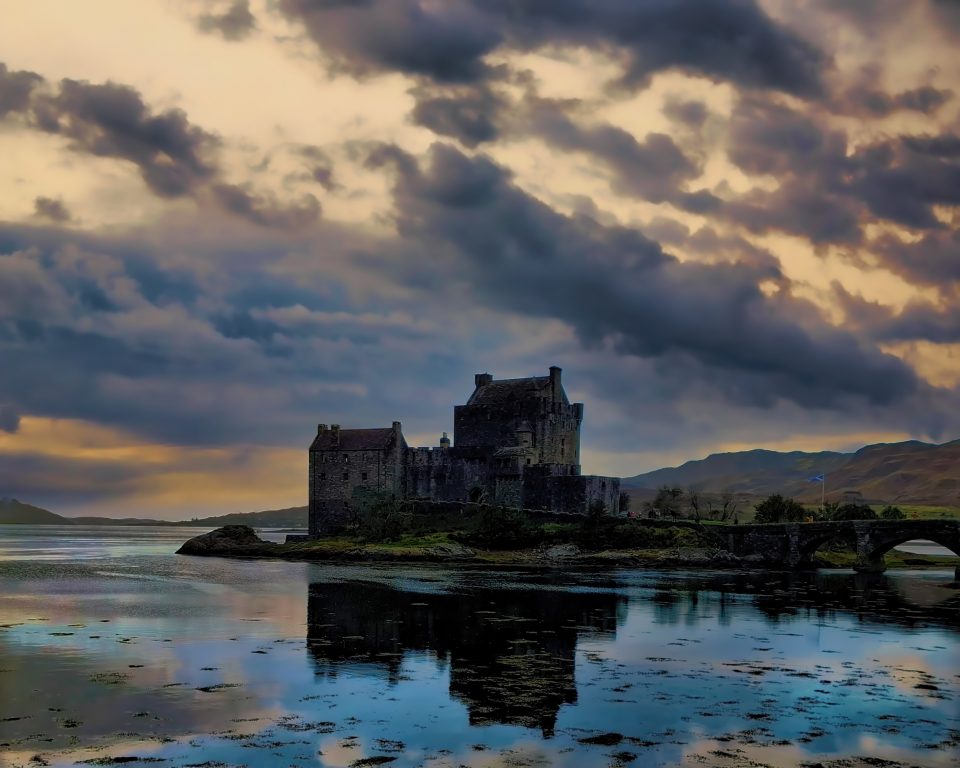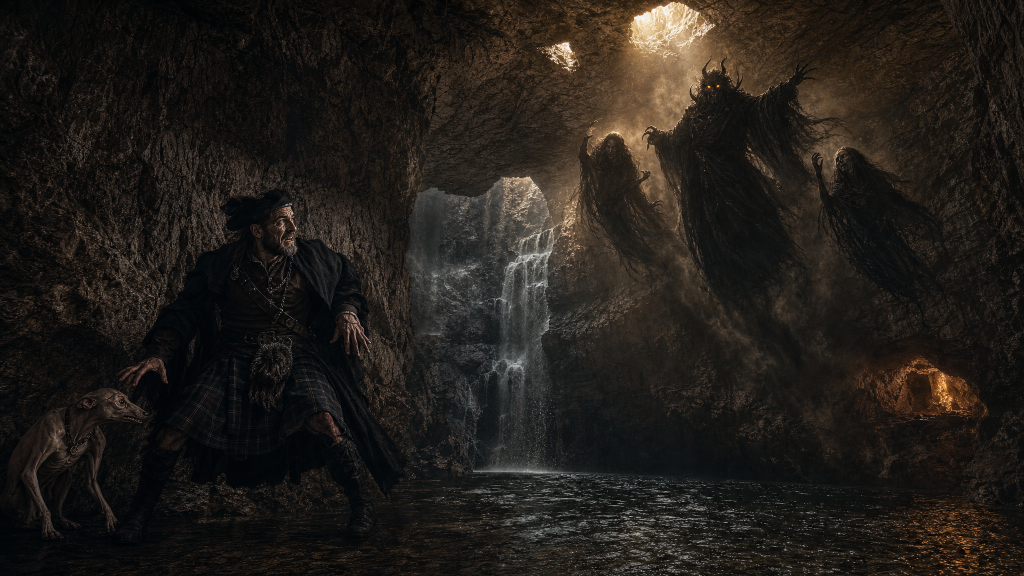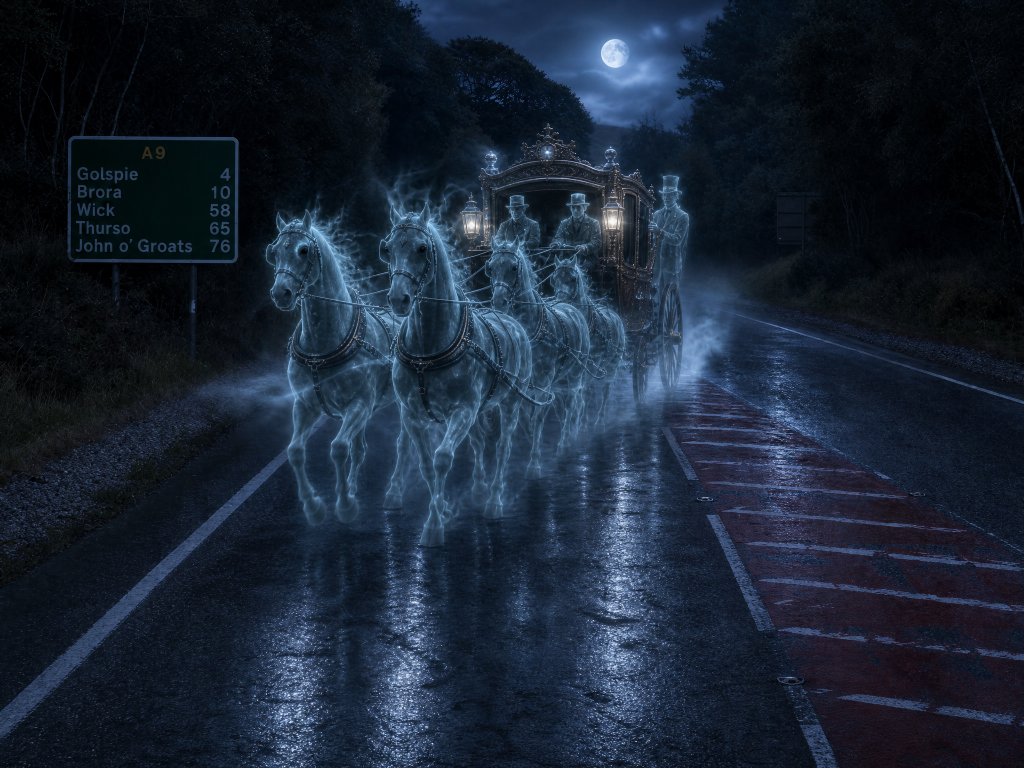
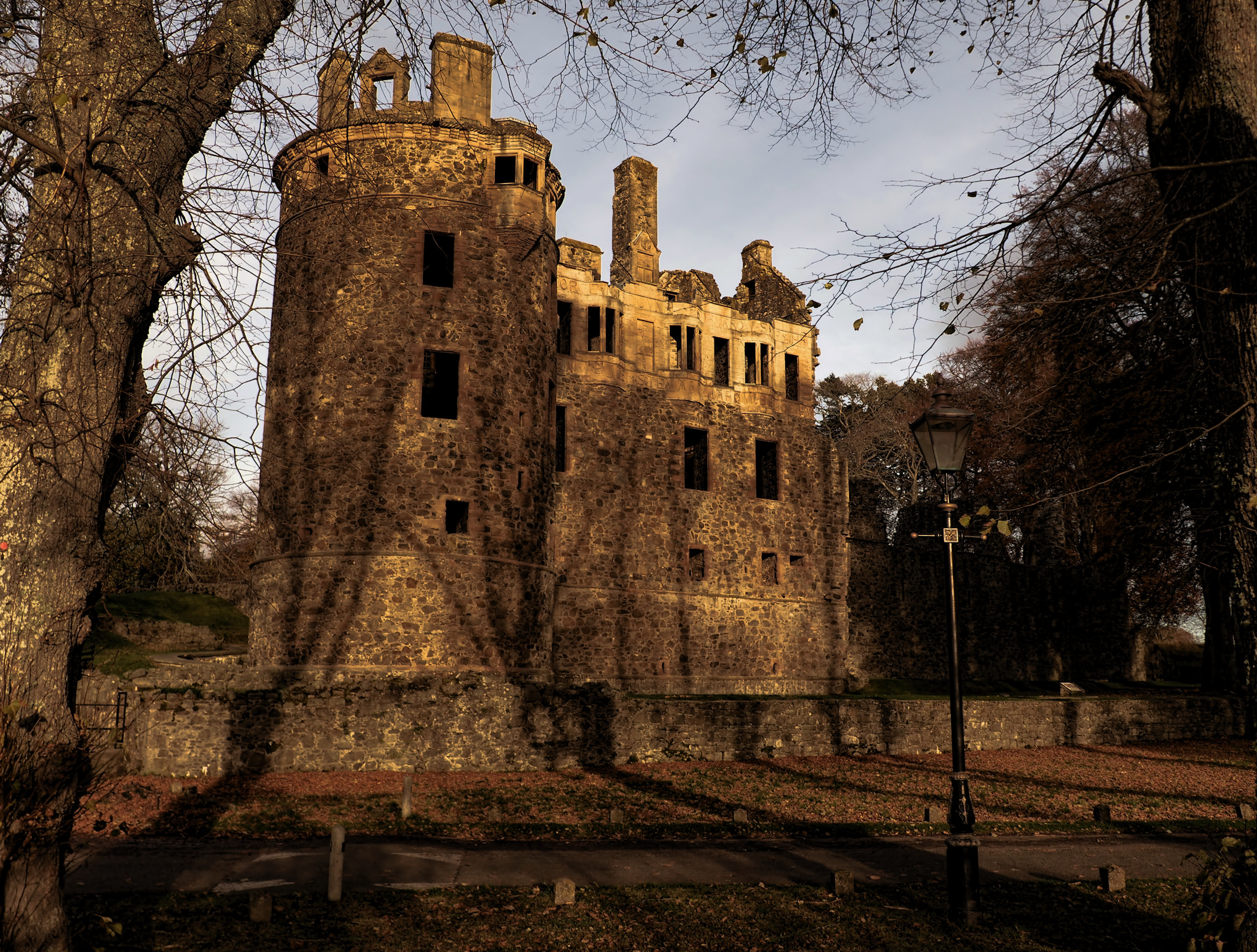
Haunted Huntly Castle now stands in ruins stands in the fertile countryside of Aberdeenshire. Originally known as Strathbogie, this formidable stronghold served as the ancestral seat of the powerful House of Gordon. This was an aristocratic family of Anglo-Norman descent who established absolute dominion across the northeast.
Throughout the turbulent sixteenth century, their staunch Roman Catholicism repeatedly brought them into direct conflict with the Protestant Crown and royal regents. Political violence stained the castle walls for generations, yet the most terrifying tale recorded at Strathbogie belongs to genuine early modern chronicle: the sudden demise of George Gordon, 5th Earl of Huntly, and the inexplicable supernatural contagion that seized his household immediately afterwards.
The Downfall and Dark Deeds of George Gordon
George Gordon, 5th Earl of Huntly, was one of the key conspirators of the Marian Civil War. Following his father’s death after the Battle of Corrichie in 1562, George faced imprisonment and a sentence for high treason. However, when Mary, Queen of Scots required powerful allies, she restored Gordon to his titles and named him Lord Chancellor of Scotland in 1567.
Gordon soon involved himself in the most notorious crimes of the era. He signed the Craigmillar Bond that orchestrated the assassination of Henry Stuart, Lord Darnley. Furthermore, he colluded in the murder of Regent Lennox at Stirling. Although he later reached fragile reconciliations with Regent Morton, Gordon remained a deeply suspected traitor to the Scottish Protestant state.
On a mild October afternoon in 1576, the Earl engaged in a vigorous match of football on the castle green. Suddenly, after striking the ball a second time, Gordon collapsed to the turf. He struggled to his feet, leaned heavily against a peat-stack, and called for his cloak before staggering toward the palace gate.
Moments later, the Earl fell face-down into a muddy pool. Attendants carried him upstairs to his bedchamber within the New Work of Strathbogie, where his condition deteriorated with shocking ferocity. Gordon began to convulse, frothing at the nostrils and vomiting a viscous fluid described as black as soot. Although he could no longer form coherent sentences, he repeatedly gasped a single chilling instruction: “Luike! Luike! Luike!” By seven o’clock that evening, the Earl was dead.
The Contagion of Unnatural Cold
The macabre terror at Strathbogie did not conclude with the Earl’s final breath. Richard Bannatyne, secretary to the Protestant reformer John Knox, recorded eyewitness accounts describing how a terrifying, freezing contagion afflicted the household over the following days. While Bannatyne relied on third-hand testimony and was keen to frame Huntly’s hideous demise as divine retribution against an unrepentant Catholic conspirator, the chronicle nonetheless provides an extraordinary record of early modern panic and political propaganda.
Early on Sunday morning, several companions gathered in the lower chamber to discuss their master’s abrupt fate. A man from Assynt, warming himself with his back to the hearth, suddenly dropped flat to the floor as though struck lifeless. When the petrified attendants carried him to the open air, he felt boiling hot to the touch yet displayed no breath. Upon waking half an hour later, he began convulsing violently while shrieking uncontrollably: “Cauld! Cauld!”
Two days later, John Hamilton entered the upper gallery alongside James Spittel and a castle servant to fetch culinary spices. Hamilton instantly cried out about an overpowering chill and collapsed to the floor. While Spittel assisted Hamilton down the stone turnpike, the unnamed servant remained behind. Upon their return, they found the servant sprawled motionless over an open coffer.
Just like the others, this servant eventually regained consciousness through frantic physical restraint, only to suffer terrible spasms while shouting of an unearthly coldness. Modern medicine suggests the Earl suffered a catastrophic cerebral haemorrhage or acute stroke during exercise, but early modern onlookers interpreted the subsequent household seizures as a demonic infection.
Phantom Voices and Modern Spectral Encounters
Following the embalming of the Earl’s corpse by William Urquhart, a surgeon summoned from Aberdeen, the body was moved down to the private chapel. The Earl’s private chamber was cleared, locked, and guarded. On Wednesday evening, the Earl’s brother, Patrick Gordon, sat in the adjoining hall alongside roughly twenty retainers. Without warning, a tremendous clamour arose from behind the heavy oak door of the sealed chamber.
Patrick demanded that John Hamilton unlock the door, but Hamilton was immobilised by fear. Entering alone into the fading dusk, Patrick heard distinct voices, agonised groans, and heavy rumbling sounds within the vacant room. Terrified, he bolted back into the hall.
When the men returned with lit candles, they discovered the bedchamber completely undisturbed. Yet whenever they stepped across the threshold back into the hall, the violent rumblings recommenced. Contemporary witnesses were adamant that no living creature, not even a mouse, could enter the securely shuttered room, sparking whispers throughout Aberdeenshire that the dead Earl had risen again.
Today, Historic Environment Scotland cares for the imposing ruins, which still attract investigators of the paranormal. Visitors frequently report encountering the Weeping Woman, an elusive silhouette in dark robes who weeps near the ruined holding vaults. Others document phantom footsteps on ruined stairs and sightings of a 17th-century soldier, said to have perished when Oliver Cromwell’s forces besieged the Catholic citadel.
Haunted Huntly Castle remains a favourite with Spooky Scotland. We particularly like to visit in autumn when the leaves on the trees around the castle are turning. However, beware, you never know what ghostly encounter you might have.
Sources
-
Richard Bannatyne, Memorials of Transactions in Scotland, A.D. 1569–1573, edited by Robert Pitcairn (1836), “The Maner of the Erle of Huntlies Death”. Internet Archive
-
Historic Environment Scotland, “Haunting Huntly Castle”.
-
“George Gordon, 5th Earl of Huntly,” Wikipedia.
-
East Durham Paranormal Research Group, “Huntly Castle”.