The Uig Flood of October 1877 brought a night of bizarre and macabre destruction to northern Skye. Over the Sabbath night of 13th to 14th October, torrential rain battered the Trotternish peninsula. More than seven inches fell within hours, rapidly swelling the Rivers Conon and Rha into violent torrents.Thus,, loose earth and boulders choked the narrow gorge above Uig, forming a temporary dam. When this barrier gave way around midnight, an enormous surge of water swept straight down the glen.
The torrent obliterated bridges, tore away valuable topsoil, and battered the foundations of Uig Lodge, the seaside villa belonging to the Kilmuir estate’s landlord, Major William Fraser. To the local Gaelic community, the damage to the estate was not merely an act of nature. Instead, it was widely interpreted as divine retribution against a notoriously oppressive proprietor.
Evictions and Unpopular Landlords
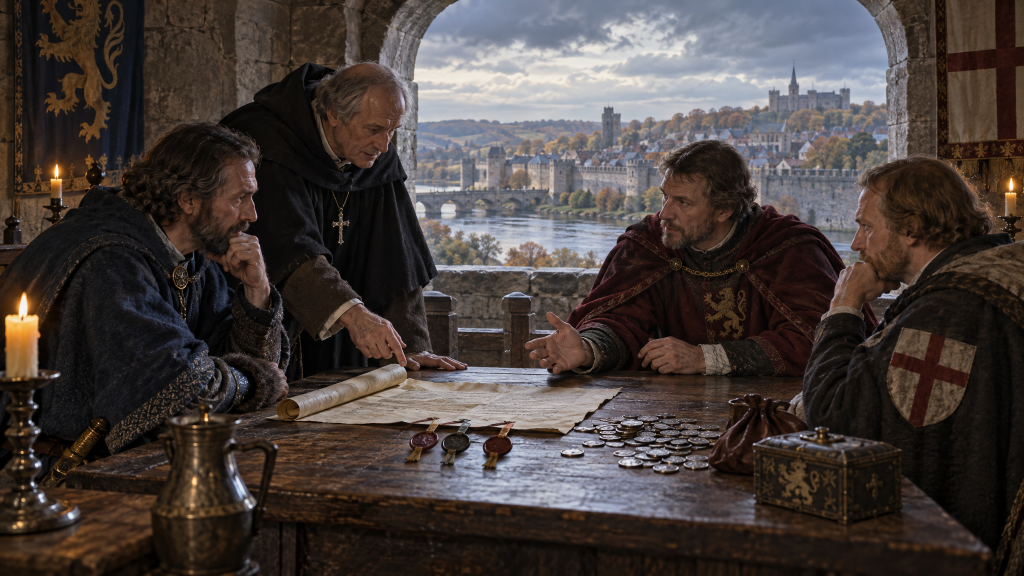
Major William Fraser had purchased the Kilmuir lands from Lord MacDonald in 1847. Over three decades, he earned a reputation as one of the most ruthless landlords in the Hebrides. Alongside his factor, William Malcolm, Fraser imposed steep rent increases and evicted crofters with little regard for their survival.
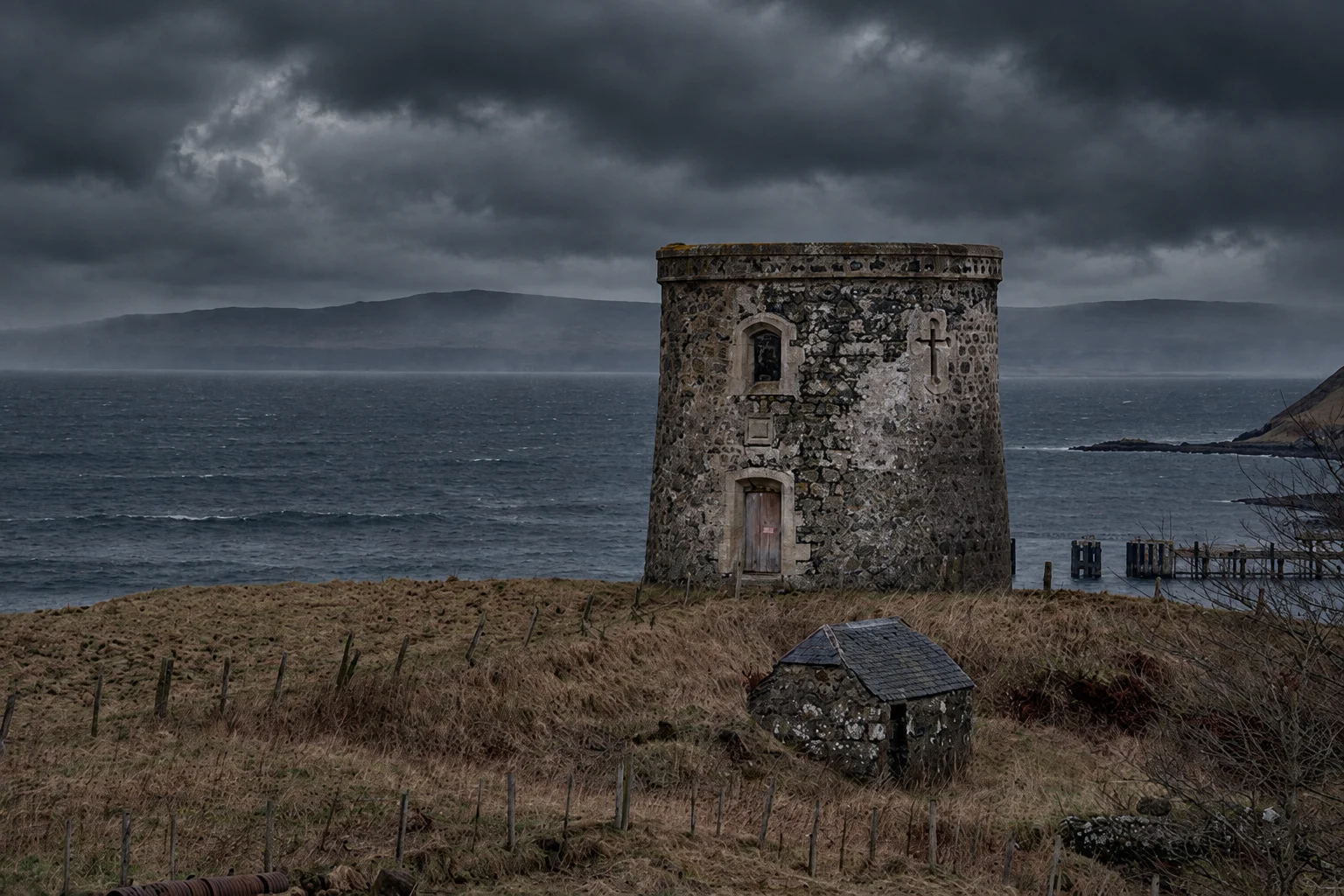
Because of this constant pressure, the community held him in deep contempt. Fraser even erected Uig Tower, a mock-Norman stone folly on the hillside, to watch over his estate and collect rents. Therefore, when the flood tore through the valley and battered Fraser’s residence, the tenantry saw poetic justice. In their eyes, providence had targeted the house of the oppressor.
Faithful unto Death: David Ferguson
As the Conon rose rapidly, danger mounted across the valley floor. David Ferguson, Fraser’s 52-year-old estate manager, lived safely on the hill above the glen. Despite the risks, Ferguson felt compelled to venture into the rising water to protect his master’s property. His family begged him to stay, but he reportedly insisted: “Tha an deagh sheirbheiseach dìleas dha mhaighstir” (“The good servant is faithful to his master”).
His son and two neighbours soon followed into the surging river to bring him back. However, the water swiftly rose from their waists to their chins, nearly drowning one of the rescuers. They shouted into the darkness, but the roar of the river swallowed every sound. From the hillside, Ferguson’s wife watched his lantern move from room to room until the light vanished. Days later, searchers recovered his body from the cellar ruins.
The Cemetery Washed to Sea
When daylight arrived on Monday morning, the true horror of the disaster became visible. The saturated hillside had collapsed into the river, carrying away most of the old Uig burial ground. Skeletons, broken coffins, and recently buried corpses had been torn from the earth and washed down the glen.
Furthermore, the flood deposited disinterred bodies and animal carcasses across what remained of Fraser’s front garden. Other corpses were swept out into Loch Snizort, with some washing ashore miles away at Greshornish. The scene deeply unsettled the devout community. It seemed as though the dead had literally been raised from their graves to strike at the landlord’s estate.
Libel and The Highlander
The political fallout began almost immediately in the press. John Murdoch’s radical newspaper, The Highlander, published a letter from Skye reflecting the mood of the parish. The writer stated that the disaster was widely seen as a judgement upon Fraser’s property, noting bitterly that locals wished the landlord had been in the lodge instead of his manager.
Furious at the public insult, Major Fraser sued the paper for £1,000 in libel damages. The court ultimately awarded Fraser only £50, but Murdoch was ordered to pay £34 in expenses. Although the damages were low, the combined legal costs proved fatal for the publication. The lawsuit forced The Highlander out of business, temporarily silencing a major voice for crofting rights.
The Kilmuir Rent Strike and Marine Intervention
Despite the catastrophe, Fraser showed no sympathy for tenants whose potato crops and fields were ruined. Instead, he raised rents in 1884 to recoup his own financial losses. This decision provoked open revolt. The Kilmuir tenants declared an organised rent strike, refusing to pay rent or perform estate labour until their terms were met.
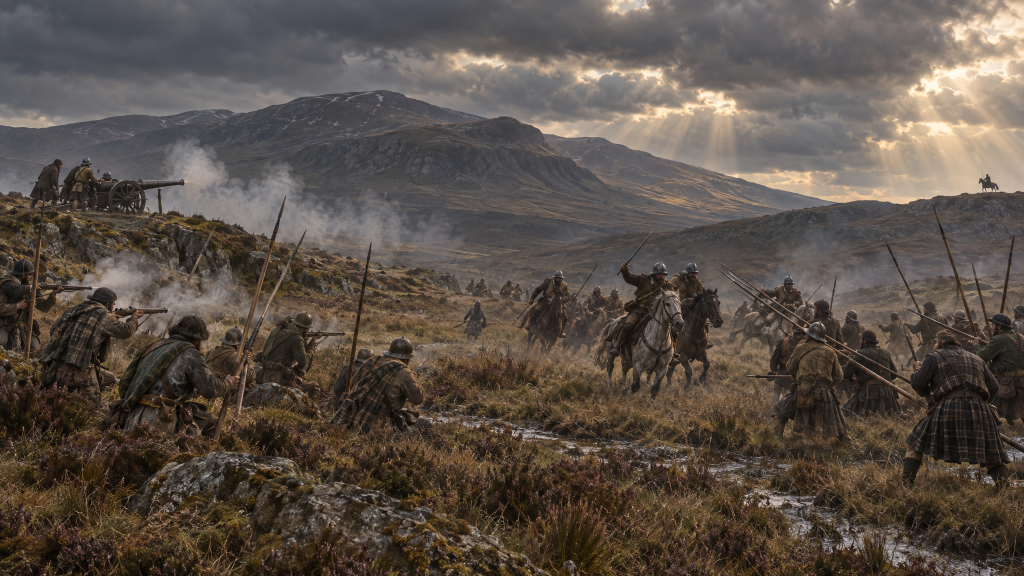
When Fraser attempted an eviction at Garafad in Staffin, the crofters physically blocked the sheriff’s officers. Panicked, Fraser told the government that the island was in open rebellion. Authorities responded by sending a naval flotilla carrying 400 Royal Marines and police to Uig Bay.
However, the military demonstration quickly turned into an embarrassment for the authorities. Local hotel owners refused to provide beds for the police, while boatmen refused to row the troops ashore. Compelled to march overland through sodden peat bogs to Staffin, the troops met no armed resistance. Instead, they were greeted by mocking white flags and local women who openly jeered at the confused soldiers in Gaelic.
A Turning Point for Crofting Rights
The heavy-handed deployment of gunboats against impoverished islanders drew sharp condemnation from the national press. The Home Secretary, Sir William Harcourt, ordered the military to stand down, declaring that the British Army would not serve as an eviction force for private landlords.
This public victory gave enormous momentum to the Highland Land League, which won parliamentary representation in 1885. Their campaigning resulted in the landmark Crofters’ Holdings Act 1886, granting security of tenure and ending arbitrary evictions. The government eventually took control of the Kilmuir estate, creating 85 new holdings and improving hundreds more. The flood destroyed Fraser’s lodge in a single night, but it was the crofters’ resistance that ultimately broke his authority forever.