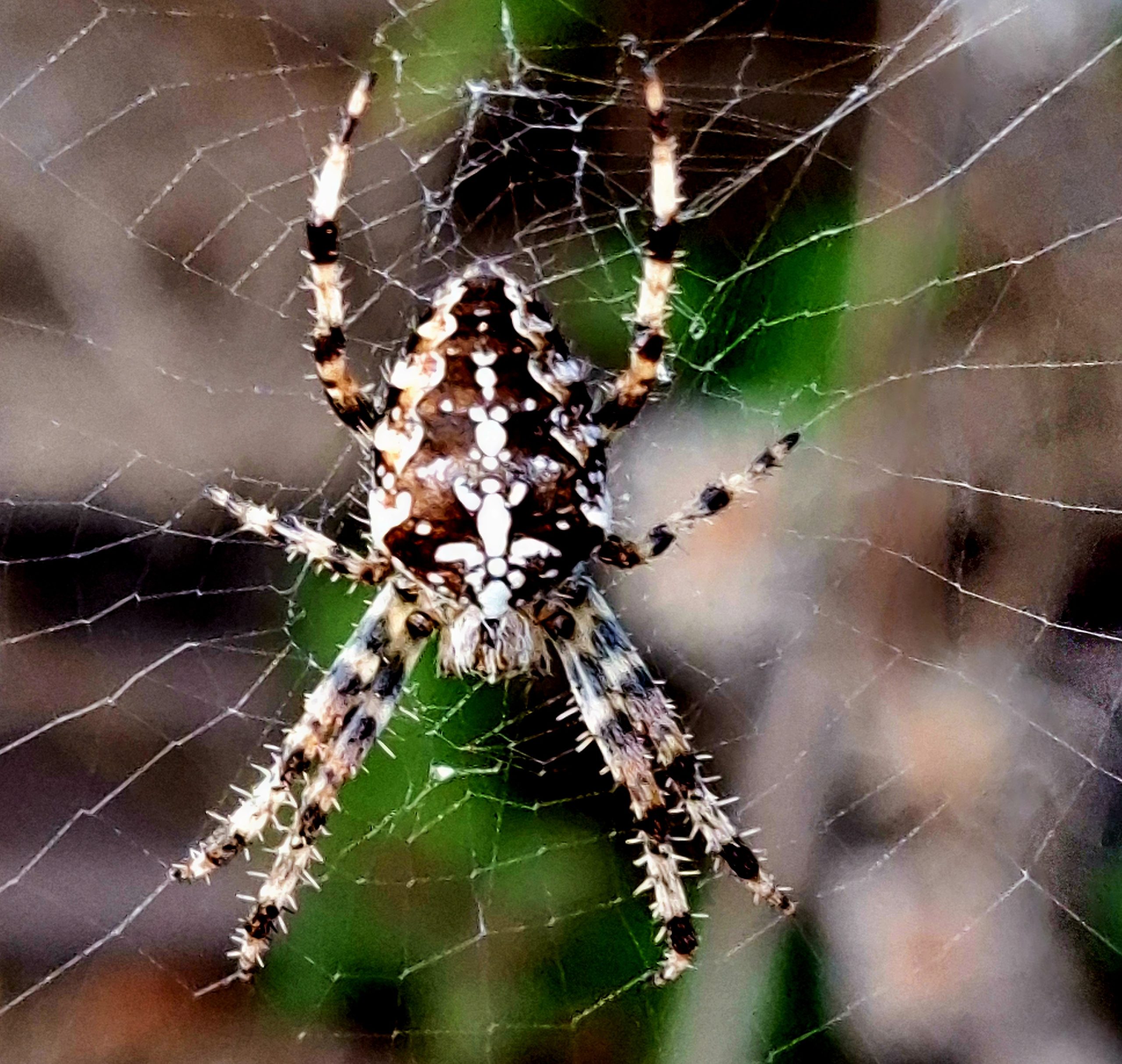
Spiders play a special role in Scottish Animal Lore. They have always been held in special regard. In Scots it is known as a wyver and in Gaelic it is known as Damhan-allaidh. In Orkney there was a saying:
If you wish to thrive
Let the spider go alive.
Perhaps, this special relationship dates back to its royal associations with Robert the Bruce.
Robert The Bruce and the Spider
In the winter of 1306-07 King Robert was forced into hiding , including a period living in a cave. This cave hhas been said to be on the island of Rathlin off the coast of Antrim, or Arran or even Carrick. His enemies were on their ascendency According to local folklore it is here that Robert had his life-changing moment with a spider. Apparently, he observed a spider repeatedly weaving and reweaving its web, never giving up until finally it succeeded. Robert is said to have drawn from this encounter the resolve to try again to gain control of his kingdom. Ultimately he succeeded in holding onto the Scottish Crown and winning the First Scottish war of Independence.
Spiders used in Cures
Spiders also played a role in curing illnesses. A crushed spider mixed with syrup cured a fever. Meanwhile, in Western Scotland, ague could be cured by putting a spider into a goose quill and sealing it up. It would be hung around the next with the result that the spider would be close to the stomach. This disease could also be cured by making pills from the spiders’ webs. The recommended dosage was one pill taken before breakfast, for three successive days. Another cure involved putting a live spider into a nut shell and hanging it round the patient’s neck.
Spiders’ webs were also used as an antiseptic plaster on a cut. In the North-east of Scotland, Spider’s webs were called ‘moose wobs’ and were said to stop bleeding.
Holy Connections
A story from the borders tells of a minister visiting an elderly woman in her last illness. He attempted to remove a spider near her bed. the invalid promptly rebuked him.
“Let it be,” she chided. “When our blessed Lord lay in the manager at Bethlehem, a spider came down and spun a beautiful web which protected the babe from all the dangers that surrounded him: cold and frost and the searchers of King Herod.”
Lucky Money Spiders
The tiniest of spiders are known as money spiders and are supposed to bring good luck. If it runs across clothing, new clothes were on their way. If you put a live spider in your wallet, the spider brought wealth. However, if you deliberately killed a spider, this would lead you to break crockery or glassware on the same day.
Although we have come to associate spiders with Halloween, remember that in Scotland, spiders are considered special- maybe if for nothing else, they eat that great summer scourge of the Highland Midge.
Sources:
Notes on the Folklore of the North-East of Scotland- Rev Walter Gregor (1881)
Scottish Animal and Bird Folklore- Malcolm Archibald (1996)
Scottish Customs- Sheila Livingstone (2000)
The Penguin Guide to the Superstitions of Britain and Ireland- Steve Roud (2006)


