St Kilda is an archipelago of wind‑lashed cliffs and empty cottages, remote off the west coast of Scotland. Human presence on Hirta stretches back millennia, but the islands’ twin claims to significance are their extraordinary natural life‑forms and a cultural history shaped by isolation. This post outlines the landscape and community, surveys the folklore that threaded daily practice, and explains why a long‑standing settlement finally came to an end in 1930.
The St Kilda archipelago
Geography and landforms
St Kilda represents the eroded rim of an ancient Tertiary volcano. The islands lie forty‑one miles west of North Uist and include Hirta, Boreray, Soay and Dùn. Jagged sea stacks puncture the surrounding water; Stac an Armin rises nearly two hundred metres and is Britain’s tallest sea stack.
Climate and landscape
Powerful oceanic swells and relentless gales batter the cliffs throughout the year. Conachair on Hirta plunges over four hundred metres into the sea, forming the highest sea cliff in the United Kingdom. Trees never grew on these wind‑scraped slopes, yet freshwater springs flow through the valleys. Over a thousand drystone storage cells known as cleits still pepper the hillsides. Islanders built these ingenious stone structures with turf roofs and hollow walls so wind could dry preserved seabirds, eggs and peat while keeping rain out.
A brief history of St Kilda
Early settlement and isolation
St Kilda has been home to people for at least 4,000 years. Archaeological remains show earlier communities lived among the cliffs and valleys, though much of their daily life remains obscure. The archipelago’s isolation allowed distinctive traditions to develop. Over time islanders built a society based on crofting, seabird hunting, fishing and careful cooperation.
Contact, change and decline
Written descriptions begin in the late medieval period. Donald Munro described the islands in 1549 as poor and isolated, noting the MacLeods of Harris held authority. For centuries St Kilda remained largely self‑sufficient. During the eighteenth and nineteenth centuries outside influence rose. Missionaries brought more formal religious teaching. Visiting ships brought trade, new goods and new illnesses. In 1852 thirty‑six islanders emigrated to Australia. That loss reduced the population and weakened the community.
Community life on Hirta
Economy and work
Life on Hirta depended on shared labour, local knowledge and constant attention to the weather. Islanders raised sheep and cattle, cultivated small plots of potatoes and barley, and gathered peat for fuel. The rich seabird colonies were central to survival. Gannets, fulmars and puffins, and their eggs, provided food, oil and feathers.
Cliff work and gender roles
Men climbed cliffs and stacks to catch birds, often using ropes and skills passed through families. The work was dangerous, but it supplied much of the community’s food. Women prepared food, managed households, cared for children, worked wool and took part in agricultural labour. Each household depended on the work of others.
Community organisation
Each weekday morning men met in what became known as the St Kilda Parliament. This informal gathering allocated the day’s work and addressed practical needs within the settlement. Women also held meetings. The community had systems for collective decision‑making, though labour was divided by age, gender, skill, health and household circumstance.
Food storage and resilience
Cleits formed an essential part of the working landscape. These dry‑stone stores protected and aired food, peat, feathers and other supplies. Islanders also preserved eggs in peat ash for winter, when storms could cut the islands off. Survival depended on planning well beyond the immediate season.
Contact with the mainland
Daily life was not wholly isolated. Islanders received occasional ships and traded goods such as tweed, bird products and knitwear. They also used St Kilda mailboats for messages. Yet contact with the mainland remained uncertain. A resourceful community could not control the Atlantic weather or obtain help quickly in an emergency.
Folklore of St Kilda
Tigh an t‑Sìth — the House of the Fairies
Tigh an t‑Sìth on Hirta is a small subterranean stone structure, a souterrain islanders associated with sithichean. Antiquarian accounts treat it as part of the ritual landscape and record local caution about such liminal places. Sometimes the site was regarded as a dwelling of helpful spirits, sometimes as a place to avoid without proper ritual.
Tobar nam Buaidh — the Well of Virtue
Tobar nam Buaidh served as a place visited for cures and blessing. Recorded practice combined Christian prayer with older lustration rites: drawing water, leaving a small offering and reciting a short blessing to seek health, safe passage or protection for cattle. The well fits a wider Hebridean pattern of named springs known for healing.
Gruagach traditions and the Milking Stone (Clach a’ Bhainne)
Gruagach figures are guardian spirits tied to herds and byres across the Hebrides. On Hirta a prominent boulder, Clach a’ Bhainne or the Milking Stone, received part of the first spring milking as a libation to secure herd fertility. Field observers noted the local detail that islanders said they could hear the fairies under the stone “rattling their spoons” after the milk was offered. Similar milk‑libation customs occur across Hebridean folklore.
Taigh na Banaghaisgich — the Amazons’ House
Taigh na Banaghaisgich is a vaulted, beehive‑roofed stone building inland from the village. Field reports note its unusual architecture and a name that carries legend. Antiquarians debate its original function — storehouse, ritual house or habitation — yet its form and surviving name make it a place of cultural memory.
Interpretation and context
St Kilda’s ritual sites, wells and named stones were practical as well as symbolic. Offerings, taboos and blessings helped protect animals, health and harvest in a harsh environment. Older writers sometimes translated local reverence into classical vocabulary and called household guardians “gods”. Modern usage of guardian spirit or fairy better matches the ethnographic record.
Decline of St Kilda
Economic pressures and dependence
By the late 19th century St Kilda’s economy and population were under mounting stress. The islands had always been marginal — exposed to storms, dependent on seabirds and a small number of cattle, and cut off from regular communication for long stretches. From the 1850s contact with visitors and markets began to change island life. Summer steamship calls and visitors brought cash income but also new demands. Islanders produced goods for sale and took paid work ashore, shifting labour away from subsistence patterns and increasing dependence on imported food, kerosene and building materials.
Demography, disease and war
Young people left in search of wages and education, and emigration cut the pool of able‑bodied labourers needed for peat‑cutting, boat work and the seabird economy. Disease and bad seasons made matters worse. Recurrent food shortages, a serious influenza outbreak in 1913 and the disruption caused by the First World War eroded resilience. Wartime naval detachments brought temporary supplies and regular contact, but when services were withdrawn after 1918 the sense of isolation returned.
Culture and economy
Isolation shaped more than material life. The island’s Gaelic developed distinctive phonology and local vocabulary through centuries of separation. Barter and in‑kind exchange remained important well into the 20th century, with cash supplementing rather than replacing older practice. Communal systems of shared labour weakened under market pressures and out‑migration, reducing the community’s capacity to respond to labour‑intensive crises.
By the 1920s the community judged that another harsh winter would be catastrophic. After repeated appeals and private discussion with the estate factor and the authorities, the remaining residents requested evacuation in the summer of 1930.
Evacuation
The removal of the last islanders
On the morning of 29 August 1930 the final chapter of permanent habitation on Hirta was enacted. HMS Harebell took aboard the islanders, their few personal goods and the animals that could travel. Within hours 36 people — men, women and children — left their homes and the rhythm of island life they had known for generations.
Relief and loss
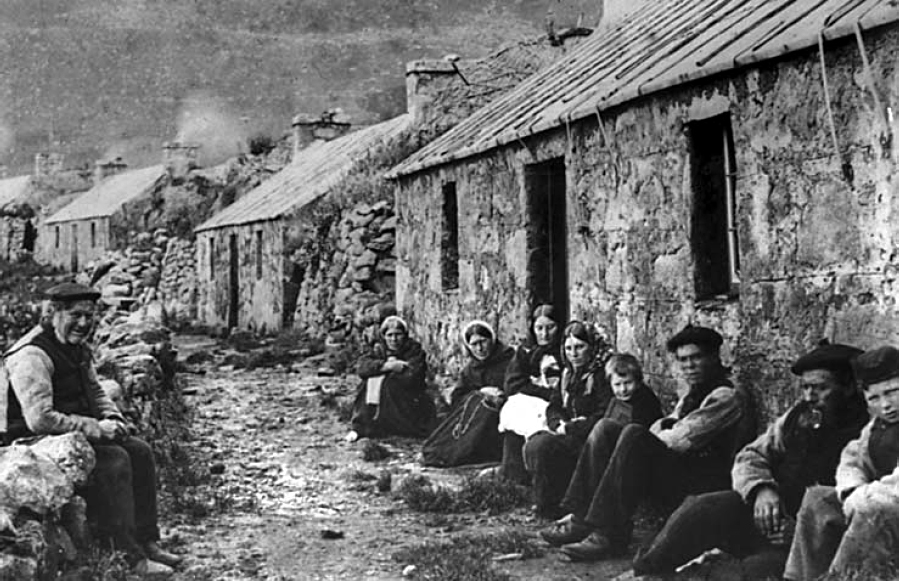
Contemporary accounts stress both relief and deep sorrow. For many the decision had been gradual and practical: dwindling numbers, repeated food shortages and loss of services made long winters intolerable. For others the act of leaving severed ties to place, ritual and communal labour. The village street emptied and many lesser objects were left behind. Survivors later recalled both relief at rescue and quiet grief.
Reception and resettlement
Reception on the mainland varied. Government and charitable agencies provided resettlement help, and communities in Stornoway, Glasgow and elsewhere accepted families. Resettlement proved disruptive. Islanders faced housing, employment and health problems, especially among those unaccustomed to mainland economies. Cultural dislocation was profound: language, customary labour patterns and tightly woven communal responsibilities dissolved. Ministers and visiting clergy noted that local religious practice showed distinctive features shaped by isolation and older customs. Worship on Hirta often blended standard Presbyterian forms with longstanding ritual language. Some islanders adapted; others struggled.
Aftermath
From settlement to heritage
After evacuation the islands passed into a different relationship with the mainland. The abandoned village and outbuildings needed basic maintenance, while the estate and government supervised property matters and occasional salvage. From the mid 20th century archaeological fieldwork and scientific study became regular. The National Trust for Scotland acquired the islands in stages and took responsibility for stabilising buildings, recording sites and protecting both cultural remains and the international seabird colonies.
Legal protections and UNESCO status
St Kilda became a scheduled monument and a national nature reserve. In 1986 UNESCO inscribed the archipelago as a World Heritage Site for its combined natural and cultural values. Later extensions strengthened protections for seabird populations and geological features. Those designations brought scientific funding, stricter visitor management and wider public awareness, while formalising a new relationship in which the islands are managed primarily for conservation and study rather than as a living community.
Social memory and legacy
Former islanders and their descendants dispersed across the mainland and overseas. Oral histories, photographs and objects entered archives and museum collections. These records preserve the islanders’ distinctive Gaelic, their continuing use of barter alongside cash, and the pattern of religious observance that marked life on Hirta. Tourism and media interest keep St Kilda in public view, yet access remains limited and regulated to protect fragile habitats.