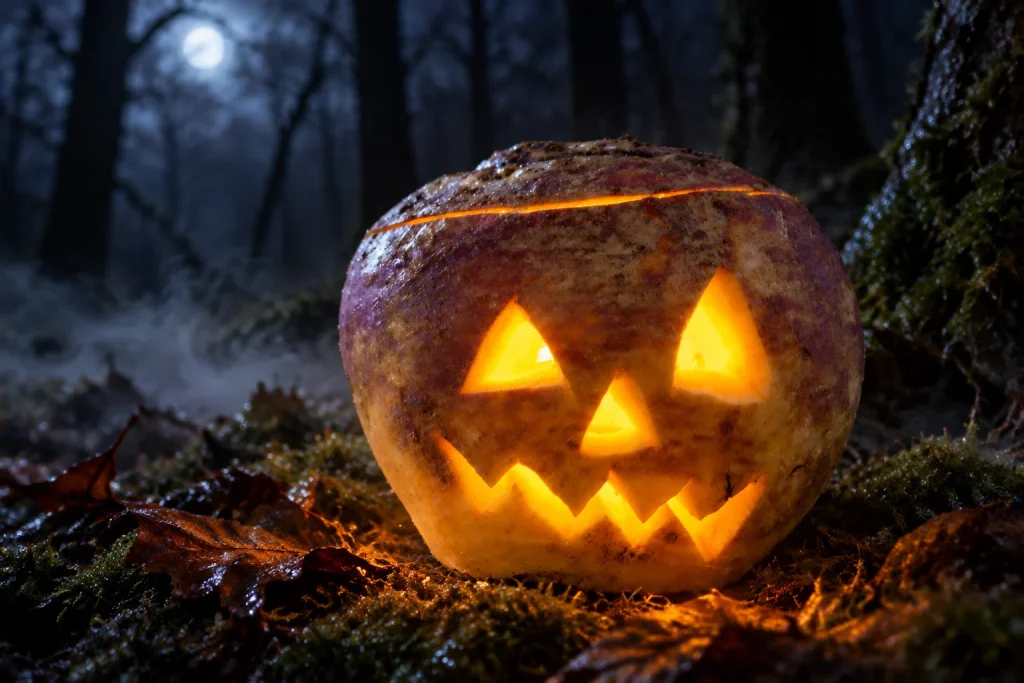
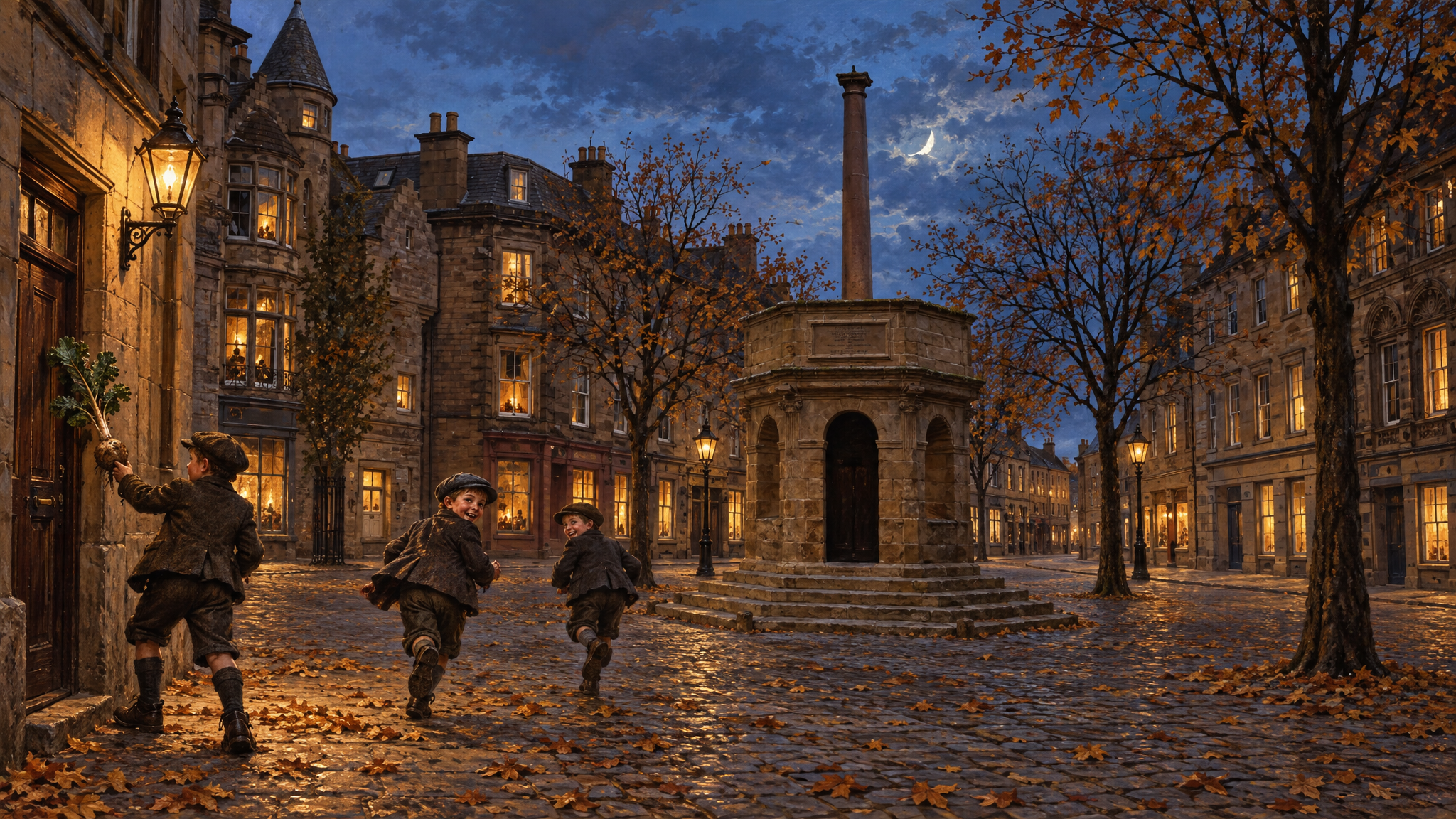
Knock-A-Doory Night brought a sharp burst of seasonal disorder to Elgin every 30 October. Also known locally as Knocky-Doory Night, the occasion turned the dark streets into an arena for quick feet and rattled timber. Youngsters raced up closes, thundered on wooden doors, and vanished into the closes before an exasperated householder could draw the bolt.
Yet, an older custom in the town was far noisier. Before hands simply struck bare panels, pranksters took to the kail yards. They tore up hefty kail stalks with the dirt and roots still clinging to them, wielding the heavy winter greens like clubs against the neighbourhood doors.
Further north, across Caithness and Sutherland, a sister tradition went by the blunt title of Batter-Door-Night. Up there, seasonal devilment reached well past the front step. Farm gates drifted down rivers, and householders awoke to find their livestock thoroughly, bewilderingly scrambled.
The Kail Stalks of Elgin
Knock-A-Doory Night took place on the eve of Halloween, carving out its own territory for mischief before the spirits of Samhain held sway. In Elgin, that boundary belonged entirely to mortal trickery.
The weapon of choice was t the humble winter kail. Pranksters raided local gardens, yanking the sturdy greens straight from the earth with their roots intact. Running in packs through the lanes, they hammered the heavy, mud-caked roots against front doors with startling force.
Over time, this earthy racket gave way to the familiar game of knocking and fleeing empty-handed.
Batter-Door-Night in Caithness and Sutherland
Across the Moray Firth and down through the glens of Sutherland, the night went by the descriptive title of Batter-Door-Night. As the name promised, doorsteps took a pummelling, but the northern pranksters had grander ambitions for communal chaos.
Removing garden and farm gates was an art form. Lads lifted heavy timber and iron gates cleanly off their pintles, dragging them through the heather to be cast into burns or floated downriver.
Even more disruptive was the surreptitious swapping of livestock. In the dark of the steading, a black horse would be led from its stall and quietly replaced with a white neighbour. By morning, crofters faced an almighty tangle of misplaced beasts, unhinged field boundaries, and livestock wandering across unfenced land.
Borders of Mischief: England and America
Scotland was far from alone in carving out an evening dedicated to domestic havoc. The instinct to test authority before winter set in crossed many borders, taking on local names and varying dates.
In parts of northern England, youth celebrated Mischief Night on 4 November, the eve of Guy Fawkes Night. The pranks echoed the northern Scottish traditions with uncanny precision. In 1885, a Lancashire bulletin recorded that local youths made a habit of stealing private garden gates, revelling in the sport as if custom granted them legal right.
Across the Atlantic, 30 October gathered its own patchwork of titles. Communities in New Jersey maintained the British label of “Mischief Night”, while Detroit dubbed it “Devil’s Night”. Other American regions called it “Gate Night” or “Cabbage Night”, the latter mirroring Elgin’s vegetable warfare with flying cabbages hurled at porches.
The Architecture of the Trick
Knock-A-Doory Night and Batter-Door-Night capture an earthier, older side of the Scottish festive year. Before Halloween transformed into a neat circuit of disguises and sweets, youth claimed the dark streets to turn order upside down.
These traditions anchored themselves in the immediate physical world: the soil of the kail patch, the latch on the farm gate, and the sudden clatter in the pitch dark.
Sources
Sheila Livingstone, Scottish Festivals (Birlinn, 2025), p. 47.
Merrill Fabry, “A Brief History of ‘Mischief Night’”, TIME, 30 October 2015.