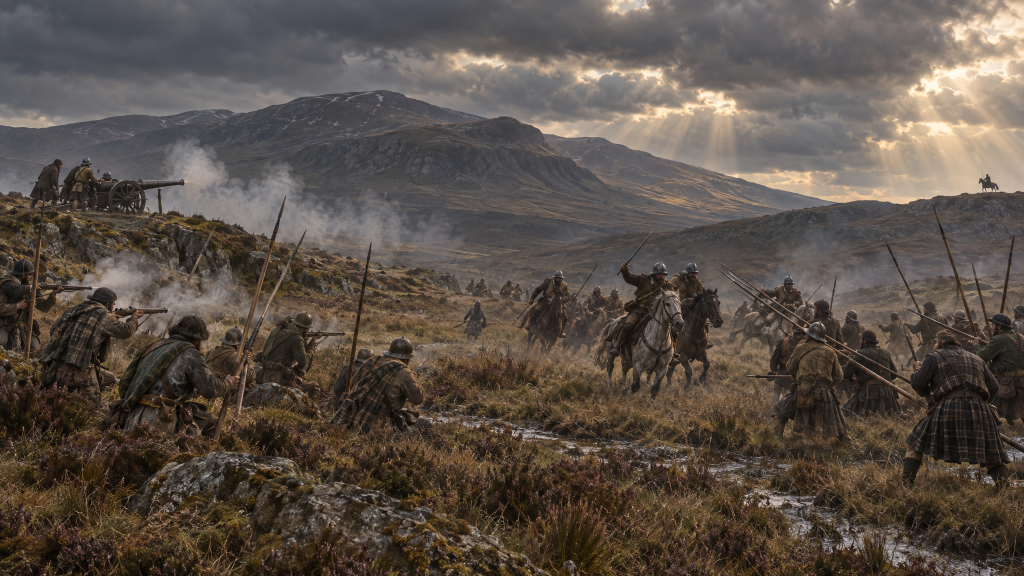
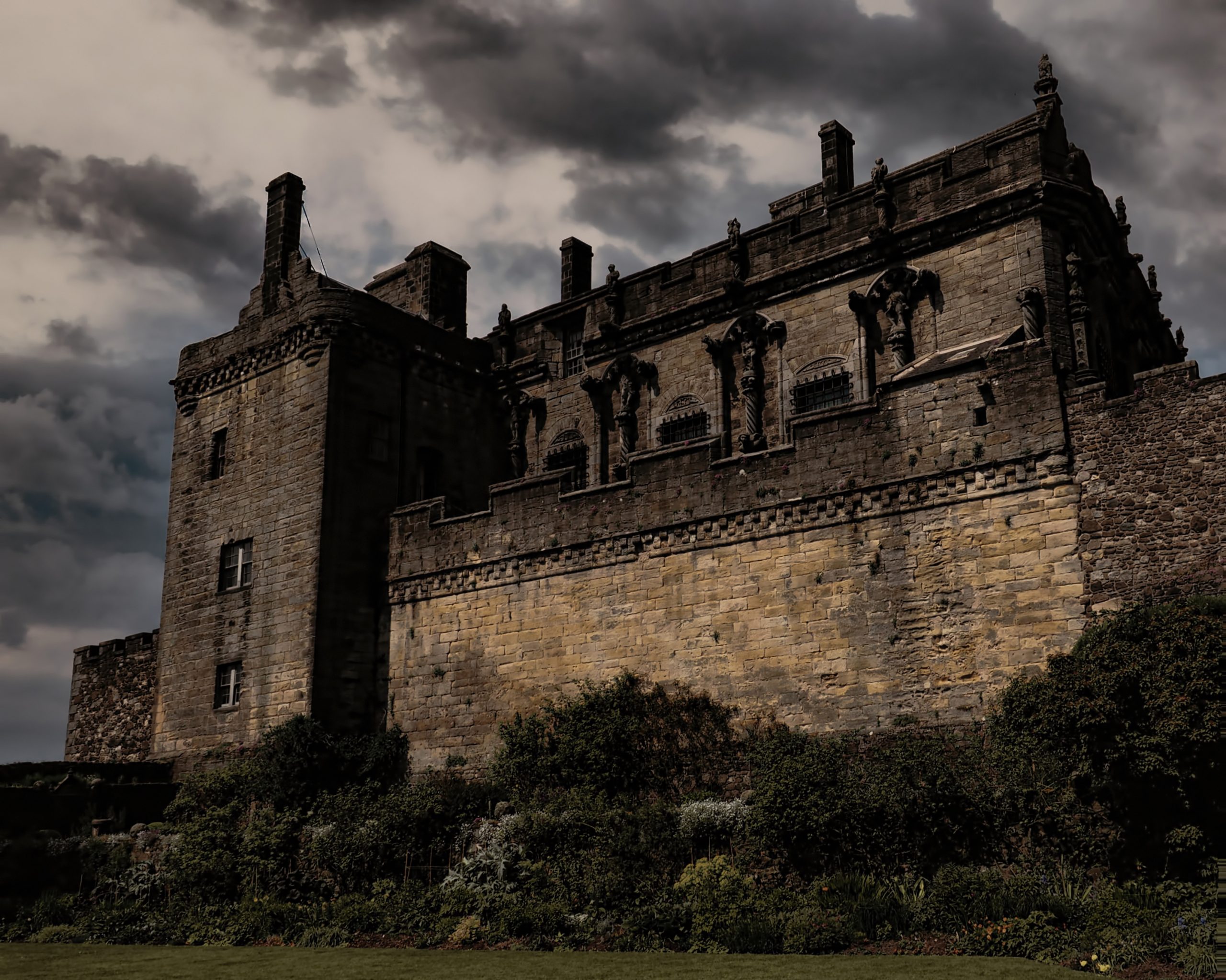
The Siege of Stirling Castle stands as one of the most high-stakes confrontations in the Wars of Scottish Independence. The castle was as the final barrier to total English domination in 1304. Because the castle sits atop a volcanic crag commanding the lowest crossing point of the River Forth, it functioned as the vital geographic link between the Highlands and the Lowlands. As a result, no medieval army could safely move north or south without controlling this gateway. During the opening phases of the Wars of Scottish Independence, Stirling became the ultimate prize for Edward I. He was determined to extinguish the last embers of Scottish resistance after his victory at the Battle of Falkirk.
The Strategic Importance of the Rock
Stirling Castle was not merely a fortification; it was a military keystone for the entire kingdom. During the late 13th century, control of the castle equated to control of Scotland’s main artery of communication and supply. As the Wars of Scottish Independence intensified, the fortress shifted hands multiple times, highlighting its status as the most contested site in the realm. By 1304, while most Scottish nobles had been forced to submit to English rule, Stirling remained the lone, defiant symbol of an independent Scotland, garrisoned by a small but resolute force under Sir William Oliphant.
Why the Siege of Stirling Castle Began
The Siege of Stirling Castle became inevitable following the English victory at the Battle of Falkirk in 1298. Although Edward I had defeated William Wallace, it took a further six years of gruelling campaigning to bring the Scottish heartlands under his grip. By early 1304, the English King had successfully forced most of the Scottish nobility into submission, leaving Sir William Oliphant’s garrison as the final pocket of organised resistance. Edward sought to demonstrate that no fortification, regardless of its height or history, could withstand his royal authority.
Stirling was the last stronghold still resisting in the name of the Scottish crown, and Edward viewed this defiance as a personal affront to his claim over Scotland. Since the fortress occupied the most defensible position in the country, the English could not declare Scotland “conquered” while Oliphant held the ramparts. Furthermore, Edward needed a definitive, high-profile victory to discourage any future uprisings. Consequently, he moved his entire court and war machine toward the castle, ordering Scottish lords who had already surrendered to provide horses and labour for the upcoming assault.
The Siege of Stirling Castle: Four Months of Bombardment
Edward I arrived at Stirling on 22nd April 1304 with a formidable arsenal. He had assembled possibly the largest array of siege engines ever deployed by the English crown — thirteen catapults and trebuchets that hurled projectiles at the castle walls day and night. The ammunition was sourced with ruthless efficiency; Edward ordered Scottish churches to strip their roofs of lead, and cartloads arrived from Brechin, Dunfermline and St Andrews. On top of this, he had sulphur and saltpetre — components of an early gunpowder mixture — brought from England.
The bombardment was relentless. Lead balls, stone projectiles, and Greek fire rained down on the castle for months. Nevertheless, the garrison of approximately thirty men, under Sir William Oliphant, held firm. The castle’s defences proved remarkably resilient, and the defenders still had sufficient supplies of salted beef to sustain themselves.
Edward had also ordered Scottish earls and lords — those who had already submitted — to send men and horses to assist the siege. This was a deliberate political statement as much as a military strategy. He was forcing Scotland’s own nobility to participate in crushing the last symbol of Scottish resistance.
Despite the overwhelming force ranged against them, Oliphant’s small garrison refused to yield. It was this stubborn defiance that pushed Edward toward a more drastic solution.
The Warwolf: The World’s Largest Trebuchet
The Warwolf — known in Latin records as Lupus Guerre and in French as Loup-de-Guerre — was the most ambitious siege engine ever constructed. Impatient with the garrison’s continued defiance, Edward I ordered his chief engineer, Master James of St George, to build something unprecedented. Contemporary chronicles described it simply as une engine orrible — a horrible engine.
Five master carpenters and forty-nine labourers spent at least three months assembling the machine from massive wooden beams, winches, and an enormous counterweight. When disassembled, its components filled thirty wagons. At full extension, the arm is estimated to have reached approximately 90 metres in height, capable of launching a projectile of around 120kg a distance of 200 metres. The scale of the project is confirmed by surviving payment records from Edward’s own parchment rolls, which document wages paid to carpenters working through May and June 1304 at Stirling.
Edward transformed the siege into a public spectacle. He had a viewing gallery constructed for the ladies of the court, and a special window cut into the queen’s apartments so she could watch proceedings. This was not merely military engineering — it was theatre, designed to humiliate and demoralise.
When Oliphant saw the Warwolf nearing completion, he attempted to surrender. Edward refused. He wanted his machine tested. A single shot from the Warwolf reportedly sent a stone through two of the castle’s walls. Only then did Edward accept the garrison’s surrender on 24th July 1304.
Bannockburn and the Liberation of Stirling Castle
The fall of Stirling Castle in 1304 marked the apparent end of organised Scottish resistance. Sir William Oliphant was imprisoned in the Tower of London. That same year, virtually all remaining Scottish nobles swore fealty to Edward I. William Wallace alone refused, and remained a fugitive until his capture and execution in 1305.
However, Edward’s brutal display of power had not extinguished the idea of Scottish independence — it had merely driven it underground. A new leader was emerging. Robert the Bruce, who had notably been present during part of the siege and had even supplied Edward with siege engines, launched his campaign for the Scottish crown in 1306. Ironically, Bruce’s experience at Stirling may have directly shaped his later military strategy. He adopted a deliberate policy of destroying castles rather than holding them, denying the English the very strongholds they depended upon.
By 1314, Stirling Castle was still under English control, held by Sir Philip de Mowbray. Furthermore, it had become the flashpoint for the most decisive battle of the Wars of Scottish Independence. Edward II marched north to relieve the castle. On the 23rd and 24th June 1314, Robert the Bruce’s forces met the English army at the Battle of Bannockburn. The Scottish victory was overwhelming. Stirling Castle was subsequently surrendered and, in keeping with Bruce’s strategy, largely dismantled.
The castle that Edward I had gone to such extraordinary lengths to subdue had ultimately become the catalyst for Scotland’s greatest military triumph.