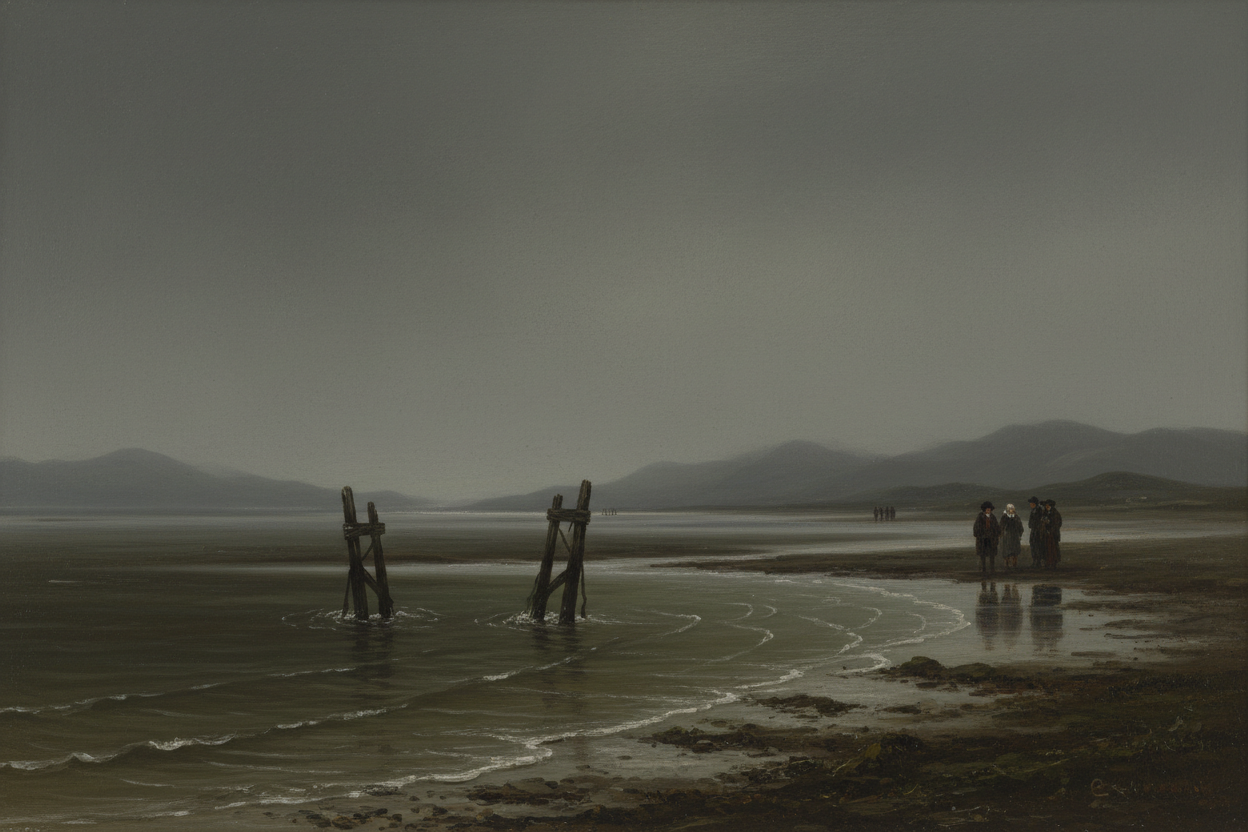
The Scottish Reformation martyrs and murders began with a lethal combination of religious certainty, state authority, and social fear. On 11 May 1685, the cold, grey waters of the Solway Firth became a site of state-sponsored cruelty that still haunts Scottish history. Two women, Margaret MacLachlan, a widow in her sixties and Margaret Wilson, a teenager of just eighteen, were led down to the mudflats. Their crime was a refusal to take the Abjuration Oath. This was a test of loyalty to the King over their own conscience.
A Choice Between Life and Breath
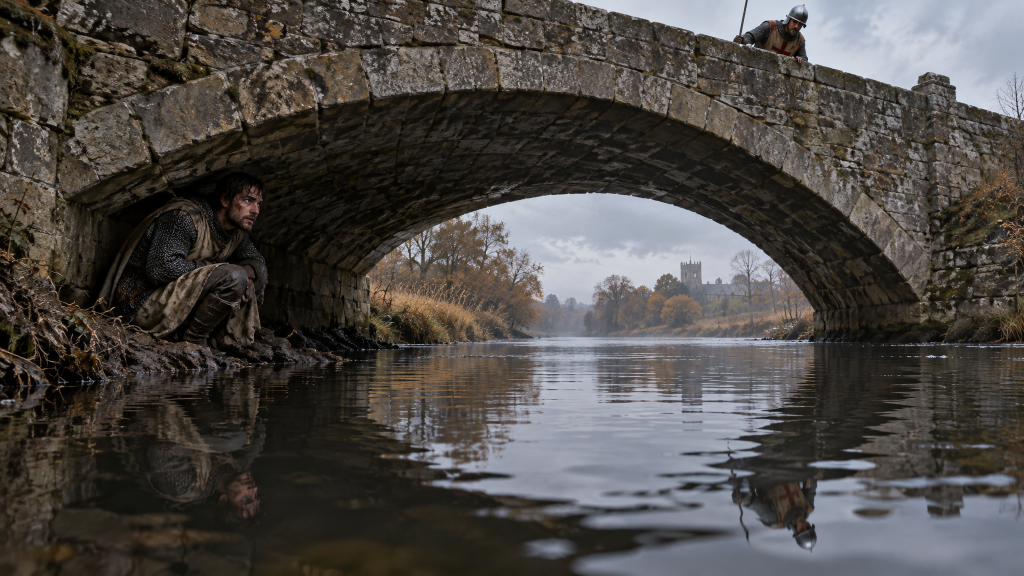
The authorities planned their deaths with clinical precision. They tied the older woman to a stake further out in the water, ensuring she would drown first. The younger Margaret was forced to watch as the tide slowly rose, swallowing her companion’s cries in a calculated attempt to break her spirit.
However, the psychological torture failed. When the water reached Margaret Wilson’s throat, the soldiers offered her one last chance to pray for the King and save herself. Her reply was devastatingly simple: “I pray for the salvation of all men; I wish the salvation of none to be lost.” She was thrust back under the waves until she moved no more.
The Cold Logic of Certainty
Importantly, the men who drove those stakes into the sand did not see themselves as monsters. They were representatives of the state, acting with the absolute certainty that they were maintaining divine law. This event illustrates the darkest side of the conflict. It shows how the intersection of religious certainty and state authority can turn a beach into an execution chamber.
Indeed, the history of Scottish Reformation martyrs and murders reveals a troubling pattern across more than a century. From early reformers like Patrick Hamilton and George Wishart, executed as heretics under church law, to later Covenanters, belief repeatedly became a reason to take life. These early deaths were not seen as murder by those in power; instead, they were framed as necessary acts to defend truth.
Authority: The Trap of the Abjuration Oath
By 1685, the state had weaponised the law through the Abjuration Oath. This lethal legal instrument required citizens to renounce a declaration of “war” against the King James VII. While it sounded like a simple test of loyalty, it was a spiritual trap. For Covenanters, taking the oath meant acknowledging the King, rather than Christ, as the head of the Church. The whole point of the National Covenant was to give people religious freedom from the Crown and State. The Abjuration Oath was a forced violation of conscience designed to identify and eliminate dissenters who would not conform to the Crown’s new religious demands.
Consequently, officers were granted summary powers to execute anyone who refused to swear the words on the spot. James Kirk was a Covenanter from Minnigaff who had been forced into hiding to avoid the government’s dragoons. In May 1685, he was eventually tracked down in the hills of Dumfriesshire after being betrayed by an informant. He was captured by soldiers led by Captain Bruce, who were patrolling the area specifically to root out those who had skipped the state-mandated church services.
However, Kirk was not taken to a prison for trial. Instead, he was brought to the town of Dumfries, where he was held briefly while the authorities decided his fate. The soldiers were under pressure to act quickly to signal that the Crown’s authority was absolute and that the hills would no longer provide sanctuary for dissenters.
The Field of Execution
On 13 May 1685, James Kirk was led out to the Sands of Dumfries. He was offered his life on the condition that he took the Abjuration Oath, swearing that the Covenanter’s declaration of war against the King was “execrable and damnable.” Kirk, driven by a religious certainty that mirrored his captors’, refused to save his life at the cost of his soul.
Importantly, the execution was carried out with brutal efficiency. Kirk was not granted a long period of prayer or a final sermon from the scaffold. Instead, he was shot by a firing party in front of the local townspeople. This represents a shift in how authority was wielded—it was no longer about proving a crime, but demanding total spiritual submission.
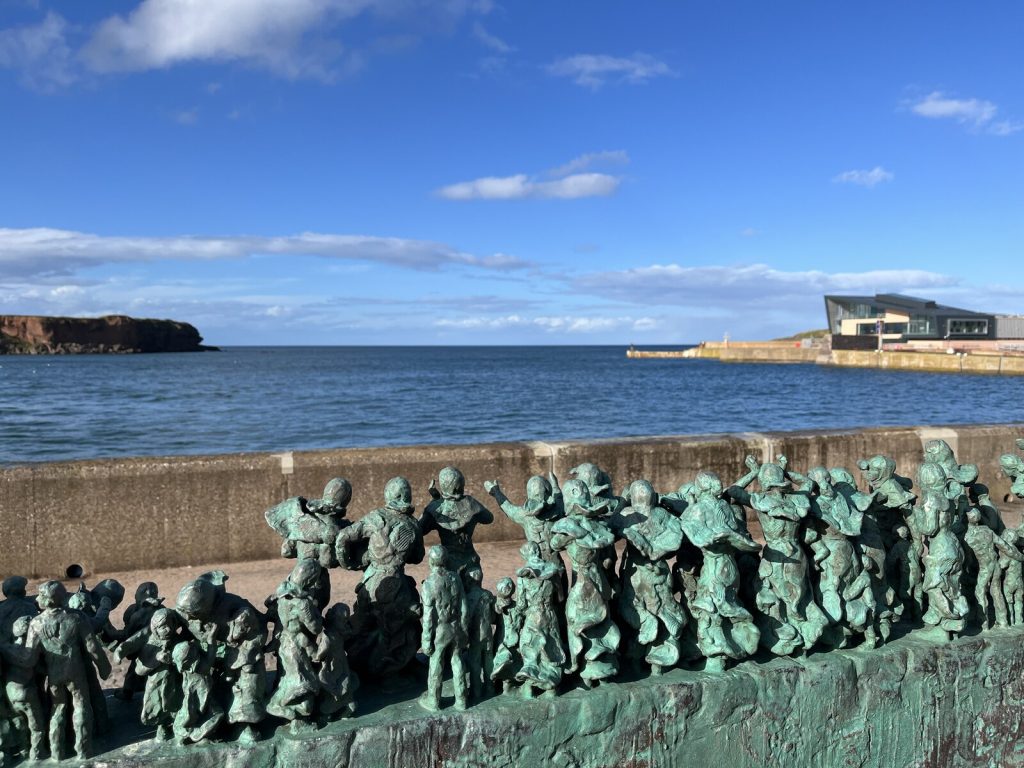
Today, his memorial in Dumfries stands as a stark reminder of that May afternoon when a man’s life was ended over a refusal to break an oath. It reinforces the theme that in 17th-century Scotland, the state did not just want your obedience—it wanted your conscience.
Fear: The Link to Scottish Reformation Martyrs and Murders
Similarly, the same religious fervour created a climate where supernatural fear became a tool of social hygiene. Between 1563 and 1736, Scotland executed approximately 2,500 people for witchcraft. The authorities believed that if they did not “purge the land” of witches and pagan remnants like the Beltane fires, the community would face divine wrath.
As a result, the victim—whether a Covenanter or an accused witch—was seen as an existential threat. The men in black who oversaw the burning of “witches” were often the same magistrates who sought to suppress the joyful May Games of the people. In this era, Scottish Reformation martyrs and murders were frequently linked to the state’s obsession with moral and social purity.
Resistance: The Rescue of James Gillon
While the state was busy shooting Covenanters in the south, the authorities in Edinburgh were attempting to crush the spirit of the city itself. In May 1561, the magistrates sentenced James Gillon, a shoemaker’s servant, to be hung for the “crime” of celebrating the May Games. He was a scapegoat, chosen to prove that the new, dour order of the Reformation could suppress the ancient Beltane traditions of the “common horde.”
However, the magistrates underestimated the Edinburgh mob. On the day fixed for Gillon’s execution, the city did not watch in silent fear. Instead, they rose in a calculated riot. A section of the crowd trapped the Provost and Bailies inside a shop. Meanwhile, others marched to the City Cross and physically dismantled the gallows.
Hammers Against the State
The mob then descended upon the Tolbooth, where Gillon was held. When the jailers refused to produce the keys, the people did not retreat. Armed with hammers and sheer fury, they smashed their way through the massive prison doors. Gillon was pulled from his cell and set free before the noose could ever touch his neck.
Importantly, this was more than a jailbreak. It was a direct rejection of the Reformers’ “Certainty.” The people were signalling that while the state might claim authority over heaven, it did not have absolute authority over their festivals or their lives. For five hours, running battles turned the High Street into a war zone, yet the people held their ground.
The Limit of Fear
Thus, James Gillon’s story provides a necessary counterpoint to the martyrs. It proves that state-sponsored fear only works as long as the populace remains passive. By rescuing a man who had done nothing more than take part in the May fun, the Edinburgh mob exposed the fragility of the magistrates’ control.
The Legacy of Contested Memory
Finally, the murder of Archbishop James Sharp on 3 May 1679 showed that fear could lead to insurgent violence. Sharp was a former Presbyterian minister who had exchanged his faith to become the Episcopalian Archbishop of St Andrews. His killers, led by David Hackston and his brother-in-law, John Balfour of Kinloch. They believed they were executing an apostate and a traitor to God’s Covenant. They dragged him from his carriage at Magus Muir and executed him in front of his daughter.
Meanwhile, the state viewed it as a barbaric assassination.
Two of the nine involved in the assassination were captured and executed.
The Chains of Magus Muir
On 25 December 1679, the state’s demand for total submission claimed five more victims. These were Thomas Brown, James Wood, Andrew Sword, John Weddell, and John Clyde. They had been captured months earlier at the Battle of Bothwell Bridge. Although they were not personally involved in the assassination of Archbishop Sharp, they were executed as part of a collective punishment for his death.
The authorities offered them mercy if they would identify those responsible for the murder. Consistent with the logic of Scottish Reformation martyrs and murders, they refused to betray their brethren. Consequently, they were hanged at Magus Muir, the site of Sharp’s death, as a display of state vengeance. Their bodies were left hanging in chains for nearly a decade, a rotting reminder of the price of silence, only being removed when James VII fled the country in 1688.
The assassination of Archbishop Sharp proves a critical historical point. Once a society accepts the principle of “killing for truth,” no one is safe. The certainty that justifies the stake also justifies the dagger.
Today, the study of Scottish Reformation martyrs and murders raises an uncomfortable question. If both sides believed they were right, what actually separates martyrdom from murder? The memorials scattered across Scotland remind us that the most dangerous weapon in history is often a person who is both powerful and absolutely certain they are right.