Ancient Scottish folk magic was never a distant myth; it was a living, breathing system of survival that eventually became a death sentence for many. During the witch trials of the sixteenth and seventeenth centuries, the testimony of the accused—most famously Isobel Gowdie in 1662—provided a rare, dark window into the charms and rituals used by ordinary people. These trials transformed the everyday folk practices of the working-class people into evidence of diabolical pacts. However, the “magic” described was often rooted in much older Celtic traditions of protection, healing, and in some cases harm.
Folklore Revival
The Scottish Witch Trials grew out of the Scottish Protestant Reformation. At this time, Scotland was still a country of two parts- The Gaelic Speaking Highlands and Islands and the Scots Speaking Lowlands. In the Highlands, Fairy Faith was strong and accepted. The Highlanders did not see anything sinister in the practice of folk magic. As a result, there were far fewer Witchcraft cases. On the other hand, in the Lowlands where Presbyterianism was embraced with a fanatical fervour, people practicing folk magic and using charms were viewed more suspiciously. The resulting witch trials resulted in a whole belief system being almost lost from the East of Scotland forever.
However, during the 19th and beginning of the 20th Century there was a folklore revival which saw many scholars and ministers recording the folklore and folk magic of the Gaels. Alas, most of the folklore of the east was lost with small gleanings gathered from the Witch Trials. By grouping these threads together, we see how much the ‘confessions’ of figures like Isobel Gowdie align with the survival of those beliefs in the Highlands and Islands.
Who was Isobel Gowdie?
Isobel Gowdie was an accused ‘witch’ brought to trial on the 13th April 1662, in Auldearn, Nairnshire. Folk magic was the primary focus of Isobel’s 1662, which blended standard witchcraft tropes with remarkably vivid, personal details. While many of her admissions followed typical patterns of maleficium, such as attempting to destroy a neighbour’s crops, other elements were entirely unique to her account. She described a “puddock (frog) plough” used to ensure only thistles would grow, and she provided meticulous details on kneading clay effigies to the consistency of rye meal. These figures were crafted with “little lips” and folded hands before being consumed by fire. Such specific imagery suggests that her testimony was not merely a product of interrogation but was rooted in her own imaginative or lived experiences.
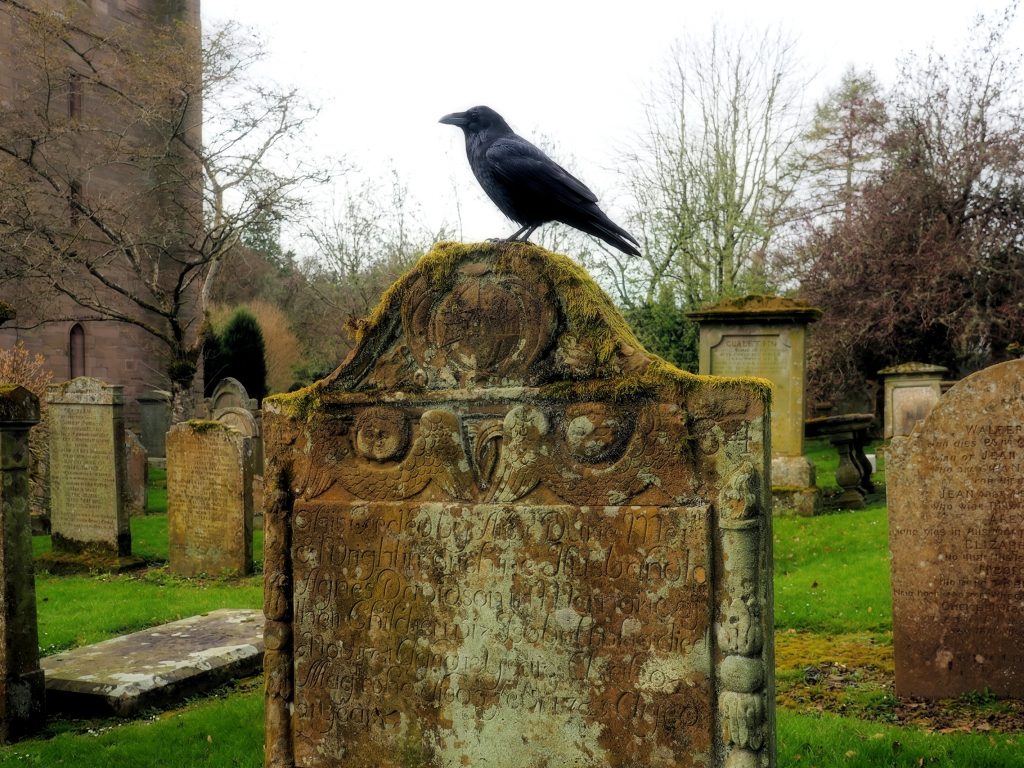
Furthermore, Isobel’s narrative delved into the supernatural realms of fairy lore and traditional Scottish charms. She claimed to have feasted under Downie Hill with the fairy king and queen, even expressing a grounded fear of “water bulls” found within the mound. Her more fantastical claims included transforming into a crow to steal food or flying through the air on charmed corn straws. In addition to these feats, she recounted twenty-seven unique charms for healing fevers and broken bones. Consequently, her testimony represents a complex tapestry where local folklore, demonological stereotypes, and the role of the “wise woman” merged into one of Scotland’s most haunting historical records.
Where had Isobel Gowdie’s Folk Magic originated?
Ancient Scottish folk magic is a belief system that evolved from Neolithic times through the Picts, Gaels, and Brythonic cultures. This complex web of spirituality was never a single, static religion. Instead, it was a living tradition that changed to meet the needs of each passing era. When the Vikings and Anglo-Saxons arrived, they brought their own myths, which layered over the existing Celtic foundations. Later, the arrival of Christianity did not simply erase these older ways. It forced them to adapt, often veiling pagan practices under a thin veneer of the new faith.
Many pagan beliefs were hidden in plain sight during this transition. Powerful deities were often downgraded to saints, such as the goddess Bride becoming Saint Brigid. Others were demonised, with figures like the Cailleach or Nicnevin transformed into hags or witches in the popular imagination. Guardian spirits that once protected the land were rebranded as the fairies or Sìthichean. Even the modern “Wheel of the Year” is a recent invention that overlays ancient farming festivals with solar events like the solstices. This framework now allows those seeking a connection to nature to find a balanced outlook on the seasons.
The Witch Trials: Isobel Gowdie and the Fossil Priestesses
Ancient Scottish folk magic became a matter of life and death during the witch trials of the sixteenth and seventeenth centuries. The testimony of the accused provided a rare window into the rituals used by ordinary people. Most famously, Isobel Gowdie’s 1662 confession revealed a world of rhythmic, poetic incantations. She described a belief in theriomorphism, where the soul could take animal form. Gowdie claimed she could transform into a hare to steal the “substance” or toradh of her neighbours’ milk. While the courts saw this as a diabolical pact, it was actually a survival of much older animist traditions.
These “witches” were likely the fossilised remains of an ancient, matriarchal priesthood. Research by J.G. McKay suggests that a pre-Celtic Deer Cult once dominated the Highlands, administered exclusively by women. In this system, the deer were not merely game but “fairy cattle” owned and milked by gigantic Deer Goddesses. These Goddesses likely included the Cailleach and her eight hag sisters. When society shifted from matriarchy to patriarchy, these priestesses were rebranded as witches. Their “quarrels” with hunters in folklore represent a historical break with tradition. Hunters began to refuse the ancient requirement to share their venison with the official representatives of the goddess.
The Reformation and The Scottish Witch Trials
The Reformation in Scotland was marked by a significant shift in religious beliefs and societal norms. The establishment of the Presbyterian faith, which emphasized the fight against perceived evil, including witchcraft, contributed to a cultural backdrop where suspicion and accusations could flourish. The Protestant Church saw itself as a moral guardian, and the persecution of witches was often justified as necessary to preserve society’s purity and piety. The Scottish witch hunts were particularly brutal compared to other European countries, with higher execution rates. King James VI, who ruled Scotland from 1567 and later became James I of England, played a significant role in fostering the witch hunts.
His treatise Daemonologie, published in 1597, argued for the reality of witchcraft and the necessity of rooting out witches. The text legitimised the persecution and shaped public and legal attitudes towards suspected witches. His personal involvement in the North Berwick witch trials of 1590-91, where he interrogated accused witches himself, set a precedent for the acceptance of witch hunts as a justified endeavour. The influence of his ideas continued into the 17th century, creating an environment where witch trials were seen not just as judicial processes, but as religious and moral crusades.
Suffering and Loss of Folk Magic
The reality of these trials was often defined by extreme physical suffering. Authorities used harrowing instruments of torture to extract confessions from the accused. The “Witch’s Bridle” was an iron frame locked over the head with prongs forced into the mouth to prevent speech. Other victims faced the “pilliwinks,” which were designed to crush the fingernails, or the “boots” that shattered the legs. These brutal methods transformed traditional folk practices into evidence of heresy. They turned the simple act of healing or protection into a crime punishable by fire.
Perhaps it is little wonder, given the persecution the accused ‘witches’ suffered that people were less keen to follow the old ways that included folk magic. In time, large portions of this knowledge was lost.
The power of the spoken word and the secret name
Folk magic in ancient Scotland was rooted in the immense power of the bricht, or the ceremonially spoken word. This was not merely speech but a vessel for ritual intent that could cause gonadh (wounding) or eolas (healing). Isobel Gowdie’s 1662 confessions provide a famous example of this, as they are filled with rhythmic, poetic incantations. Her charm for transforming into a hare, “I shall go into a hare, with sorrow and sych and meikle care,” illustrates the belief in theriomorphism. While the courts viewed this as a pact with the Devil, folklorists like George Henderson recognise it as a survival of the belief that the soul could inhabit animal forms. Witches allegedly used these transformations to steal “substance,” such as milk from a neighbour’s cattle, which was a major source of rural anxiety.
The Power of the Name
Ancient Scottish folk magic also taught that the soul resided partially within a person’s name. Consequently, naming was a vital component of many charms and carried a heavy geas, or taboo. For instance, it was considered dangerous to wake someone from a nightmare without calling their name first to summon the wandering soul back to the body. This belief extended to holy figures like Saint Columba, whose birth name, Crimthann (meaning “Wolf”), was kept hidden to shield him from magical attacks. The practice of togail an ainm, or raising the name, involved naming children after deceased ancestors to keep that ancestral soul alive within the family lineage.
Transmission of Healing Knowledge
Folk magic required strict traditional rules for the transmission of charms to maintain their potency. Healing knowledge, such as Gowdie’s charms for “stanching” blood or curing fevers, often had to pass between opposite genders. If a man taught a charm to another man, the magic was believed to fail. This structured exchange ensured that sacred knowledge, like the use of St John’s Wort, remained effective. This herb was known as the “armpit package of Columba” because it was traditionally carried under the left arm for protection. These rituals, which mirror those found in W. Mackenzie’s Gaelic Incantations, created a balanced web of practitioners who managed the spiritual health of their communities.
Blood, envy, and the magic of envy
Ancient Scottish folk magic viewed blood as the primary seat of the human soul. This led to the sacred fuil-falachd, or blood-covenant, where unbreakable bonds were forged through the drinking of blood. Even the simple act of spitting on hands before a clasp was a way to transfer “soul-force” to seal a bargain. Saliva was believed to retain healing properties because it carried a person’s essence. Consequently, wounds sealed with spit were thought to heal faster, as the life-force of the healer was physically applied to the injury.
The mechanism of the Evil Eye, or cronachadh, was a constant source of dread in rural life. Ancient Scottish folk magic taught that envy was a literal force capable of “breaking the stone.” When a person looked upon a neighbour’s cattle with covetous desire, the animal became teumte (bitten) or ghonadh (stabbed). This was not always a conscious act of malice; sometimes, even a well-meaning compliment could trigger the affliction. To prevent this, visitors were expected to follow any praise with a blessing, such as “Beannachd Dé ort” (God’s blessing on you).
Protective rituals were often visceral and practical in their application. To shield livestock, practitioners would “nick” the ear of a calf to draw a small amount of blood. This minor wound served as a prophylaxis, based on the logic that the Evil Eye had already drawn blood and could do no further harm. For those already afflicted, “silver water” (bùrn airgid) was the primary cure. This required water drawn from a “dead and living ford” where funeral processions and the living both crossed. Silver coins were placed in the vessel to neutralise the envy before the water was sprinkled on the victim.
Image magic and sympathetic healing
Ancient Scottish folk magic often utilised the River, or clay body, to enact justice or revenge. This was a form of sympathetic magic where a likeness of an enemy was fashioned from clay and stuck with pins. J. Ferguson’s notes on witchcraft literature highlight the 1677 Pollok bewitching case, where such images were found hidden in the homes of the accused. As the clay dissolved in a running stream, the victim’s health was expected to waste away in “sharp pangs.” The principle was “like things produce like things,” and the destruction of the effigy was the destruction of the man.
This practice was continued in Sutherland and Ross well into the nineteenth century. The only way to break the spell was to find the image and remove the pins before the clay fully disintegrated. This connection between the physical object and the living person demonstrates the belief that the soul was not confined to the body but could be manipulated through external tokens and effigies. Henderson also describes “turning the heart in lead” (cridhe luadhainn), where molten lead was poured through a door key into cold water. If the lead formed a heart shape, the patient’s heart would heal, showing that sympathetic magic could be used for restoration as well as ruin.
Healing Stones
Small, painted quartzite pebbles represent another fascinating branch of this tradition. Around 50 of these “charm stones” have been found on Iron Age and Pictish sites, decorated with soot in curvilinear designs. Adomnán’s Life of Columba mentions a similar white stone taken from the River Ness. The saint blessed the pebble, and it miraculously floated in water which, when drunk, healed the pagan Pictish king Bridei. However, whenever a person was destined to die, the stone would vanish, proving that the magic of the land was tied to the fate of the soul.
The sacred landscape: wells, caves, and rivers
Ancient Scottish folk magic was deeply tied to the geography of the land, particularly “liminal” spaces like doorways, fords, and holy wells. J.M. Mackinlay’s work on Scottish lochs and springs reveals that these sites were gathering points for both healing and prophecy. At St. Tredwell’s Loch, the water was said to turn red before a calamity struck the Royal Family, while the Dow Loch required pilgrims to leave offerings of clothing and walk “deiseal” (sunwise) to ensure a cure. The deputy would throw the invalid’s clothing over his left shoulder into the loch and carry the water home without letting it touch the ground or speaking a single word.
Rivers
Rivers were also seen as living, divine entities with their own distinct personalities. The two largest Aberdeenshire rivers, the Don and Dee, appear in ancient records as Dēoúana (the quintessentially divine one) and Dēoúa (goddess). Adomnán even refers to the River Lochy as the “Black Goddess” (Nigra Dea), suggesting that the landscape was populated by female divinities. These rivers were not just sources of water but were respected as powerful spirits that could provide or withhold life. This belief in the “sacred dimension” of the natural world meant that mountains, hills, and rivers were often treated with divine honours before they were exploited for human needs. Some of the folktales concerning the Rivers Spey and Ness might hint at river goddess belief.
Caves
Ritual spaces like the Sculptor’s Cave and Rosemarkie Cave show how the Picts used the earth for transformation. These caves were decorated with symbols and used for metalworking, which was itself considered a ritualised and almost magical process. At Rosemarkie, a violently killed man was buried next to food offerings, suggesting the cave was a site for powerful, perhaps dark, rites. Similarly, at elite centres like Rhynie, metalworking tongs and animal bones were thrust into postholes as part of a “ritualised closure.” These acts materialised the strength of the community and sought to bring good fortune through the careful management of the landscape.
Water spirits and seasonal sacrifices
Ancient Scottish folk magic often centred in the liminal places where land and water met. On the Isle of Lewis, islanders maintained a long-standing tradition of brewing ale for a Hallowtide sacrifice to Seonaidh, a sea god. A man would wade into the dark water at night, offer the cup, and beg for seaweed to fertilise the fields for the coming year. This ritual shows how pagan worship endured in remote areas, even under the watchful eyes of the church. Elsewhere, young women raced to the village well on New Year’s morning to draw the “cream of the well,” a charm believed to secure luck in love and a handsome husband.
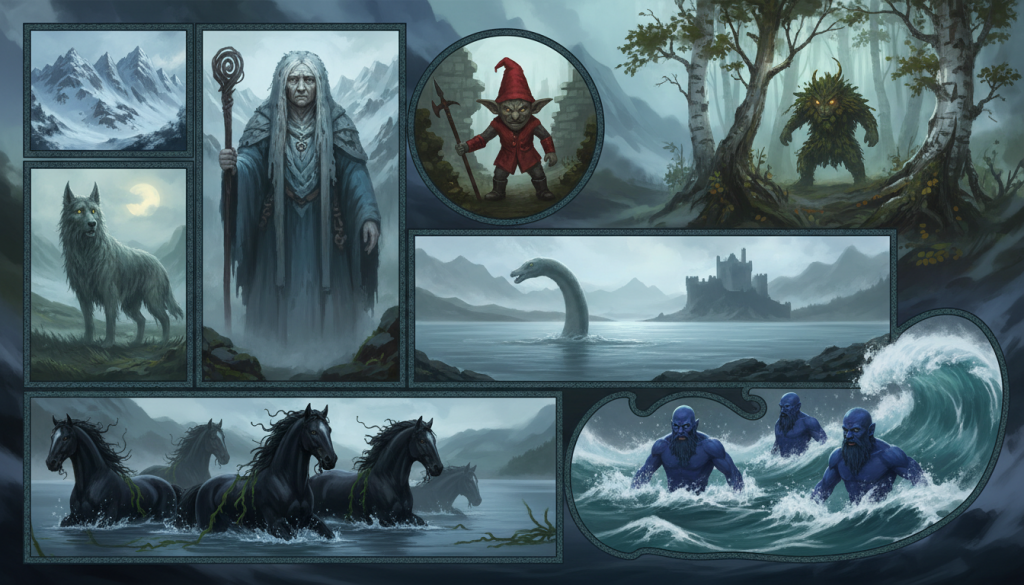
The landscape was also home to dangerous, shape-shifting spirits that required constant vigilance. The Boobrie was a triple-natured water spirit that could appear as a monstrous bird, a water-horse (each-uisge), or a water-bull. These creatures represented the lethal nature of the water’s edge, a liminal threshold. To protect against such spirits, rituals often demanded absolute silence and sunwise (deiseal) movement. At the Dow Loch, near Loch Drumlanrig, a deputy would throw an invalid’s clothing over his left shoulder into the water. He then had to carry the healing water home without looking back or speaking, as any break in the ritual would spoil the charm.
Loch Maree
Sacrifice remained a hidden but potent part of the agricultural calendar for centuries. Kirk records from the seventeenth century reveal that bulls were still being sacrificed to “Saint” Maelrubha on his island in Loch Maree. This was a Christianised version of an ancient animal sacrifice to a water deity, showing how pagan and Christian layers were often entwined. These rites were designed to bring good fortune to the community and protect the cattle from disease. They prove that the practical needs of the farming year often outweighed the strict doctrines of the kirk, keeping the old magic alive in the shadows.
Ancestors, Animism, and the Deer Goddess
Folk magic in ancient Scotland was rooted in an animist worldview in which every hill, stream, and stone possessed its own spirit. Deities were not distant beings but were the physical forces themselves; thunder was Taranis, the wind was a living presence, and the land was understood as a relative. Each clan held a unique bond to the spirits of its territory, which shaped their identity and ritual practices.
One of the oldest traces of this belief system is the Deer Goddess: a prehistoric female figure associated with fertility, seasonal cycles, and the deep connection between humans and animals. Her memory survives in tales of the Glaistig—a woman with a “fairy” nature—who may echo the priestesses that once wore deer hides and antlers during sacred rites. Similar imagery appears in the prehistoric “Sorcerer” engraving from Grotte des Trois Frères in South-West France, showing a humanoid figure in stag form. These alternating deer‑woman motifs preserve cultural memories of a time when women held ritual authority over the hunt and mediated between human and animal worlds.
The Cailleach as Heir to the Deer‑Cult Traditions
In folk tradition, many of the Deer Goddess’s roles appear within the lore of the Cailleach. While not explicitly identified as the Deer Goddess, she shares key attributes: she is the guardian of horned beasts—deer, cattle, and bulls—and decides when hunters may succeed or when prey slips into the protection of the Sidhe. Her presence governs the natural cycle, shaping the landscape, the seasons, and the harshness or mercy of winter. This continuity suggests that older deer‑cult beliefs were absorbed into her mythic framework as Christianity spread.
Her influence can be traced through the folk calendar. Samhuinn marked her return to full strength, initiating winter, the culling season, and the final harvest. Lúnastal preserved her agricultural role through the corn‑doll tradition: the last sheaf harvested became the “Cailleach,” housed by the final reaper until ploughing resumed. Through winter storms, shifting weather, and the ebb of daylight, she remained the embodiment of the land’s necessary dormancy.
Seasonal Cycles and the Shifting Power of the Cailleach
The Cailleach’s role is visible in the storms of late winter—sometimes referred to as the “Cailleach storms”—which may last several weeks. These marked the fading of her winter authority and the gradual arrival of the “big sun” of summer. Beliefs differed on when her power broke: some placed it at Imbolc, others at the Spring Equinox, and others still at Beltainn. These traditions emphasise her role as the essential force behind winter’s retreat.
Her presence also appears in harvest and midwinter traditions. Bull hides scorched at Hogmanay for household luck recall her chthonic associations and her ancient ties to horned animals. Likewise, the Cailleach’s connection to gorse, broom, yew, and blackthorn reflects her influence over frost, storms, and liminality—periods when folk practitioners looked to her as a force governing both danger and protection.
Symbols, Animals, and the Natural Powers of the Cailleach
In folk magic, the Cailleach embodies the raw forces of nature. She is tied to mountains, glens, wells, lochs, and the sea; to storms, frost, and winter winds; and to creatures such as deer, cattle, goats, wolves, geese, owls, and fish. Her association with milk, seaweed, wild garlic, and salmon appears frequently in folk tales, hinting at ancient offerings linked to seasonal survival.
She also governs aspects of life and death: the midwife, the healer, the keener, and the washer of bodies fall under her remit. These roles reinforce her status as a figure who bridges the living and ancestral worlds—guiding, protecting, and teaching rather than merely destroying. In this sense, she occupies the same conceptual territory as the Deer Goddess, continuing traditions of feminine sovereignty, animal guardianship, and the cyclical power of the land.
Examples of old Folk Magic Practices and Belief
The “Flower of the Well”
This was the first scoop or “cream” of water drawn from a spring at dawn on New Year’s Day. Young women raced to reach the well before anyone else, believing that whoever obtained the flower of the well would gain good fortune, beauty, and marital success in the coming year. It is a survival of water worship, where wells were seen as sentient and capable of granting blessings.
The Fath Fith: A Charm for Invisibility
The fath fith was an old Gaelic charm that allowed a person to pass unseen. It did not make the practitioner literally invisible; instead, it clouded the perception of anyone looking at them. The saintly version of the charm appears in the story of St Patrick approaching King Loegaire—the king saw “a herd of deer” rather than men. Hunters and travellers used the charm to move safely and unnoticed through dangerous territory.
The Sixpence in the Bridegroom’s Shoe
This is the protective counter-charm against the magical “knots of impotence.”
In the Hebrides and West Highlands, a maleficent practitioner could tie three running knots in a cord at the exact moment the priest said Ego te conjungo (“I join you”) during a wedding ceremony. The knots would ensure the bridegroom could not consummate the marriage. The only defence was:
to stand at the altar with one shoe untied,
and a crooked sixpence beneath the foot.
The loose shoe and silver coin symbolically broke the binding power of the knot magic. Silver was sacred, and its presence prevented the curse from taking hold.
Rowan Branches Over the Byre Door
The rowan tree (caorann) was the most powerful protective tree in Scottish folk tradition. Its red berries and five‑pointed seed stars were symbols of life and luck. Farmers placed rowan over byre doors to guard cattle from the Evil Eye, milk theft by witches, misfortune, and fairy interference. A rowan switch was also used to stir milk or butter to keep malign forces away from dairy products—one of the most common targets of folk magic.
The end of the era: the last execution
Scottish folk magic faced its final, official confrontation with the law in the early eighteenth century. The tragic story of the last witch execution in Scotland took place at Dornoch in 1722. Janet Horne, an elderly woman, was accused of turning her daughter into a pony to ride her to a witches’ meeting. By this time, the legal system was beginning to move away from such superstitions, yet local fear remained potent. Janet was reportedly so confused by her “fatuous” state that she did not understand her fate. She even held out her hands to warm them at the very fire lit to burn her.
This execution marked the end of a dark chapter, but the beliefs themselves did not vanish overnight. Instead, the “sacred dimension” of the landscape was slowly restricted to meet human needs as the industrial age approached. The hills and rivers that were once worshipped as goddesses were now seen as resources to be exploited. However, the transition was never complete, as rural communities clung to their protective charms for generations. The fear of the Evil Eye and the respect for the “Mighty Dead” continued to influence daily life long after the last gallows were dismantled.
Shift from Folk Magic
The shift from a magical worldview to a scientific one was a slow and uneven process. While the courts no longer accepted clay bodies as evidence of murder, the people still whispered of the Sìthichean in the glens. The forbidden spells of the witch trials were driven underground, becoming the “superstitions” of the Victorian era. Yet, these practices were the final echoes of a belief system that had sustained the people of Scotland for thousands of years. They represent a time when the world was fully ensouled and every action was governed by the careful management of the supernatural.
Enduring Echoes of Scottish Folk Magic
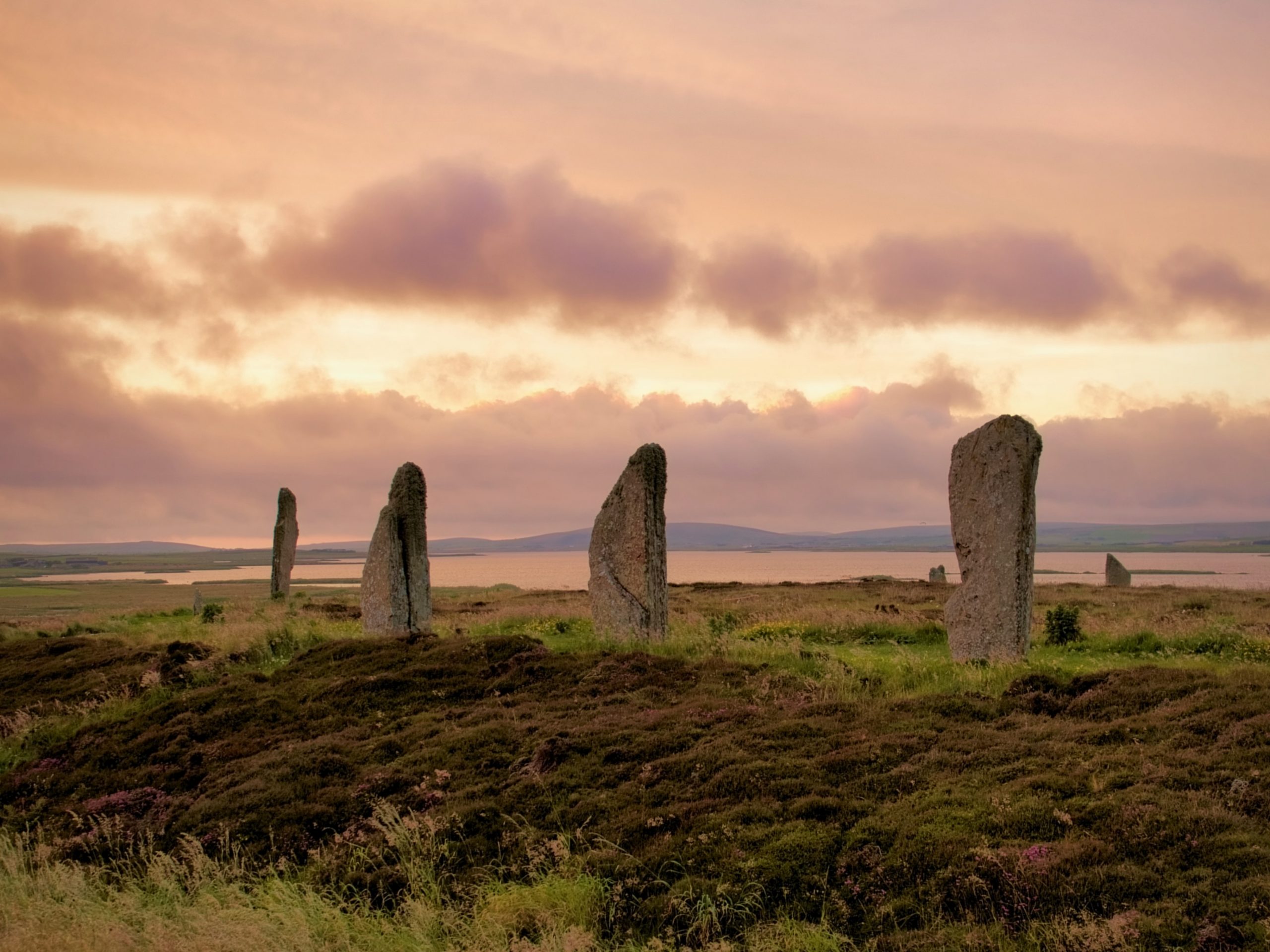
Scottish folk magic remains woven into the fabric of the landscape. Many hills, corries, and lochs are named after ancient deities such as the Cailleach, whose presence shaped storms, mountains, and the turn of the seasons. The country is filled with remnants of old rites: wells once prized for healing, standing stones aligned with the solstices, and place-names that preserve long‑forgotten spirits.
The mystery of the Scottish spirit world continues to inspire our imagination and our history books. The landscape was a place governed by charms, taboos, and the careful observation of the sun’s path across the sky. The folk magic of our ancestors may have been silenced by the kirk and the court, but its essence remains. It is a testament to the resilience of human belief and the deep, enduring connection between the people of Scotland and their sacred land.
Further Reading:
Scott Richardson-Read’s ‘Mill Dust and Dreaming Bread’ is a great place to begin.
Sources:
Survivals in Belief Among the Celts – George Henderson, Ph.D. (1911)
Evil Eye in the Western Highlands – R. C. Maclagan, M.D. (1902)
Gaelic Incantations, Charms and Blessings of the Hebrides – W. Mackenzie (1895)
Bibliographical Notes on the Witchcraft Literature of Scotland – J. Ferguson, LL.D. (1897)
Celtic Mythology and Religion – Alexander Macbain, M.A. (1885)
Folklore of Scottish Lochs and Springs – J. M. Mackinlay, M.A. (1893)
History of Paganism in Caledonia – Thomas A. Wise, M.D. (1884)
The Deer-Cult and the Deer-Goddess Cult of the Ancient Caledonians – J. G. McKay (1932)
Picts: Scourge of Rome, Rulers of the North – Gordon Noble and Nicholas Evans (2022)
Cailleachs Herbarium. Scott Richardson-Read. “The Good, the Dead and the Fairy: Animism and Ancestors in Scottish Folklore.” https://cailleachs-herbarium.com/2015/12/the-good-the-dead-and-the-fairy-animism-and-ancestors-in-scottish-folklore/