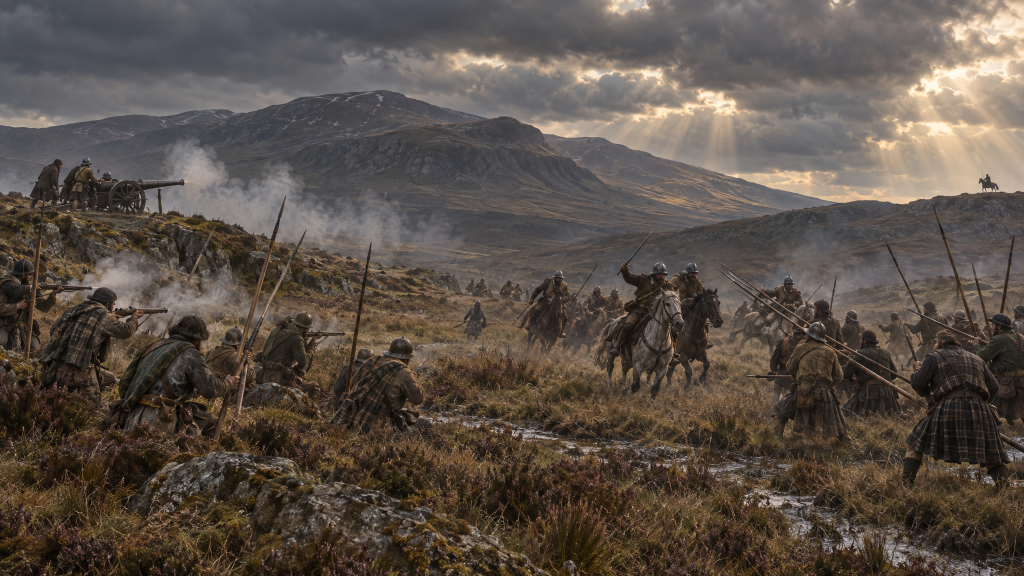
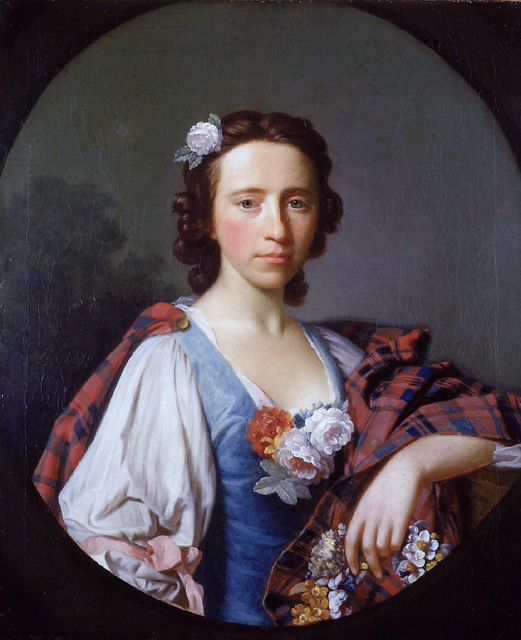
Flora MacDonald stepped into history on a stormy night in June 1746. After his army was crushed at the Battle of Culloden on 16 April, Charles Edward Stuart — Bonnie Prince Charlie — was a fugitive. A £30,000 price hung over his head. By late April, he and four companions had fought through wild weather to reach the island of Benbecula in the Outer Hebrides. It was there that Flora agreed to help.
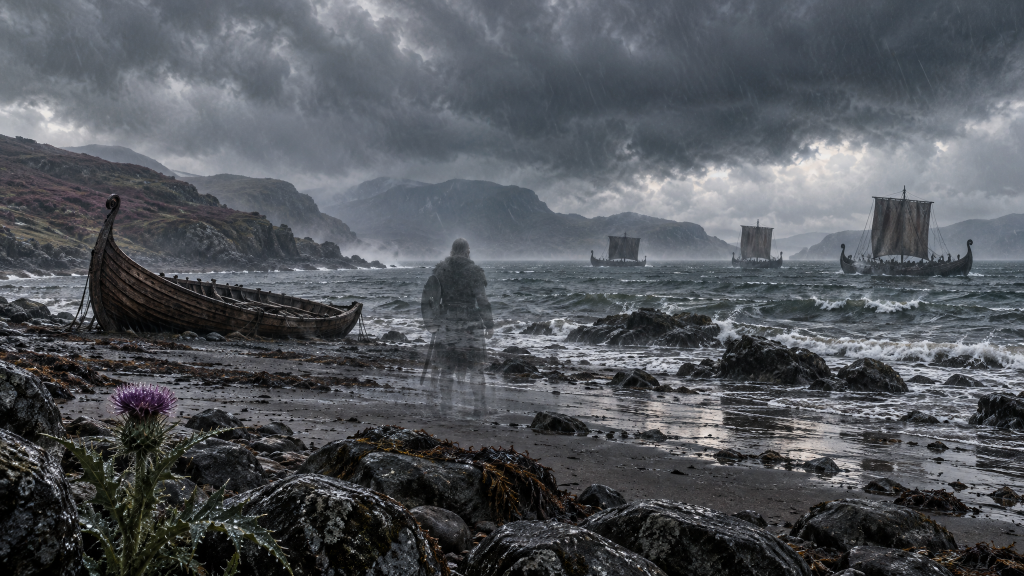
Her plan was bold. She would smuggle Charles to the Isle of Skye disguised as her Irish serving maid, “Betty Burke.” The crossing was dangerous — government troops were searching the islands. Nevertheless, they made it. Charles reached Skye, and from there, he eventually escaped Scotland for good. He sailed from near Arisaig on 20 September 1746 aboard the French frigate L’Heureux — never to return.
An Unlikely Heroine
Flora was born in 1722 on South Uist. After her father’s early death, she was raised under the protection of the chief of Clan MacDonald of Clanranald. However, she was no natural Jacobite rebel. She was a Presbyterian, and her support for the Stuart cause was far from certain.
When she was first approached to help the prince, she refused. She feared her clan chief would face punishment if the plan was discovered. Ultimately, though, she agreed — and her reasons were telling. When later questioned by the Duke of Cumberland, she told him plainly that she would have done the same for him, had he been in Charles’s position. Hers was an act of compassion, not politics. That distinction matters. It sets her apart from the romantic legend that later grew around her name.
Arrest and Imprisonment
Flora was arrested on 12 July 1746, just weeks after the escape. She spent a year in captivity; first aboard a ship, then under house arrest in London. Remarkably, her imprisonment only increased her celebrity. London society was fascinated by her. She received visits from admirers and was treated, by some accounts, more like a curiosity than a criminal.
She was released in 1747 under the Act of Indemnity. Consequently, she returned to Skye — her reputation, far from ruined, had been transformed. She was already becoming a legend.
Life After the Escape
Back on Skye, Flora married Allan MacDonald of Kingsburgh in 1750. In 1773, the writer Samuel Johnson visited her during his famous tour of the Hebrides with James Boswell. Johnson was clearly moved. He later wrote warmly of her courage and character.
The following year, Flora and Allan emigrated to North Carolina. However, peace again eluded her. The American War of Independence broke out, and Allan fought on the British side. He was captured and imprisoned. Flora, therefore, returned to Skye in 1779 and waited out the war. Allan eventually joined her.
Flora died on Skye in 1790, aged 68. She was buried at Kilmuir cemetery. The tribute Johnson composed for her memorial remains one of the finest short eulogies in Scottish history:
Her name will be mentioned in history and if courage and fidelity be virtues, mentioned with honour.
The Skye Boat Song — and Outlander
The romantic myth around Flora and Charles found its most enduring expression in the Skye Boat Song. Written by Sir Harold Boulton and set to a traditional Gaelic lament, it was published in 1884. The lyrics immortalise the crossing:
Speed bonny boat like a bird on a wing, / Onward the sailors cry. / Carry the lad that’s born to be King, / Over the sea to Skye.
Robert Louis Stevenson reworked the song and added his own lyrics. These are less well-known. However, it was his lyrics which were reworked to became the iconic theme tune to the TV series Outlander. Arranged by Bear McCreary with vocals by Raya Yarbrough, it introduced the Jacobite story to an entirely new global audience. However, it was Griogair Labhruidh’s later Gaelic-language recording of the theme that many felt captured the true spirit of the song, restoring the haunting quality of the original lament.
Furthermore, Outlander has driven a significant surge in tourism across Scotland as a whole, bringing visitors in search of landscapes, castles, and the Jacobite history that Flora MacDonald helped shape. In that sense, her story is still doing what it always did — drawing people in.