Friday the 13th in Scotland is a date often shrouded in deep-seated dread and ancient superstition. While many people today avoid travel or major decisions on this day, the origins of this fear are frequently misunderstood. In truth, this “unlucky” date was once considered a period of immense spiritual power before it was vilified by history.
During 2026, we will experience a rare triple occurrence of Friday the 13th in February, March, and November. This represents the maximum number of these events possible in a single calendar year. Consequently, for the truly superstitious, 2026 maxes out the “bad luck quota.” Hopefully, your own luck will not match the betrayal suffered by the Knights Templar in 1307.
Friday the 13th 1307
As day was breaking on Friday 13th October 1307, troops descended on every Knights Templar Commandery in France. Some 15,000 men were arrested and bound in chains. This was just the beginning of the horror that was about to unfold on these crusading soldier monks who had thrived during the twelfth century. Accusations of heresy would later lead to torture at the hands of inquisitors and ultimately death. All of this was instigated by a man who owed his life to the Templars.
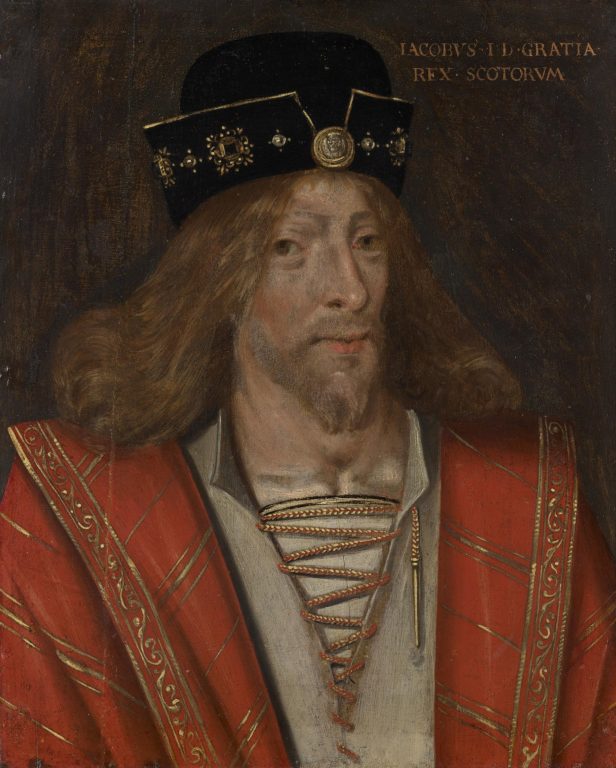
Philip IV of France was massively in debt. War with England had emptied his coffers. At first, he tried to solve his money problems by banishing the Jews from French territories so he could seize their assets. Then he expelled the Lombard bankers and expropriated their property. His eyes then turned towards the church with their extensive properties and expensive relics. As a result, he found himself embroiled in an argument with Pope Boniface VIII and tried to have the Pontiff arrested. Boniface escaped but died soon after.
Inside the Paris Preceptory
This opened the way for Philip to install his own man as head of the church and Pope Clement V has duly appointed and installed in Avignon, an enclave surrounded and controlled by French territories. Philip might have had the Pope in his pocket, but his debt had destabilised the French economy, the poor were suffering and someone must pay. Riots broke out in Paris, and the king, fleeing for his life sought refuse at the Templars’ Paris Preceptory.
Losses in the Holy Land had put pay to the Templars’ crusading days and they had turned their hand to banking which they did with great success. Such was their success, that they could give substantial loans to none other than Philip, ‘Roi de France!’ Within the walls of the Preceptory, the beleaguered king eyed their treasure and rubbed his hands with glee in anticipation of completing the next plan he was hatching to rid himself of debt. It was time for Clement to pay back the debt he owed the king and at Philip’s command, the Pope disbanded the Knights templar.
Escape prior to Friday the 13th
However, the plan backfired. Somehow the Templars got wind that something was amiss. While carrying out the arrests, Philip’s men discovered that the treasury was empty. Furthermore, the Templar Fleet at La Rochelle, had set sail at midnight, the night before and their destination was unknown.
Where would the fleeing Templars escape to? The hand of the Pope stretched across Europe with one exception: Scotland. Robert the Bruce had killed the Red Comyn before the altar in Greyfriar’s Church, Dumfries, an act which would result in his excommunication. Bruce was at war with the English at the time and fighting men were a much-needed commodity. However, this would need to be a clandestine affair, for the Scots had entered into an alliance with France against their shared enemy and if Bruce ever wanted to return to the bosom of the church he could not been seen to harbour the Pope’s enemies.
Templars at Bannockburn?
Some theorists have proposed that a band of Templar knights had fought at the Bruce’s side at the Battle of Bannockburn on the 24th June 1314, a victory that would secure Scotland’s independence from the English. In this version of events, battle-hardened warriors fleeing persecution tipped the balance and helped secure Scotland’s independence. Some modern writers, including American lawyer Robert Ferguson, go further and use statistical estimates to argue that dozens of Templars could have escaped to the north and quietly joined Bruce’s army.
However, not all experts accept this romantic narrative. Helen Nicholson, a leading historian of medieval warfare and of the Templars, describes claims of Templars fighting at Bannockburn as “rubbish.” She points out that there are no records of French-speaking Templar knights appearing in early fourteenth-century Scotland, where such outsiders would almost certainly have been noticed. Furthermore, she argues that the myth undermines Robert the Bruce’s proven military skill by suggesting he could not defeat the English without foreign help.
A Diminished Fighting Force
It is also important to recognise that the Templars were no longer the fearsome army they had once been. Their main fighting force had already suffered devastating losses with the Fall of Acre in 1291, the last major Crusader stronghold in the Holy Land. By 1307, many surviving knights with serious battlefield experience were based on Cyprus or scattered in small commanderies. As a result, the number of trained Templar soldiers available to flee in large groups was already greatly reduced. This makes tales of a sizeable, organised Templar contingent riding into Bannockburn even less likely.
Incidentally, the Grand Master Jacques de Molay was burnt at the stake in March 1314, the same year as Bannockburn. With his dying breath, he called a curse down upon his tormentors. He summoned both the King and the Pope to meet him within the year for judgement at the throne of God. Remarkably, Clement died within a month, and Philip died in November of that same year. The King was 46 years old.
The Roots of the Thirteen Curse
The fear of the number thirteen can be traced back to ancient mythology and religious betrayal. In Norse legend, the god of mischief, Loki, crashed a banquet in Valhalla as the thirteenth guest. His arrival brought chaos and death, and this story helped mark thirteen as a number of misfortunes. Similarly, Christian tradition identifies Judas Iscariot as the thirteenth guest at the Last Supper. Because Friday was also remembered as the day of the crucifixion, the combination of the day and the number became a powerful symbol of ultimate bad luck. The betrayal of the Knights Templar adds another layer to this perceived bad luck.
The Sacred Power of Thirteen
Before it was demonised, the number thirteen itself was actually revered in many older traditions. There are thirteen lunar cycles in a year, mirroring the rhythms of the tides and the turning of the seasons. Also, the number of menstrual cycles many women experience annually. Ancient cultures saw thirteen as a number of completion, initiation, and spiritual transformation. It represented the sacred circle, often imagined as twelve participants gathered around a central figure, such as a high priestess or a spiritual leader.
Friday and the Goddess
The day of Friday also carries deep layers of mythology and magic. Named after the Norse goddesses Frigg or Freya, Friday was traditionally associated with love, prophecy, and witchcraft. In astrology, the day is ruled by the planet Venus, which brings energies of beauty, harmony, desire, and creativity. When Friday aligns with the number thirteen, it creates a powerful blend of Venusian and lunar symbolism that many modern witches regard as intensely auspicious rather than unlucky.
The Mystery of William de la Hay
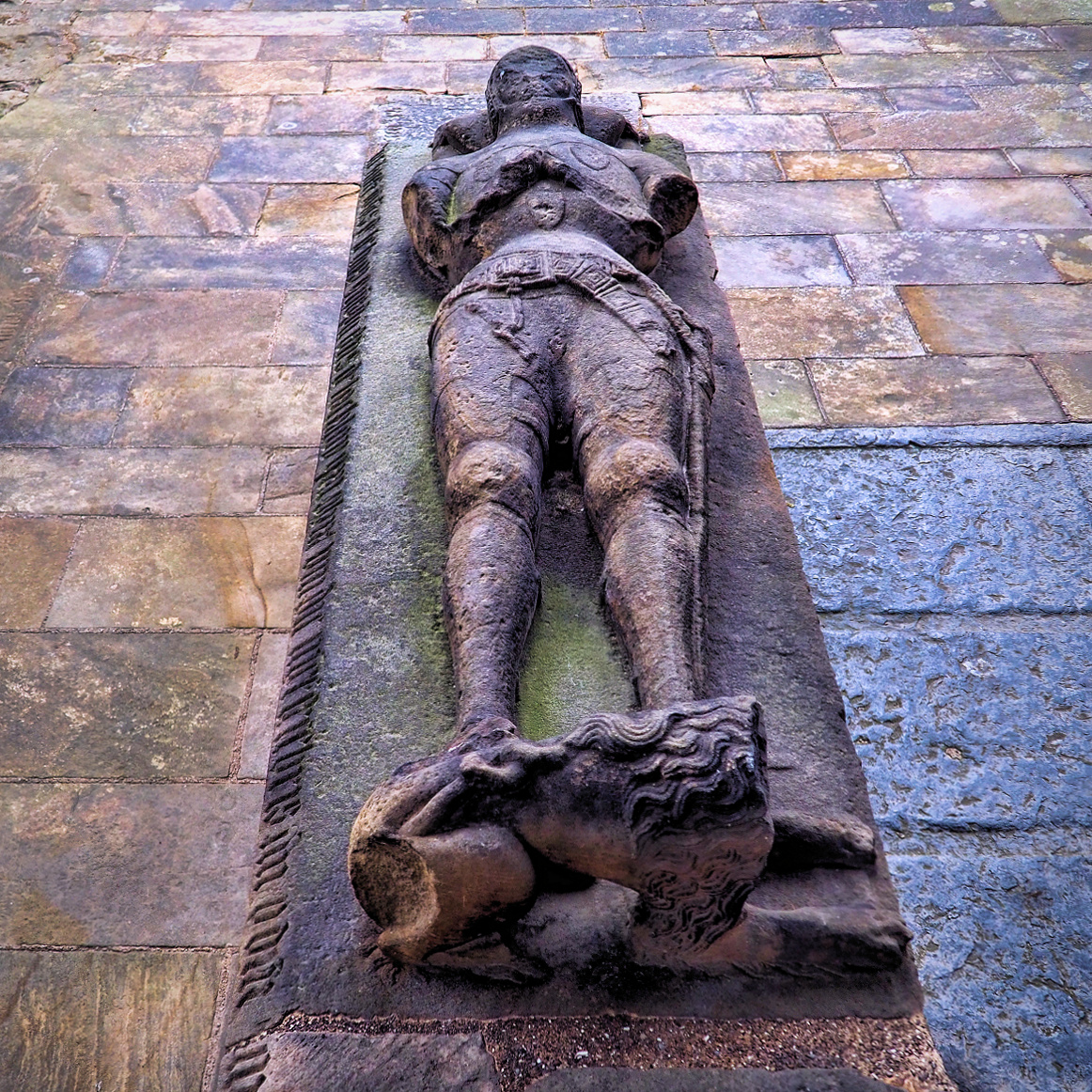
In Scotland, fragments of Templar legend continue to cling to stones and carvings. At Elgin Cathedral, the tomb of William de la Hay of Lochloy has sparked speculation among visitors. He died about a century after the order was officially dissolved. Yet his knightly effigy and the nearby “Apprentice’s Aisle” invite comparison with later Templar associations at Rosslyn Chapel. While there is no firm proof that William was a Templar, the suggestive details allow the story to live on in whispers and guided tours.
Reclaiming the Spooky Magic
Today, Friday the 13th in Scotland sits at the crossroads of myth, religion, and recorded history. From Loki’s ill-fated feast to the ruined arches of Elgin, the date has gathered layer upon layer of meaning. Rather than dismiss these stories as fear or fantasy, we can choose to explore what they reveal about the hidden workings of the world.
Superstitions are not empty shadows. Instead, they are clues that carry memories and preserve what official histories often forget. Evidence of Templar activity includes the carved stones at Kilmartin and the symbols in Rosslyn Chapel. Yet the mystery of William de la Hay stands out. Was he connected to the Templars in legacy? These threads bind Scotland’s folklore and history together, reminding us that superstition is often a doorway rather than a dead end.