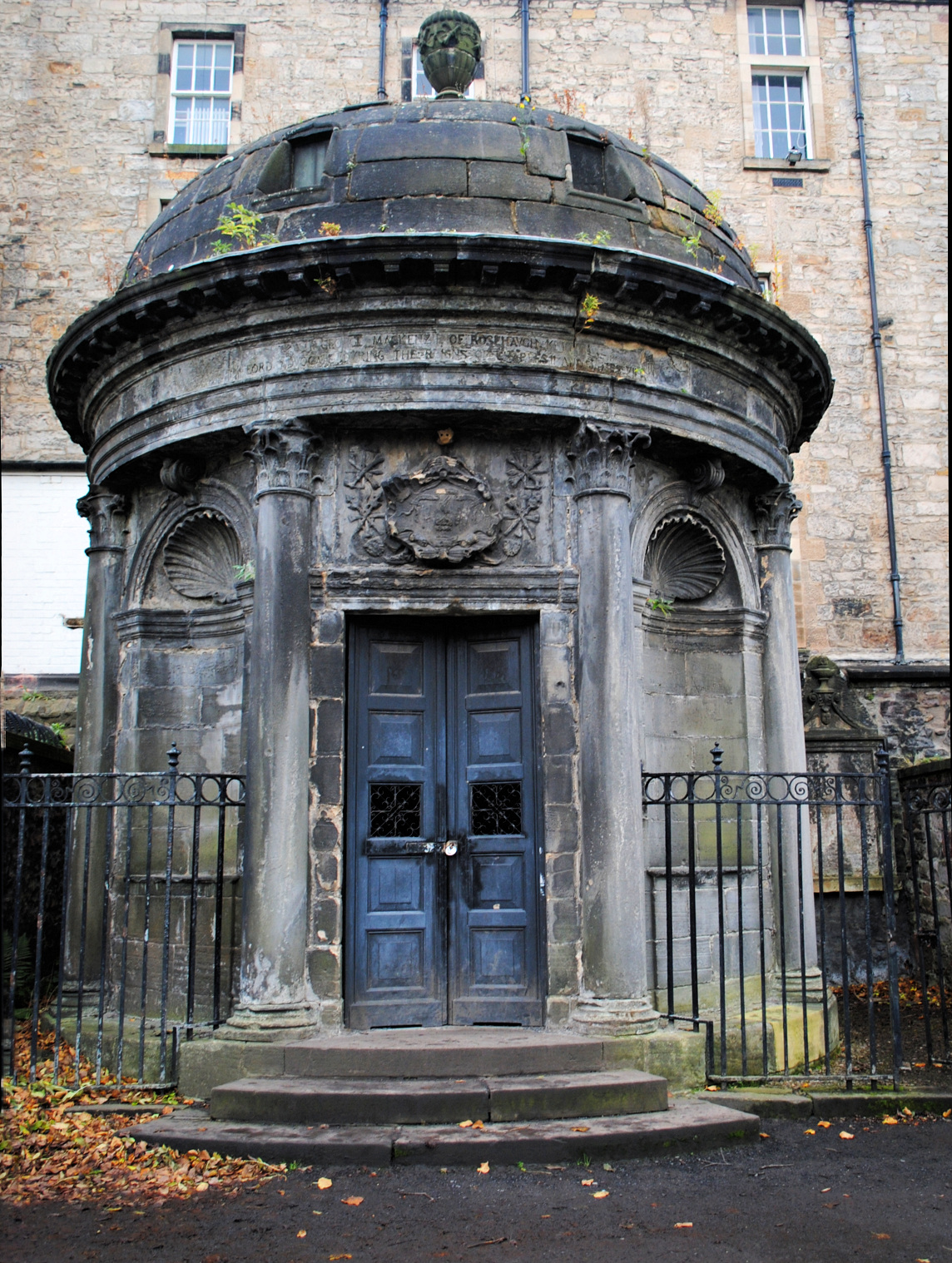
National Covenant history begins with a single, defiant act in a cold Edinburgh churchyard that changed the course of Scottish history forever. On 28 February 1638, thousands of people gathered at Greyfriars Kirkyard to sign a massive parchment document. Little did they know that many of them would return there a few years later as prisoners, nor that the Advocate, Bluidy Mackenzie, who zealously meted out their sentences, would one day be buried there too. His ghost, the Mackenzie Poltergeist, is said to be one of the most active of Edinburgh’s spirits.
A revolutionary Contract
The National Covenant was not a simple petition to the King. Instead, it was a revolutionary contract between the people of Scotland and their God. Scotland had been officially a Protestant Country since 1560. There had already been martyrs to the Protestant cause, including the deaths of George Wishart and Patrick Hamilton. By signing the covenant, the People of Scotland swore to defend their Presbyterian faith against the “innovations” of King Charles I. The atmosphere was thick with religious fervour and a sense of impending crisis. Some accounts even claim that men signed the document in their own blood. While historians often debate the literal truth of those blood-inked signatures, the symbolic weight is undeniable. This oath turned neighbours into allies and eventually into enemies. It set the stage for decades of civil war, martyrdom, and the haunting legends that still cling to the Scottish landscape today.
The St Giles Riot and the Spark of Rebellion
The road to the Greyfriars signing began with a stool thrown in anger at St Giles Cathedral. In 1637, Charles I attempted to impose a new Prayer Book on the Scottish Kirk. He wanted to align Scottish worship with the English Anglican style. To many Scots, this felt like a betrayal of the Reformation and a slide back toward Roman Catholicism. When the Dean of Edinburgh began to read from the new book, a market trader named Jenny Geddes reportedly stood up and hurled her stool at his head.
This local riot quickly spiralled into a national movement. Protests erupted across the country as people demanded the right to worship according to their own consciences. The King refused to back down, forcing the Scottish leaders to take a more formal stance. They needed a document that would unite the nobility, the clergy, and the ordinary folk under one banner. That document became the National Covenant. It was a legal masterpiece that used old Scottish laws to justify a very modern rebellion. By signing it, the Covenanters were not just protecting their pews; they were challenging the absolute power of the monarchy itself.
Why was the National Covenant so Important?
The National Covenant was important because it redefined the relationship between the Scottish people, their monarch, and their God. It was not merely a religious petition; it was a constitutional earthquake that transformed Scotland into a “covenanted nation.” For the first time, a large portion of the population claimed that their loyalty to God was higher than their loyalty to the King. This idea was revolutionary in an age when monarchs claimed to rule by Divine Right. If the King broke God’s law, the Covenanters believed they had a legal and spiritual duty to resist him. This shifted the power from the throne to the pulpit and the parliament.
For the first time, the people of Scotland had rights- human rights. According to the Covenant, they could follow their own religious beliefs, regardless of what the king might tell them. Of course, there is a certain irony to this. As copies of the National Covenant spread through the country, lairds and employers coerced their tenants and employees into signing the document.
The National Covenant: A Legal Contract with Divine Consequences
The document itself was a masterpiece of legal and religious propaganda. It combined 16th-century anti-Catholic statutes with a new oath of resistance. By signing it, Scots were entering into a formal contract. They believed that if they kept the Covenant, God would bless Scotland; if they broke it, the nation would face divine wrath. This created a powerful sense of national unity and purpose. It also made the document a “test” of loyalty. Those who refused to sign were often treated as traitors to both their country and their faith. This led to the purging of ministers and the silencing of dissenters across the land.
The Blueprint for Civil War and Revolution
The Covenant provided the political machinery for the Wars of the Three Kingdoms. It allowed the Covenanters to raise an army, collect taxes, and govern Scotland independently of Charles I. This defiance eventually triggered the English Civil War, as the King’s failure to crush the Scots weakened his authority in London. Furthermore, the Covenant’s ideas about limited monarchy and the rights of subjects laid the groundwork for the later Scottish Enlightenment. It proved that a nation could organise itself against a tyrant. Even today, the physical copies of the Covenant in Scottish archives are treated as sacred relics of this struggle for conscience.
From Holy Oath to the Killing Time
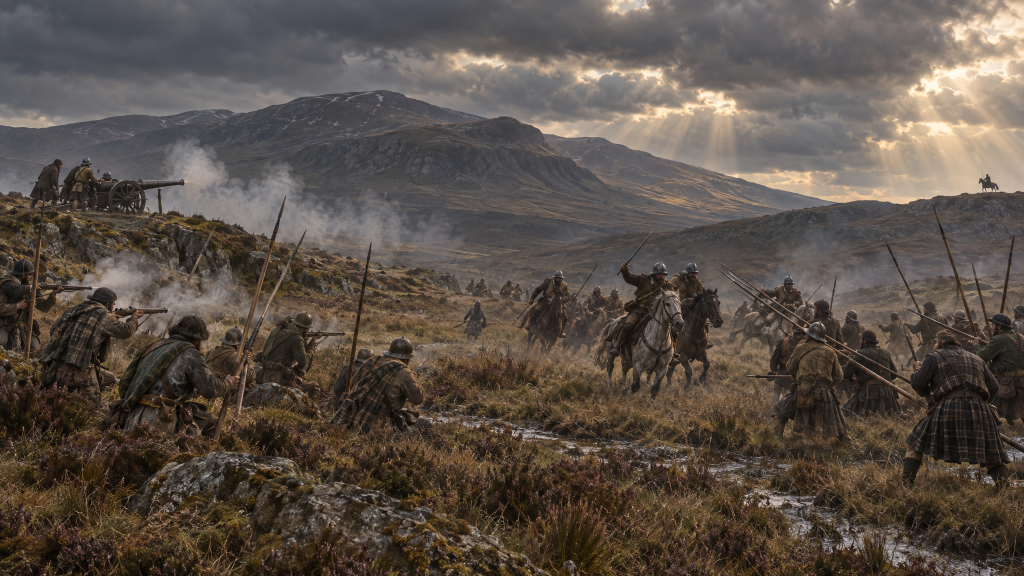
The National Covenant ideals eventually faced the brutal reality of state suppression. While the 1638 signing was a moment of hope, the following decades brought only division and blood. When the monarchy was restored in 1660 under Charles II, the King betrayed the very oath he had once signed at Garmouth. He declared the Covenants illegal and demanded that bishops be restored to the Kirk. This sparked a period of intense persecution known as the “Killing Time.” Thousands of ordinary Scots refused to abandon their oath. They began to meet in secret on hillsides and moors for illegal church services called conventicles. Government dragoons hunted these worshippers like animals across the landscape. This escalating violence reached a breaking point in 1679 at the Battle of Bothwell Brig. The Covenanter army was decisively defeated by government forces, leaving the survivors at the mercy of a vengeful state.
The Covenanters’ Prison at Greyfriars
The aftermath of the battle brought the story of the Covenant back to where it began in Edinburgh. Over 1,200 defeated prisoners were marched from the battlefield to Greyfriars Kirkyard. However, they did not return as celebrated heroes of the faith. Instead, they were herded into a narrow, walled strip of land that became Scotland’s first open-air concentration camp. There wasn’t enough room in Edinburgh’s prisons to hold all the prisoners. Records show that on the 1st July 1679, 1,184 penny loaves were bought to feed the prisoners held at Greyfriars, along with the wounded at the adjacent Heriot Hospital.
For five months, these men lived without shelter, enduring the wind and rain of a Scottish winter. They were given only four ounces of bread a day and were forbidden from lying down. Many died from exhaustion and disease, while others were executed. Some were released after taking an oath that they would never take up arms again. This site of suffering is now known as the Covenanters’ Prison. It sits just yards away from where the original document was signed with such joy forty years earlier.
In November 1679. the remaining 257 prisoners were sentenced to deportation to the American Colonies as slaves. Alas, the ship sank off of Orkney with only 48 survivors.
Sir George Mackenzie and the Shadow of the Tomb
National Covenant history is haunted by the figure of Sir George Mackenzie, the man who became the movement’s most feared prosecutor. As the Lord Advocate for Charles II, he earned the nickname “Bluidy Mackenzie” for his relentless legal pursuit of Covenanter rebels. He was a brilliant lawyer and a man of the Enlightenment, yet he used his intellect to justify state-sponsored terror. Mackenzie believed that religious dissent was a form of treason that threatened the stability of the entire kingdom. Consequently, he oversaw the trials and executions of hundreds of men and women who refused to renounce their oath. He was the primary architect of the legal machinery that turned Greyfriars Kirkyard into a place of misery. His cold, calculated approach to justice made him a villain in the eyes of the Scottish people. Even after his death in 1691, his reputation for cruelty remained etched into the national memory.
The Mackenzie Poltergeist and the Black Mausoleum
The legacy of Bluidy Mackenzie eventually transformed from historical fact into one of Scotland’s most famous ghost stories. Ironically, he was buried in a grand, domed mausoleum just a few yards away from the Covenanters’ Prison where his victims suffered. For centuries, local tradition claimed that his spirit could find no rest because of the blood on his hands. However, the legend took a terrifying turn in the late 1990s when a homeless man reportedly broke into the tomb for shelter. He broke open one of the Mackenzie coffins and fell into a pit containing the remains of plague victims.
Since that night, hundreds of visitors to Greyfriars have reported being scratched, bruised, or knocked unconscious near the “Black Mausoleum.” This phenomenon is now known as the Mackenzie Poltergeist. Many believe the spirit of the prosecutor is still lashing out at the living from beyond the grave. Whether you believe in the supernatural or not, the atmosphere around the tomb remains undeniably oppressive. It serves as a chilling physical reminder of the “Killing Time” and the man who turned the law into a weapon of persecution.