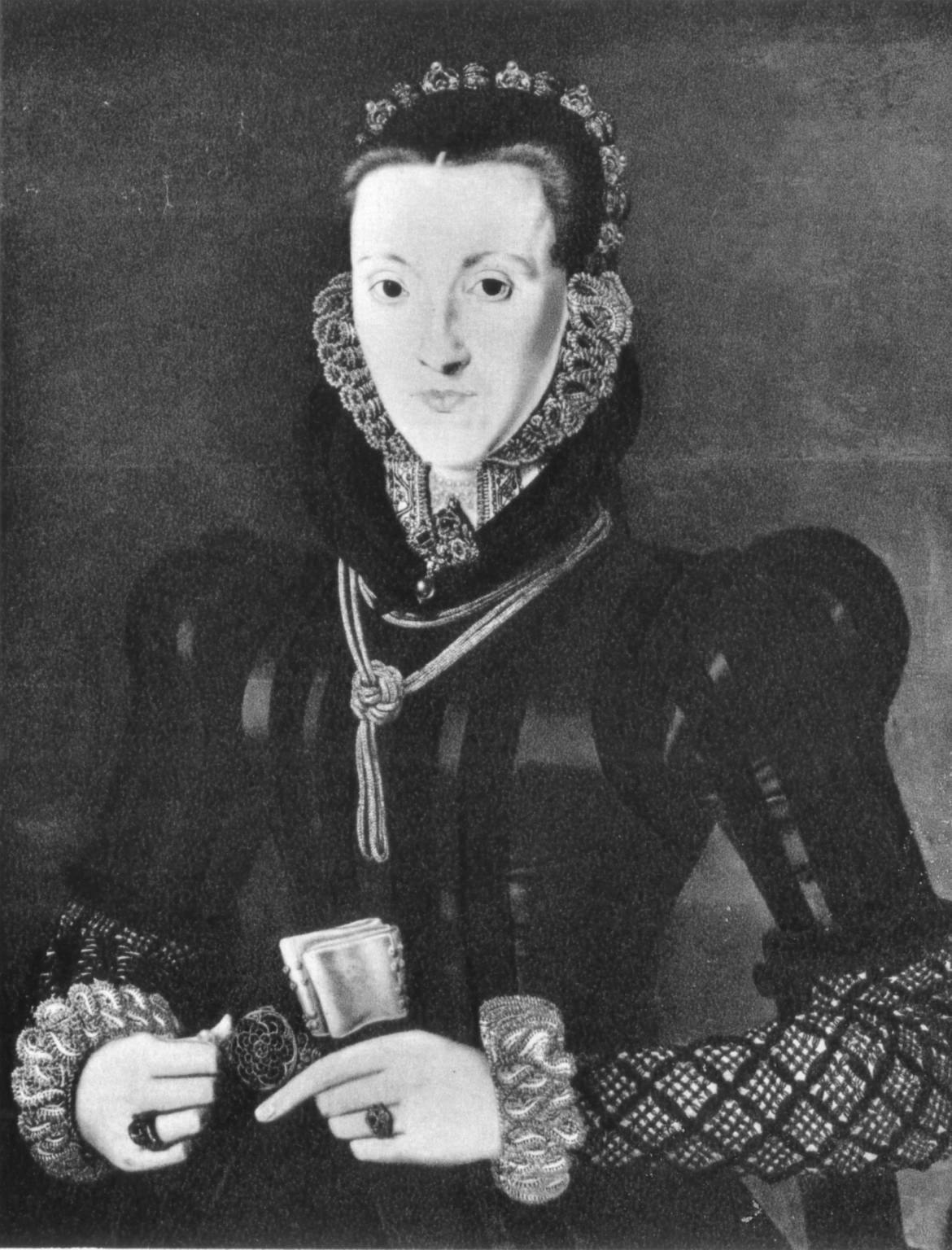
During her lifetime Agnes Keith became the most powerful woman in Scotland. By the time Mary, Queen of Scots demanded the return of her jewels, Agnes Keith had already survived rebellion, assassination and the collapse of a royal regime.
Among treasures Agnes held was the Great H, a magnificent diamond-and-ruby jewel associated with Mary’s French marriage. Agnes held it at Dunnottar Castle after the murder of her first husband, James Stewart, Earl of Moray.
Mary wanted it back. So did Scotland’s regents, who claimed it for the young James VI.
Agnes refused to surrender it to either side.
However, this was power struggle involving royal property, civil war debts, inheritance, and the authority of the Scottish crown rather than a petty quarrel over jewellery. For several years, Agnes Keith held an object that both Mary’s supporters and her enemies considered politically vital.
Her position reveals why contemporaries and later historians regard her as Scotland’s most powerful woman during the Moray regency.
Who was Agnes Keith?
Agnes Keith, also called Annas Keith in contemporary records, was born around 1540 at Dunnottar Castle in Aberdeenshire. She was the eldest daughter of William Keith, 4th Earl Marischal, and Margaret Keith of Inverugie.
The Keiths were among the great noble families of north-east Scotland. Therefore, Agnes entered adult life with wealth, political connections, and access to courtly power.
She was also remarkably well-educated. Her surviving signature, “Annas Keyth”, suggests a woman used to managing complex written business. That mattered greatly in a period when noblewomen often ran estates and handled correspondence during their husbands’ absences.
On 8 February 1562, Agnes married James Stewart, the illegitimate half-brother and leading adviser of Mary, Queen of Scots. The wedding was a massive court event. John Knox preached the sermon, while Mary provided lavish festivities at Holyrood Palace.
The marriage brought Agnes close to the centre of Scottish politics. It also made her the queen’s sister-in-law.
Agnes Keith and Mary, Queen of Scots
The relationship between Agnes Keith and Mary, Queen of Scots was personal and complex.
Initially, Mary treated Agnes as a close member of the royal circle. Agnes attended court, spent time with the queen, and was briefly entrusted with the infant Prince James at Stirling Castle in 1566.
However, her husband’s political choices placed her in an increasingly dangerous position.
In 1565, James Stewart opposed Mary’s marriage to Lord Darnley. He joined the failed Chaseabout Raid and fled to England. Agnes, then pregnant, remained in Scotland at St Andrews Priory.
She could not safely join him. Instead, she managed the Moray estates while her husband was in exile. This was practical political work, not merely domestic administration.
Following Mary’s forced abdication in July 1567, James Stewart became Regent for her infant son, James VI.
Why was Agnes Keith the most powerful woman in Scotland?
Agnes Keith’s influence rested on her position as Countess of Moray, wife of the Regent of Scotland.
From August 1567 until James Stewart’s murder in January 1570, the regent governed in the name of the child king. As a result, Agnes stood at the heart of the ruling household.
Yet her influence was more substantial than status alone.
Before Moray’s return to Scotland, Agnes acted as his “commissioner and procurator” in legal and business matters. She handled his affairs independently. Moreover, she could influence alliances within her own powerful kin network.
In May 1568, she reportedly told her cousin, George Gordon, 5th Earl of Huntly, “ye haf mad me angary”. Huntly had indicated support for Mary rather than the regent.
Although she did not hold a formal office of state, Agnes clearly exercised political agency in her own right.
Mary, Queen of Scots’ jewels and the Great H
Agnes Keith held some of Mary, Queen of Scots’ jewels while the imprisoned queen demanded their return.
After Regent Moray was assassinated in January 1570, Agnes Keith took possession of several pieces of Mary’s jewellery. They included the Great H of Scotland, a spectacular pendant set with diamond and ruby.
The jewel was not merely valuable. It carried royal meaning.
The “H” probably referred to Henry II of France, Mary’s father-in-law. Mary may have worn it at her first wedding in 1558, when she married the French Dauphin, François. Therefore, it was bound up with the lost world of her French queenship.
Moray and his secretary, John Wood, had previously taken the jewels to England. However, they returned to Scotland unsold. After Moray’s death, Agnes kept them as security for money she claimed was owed to his estate.
Mary was then a prisoner in England. From Tutbury and Sheffield Castle, she sent repeated demands to Moray’s widow.
In March 1570, Mary’s secretary wrote to Agnes in Scots:
“We ar informit ye have tane in possession certane of oure jowalles sic as oure H of dyamant and ruby with a nombre of other dyamantis, rubiz, perles, and goldwark…”
In modern English, the letter accused Agnes of holding Mary’s diamond-and-ruby H, as well as other diamonds, rubies, pearls and goldwork. Mary ordered Agnes to hand them to the Earl of Huntly and Lord Seton, who would act in her name.
The letter also contained a warning. If Agnes complied, Huntly and Seton would ask Mary to show greater pity towards her and her children.
Mary added a postscript in her own hand. She warned that her family and retainers would feel her displeasure.
Agnes did not answer.
Mary wrote again in January 1571, again raising the possibility of consequences for the countess’s children. Meanwhile, Regent Lennox demanded the jewels for the government in September 1570. Huntly also wrote on Mary’s behalf.
Agnes refused them all.
Her position was legally and politically calculated. She maintained that the jewels were security against the unpaid costs of Moray’s regency. In practical terms, she was holding a queen’s personal treasures against claims made by both the captive queen and the Scottish government.
That was an extraordinary act of resistance.
Excommunication and conflict with the Kirk
Agnes Keith’s defiance was not limited to the royal court; she also clashed with the Reformed Church.
By early 1572, Agnes had married Colin Campbell, heir to the Earldom of Argyll. Her refusal to surrender the royal jewels and her ongoing legal battles eventually brought her into direct conflict with the Kirk.
The church authorities viewed her hold on the jewels as a sign of disobedience and civil disorder. As a result of her refusal to comply with their demands, Agnes was excommunicated by the Reformed Church on 25 April 1573. Surviving accounts describe the cause as her “non-adherence” to her husband.
In the 16th century, excommunication was a severe social and political punishment. It stripped a person of their right to participate in communal life and was intended to force submission.
Agnes, however, remained resolute. She continued to fight for her financial rights despite the spiritual and social pressure applied by the church. This defiance further solidifies her reputation as a woman of immense willpower.
Agnes later became Countess of Argyll when Colin succeeded to the earldom in September 1573. Reports that he was “much advised” by her, or “overmuch ledd by his wyf”, are hostile but revealing. They suggest that contemporaries believed she had real influence within one of Scotland’s most powerful noble houses.
Death and legacy
Agnes Keith died in Edinburgh on 16 July 1588. She was buried beside James Stewart, Earl of Moray, in St Giles’ Cathedral.
Her life has often been overshadowed by Mary, Queen of Scots, and the male regents of the era.
However, Agnes Keith was an estate manager, litigant, correspondent, and political ally who could make Scotland’s leading men respond to her decisions.
The jewel dispute and her subsequent excommunication capture her character most clearly. Pressured by an imprisoned queen, rival regents, and the weight of the church, Agnes did not surrender.
For a short period during the Moray regency, Agnes Keith was arguably the most influential woman in Scotland. More importantly, she remained a serious political actor long after that formal moment of power had passed.