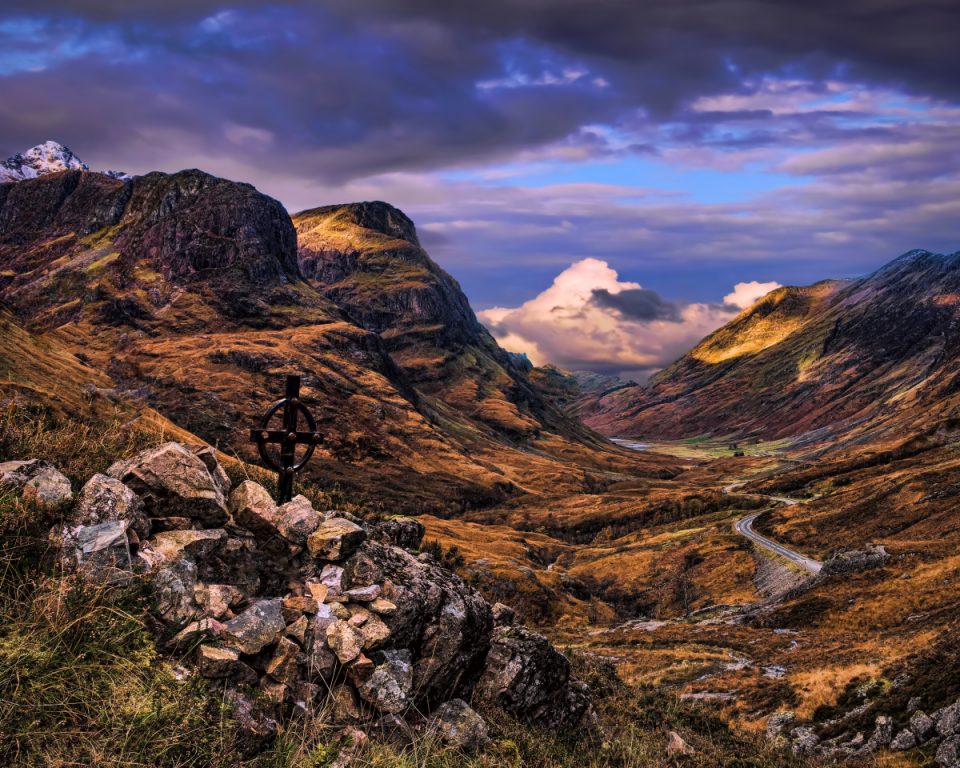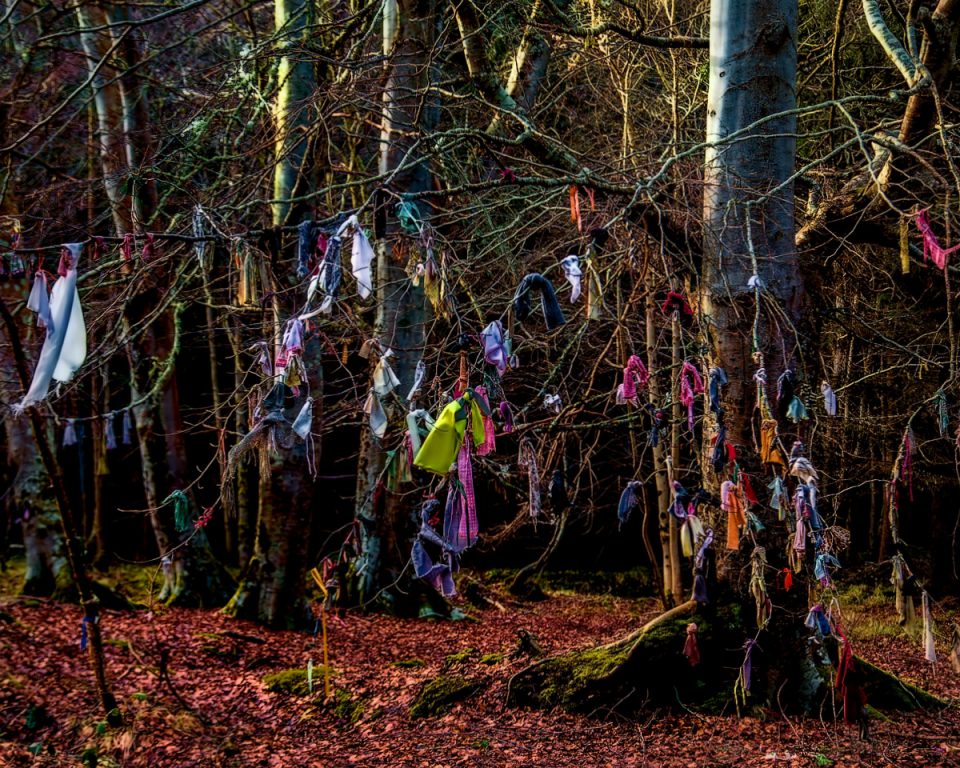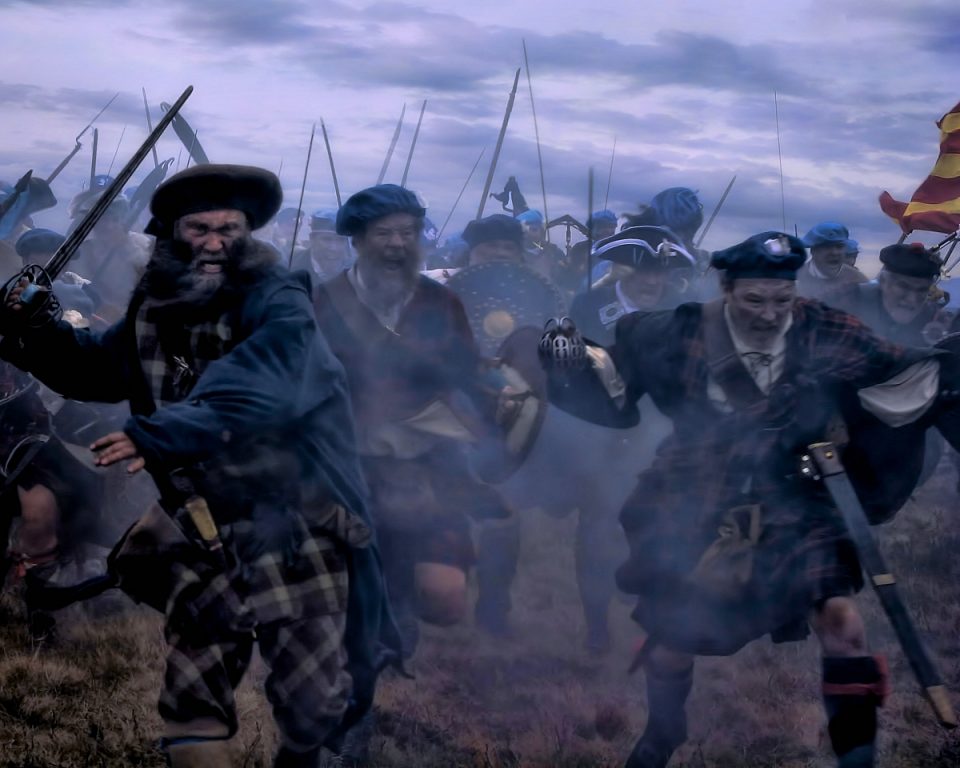
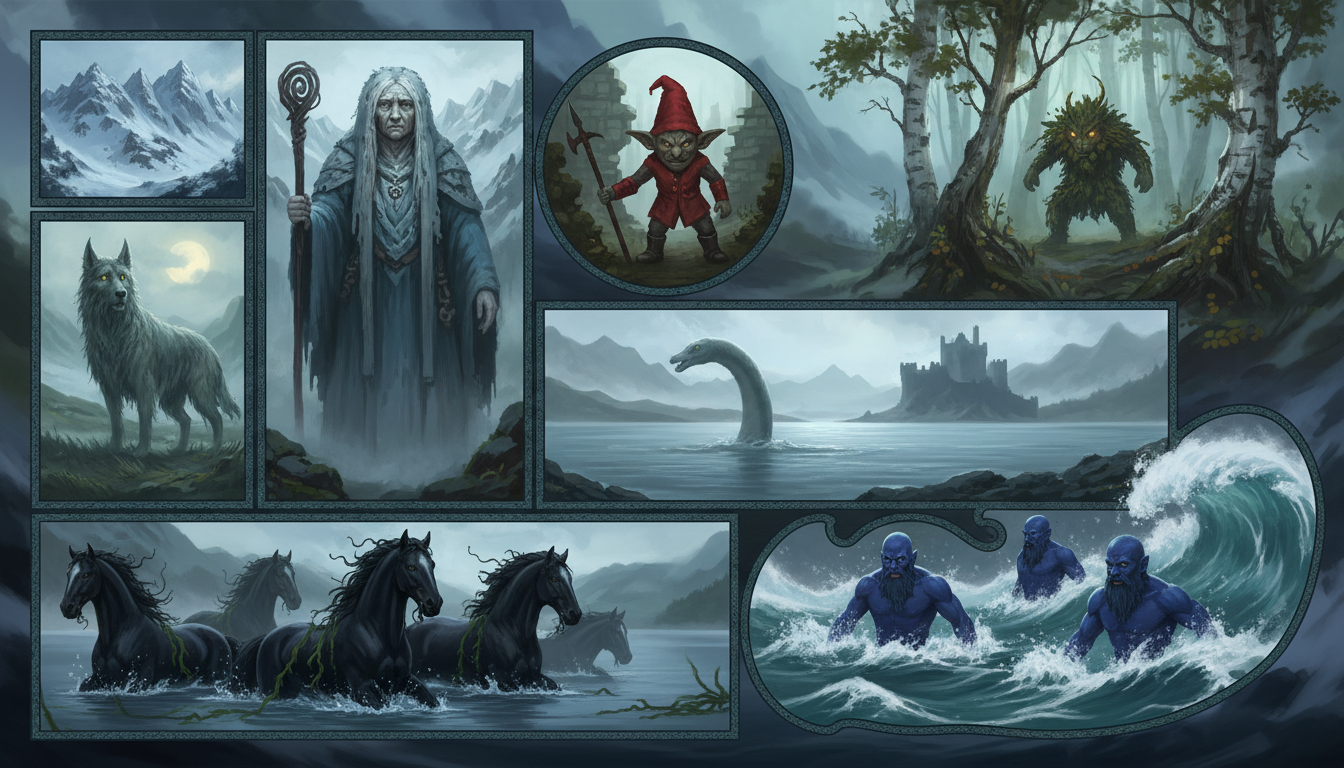
Mythical creatures and spirits were used to explain Scotland’s landscape. Scottish folklore contains remnants of belief systems, glimpses of long forgotten deities and guardian spirits, and ecological blueprints that were vital for survival in a land that was often harsh and unforgiving. These tales are not merely entertainment. Instead, they are folk memories that bind the community to the land. As Scott Richardson-Read notes in Mill Dust and Dreaming Bread: “Our memories can fail us, but our landscape will not. The tales of our culture and community might fade, but the landscape remains the book upon which our Scottish folk belief is written.” Consequently, learning to read this “book of the landscape” is essential for our cultural survival.
A Journey through Scotland’s mythscape
Come with me on a journey through Scotland’s mythscape. But first, we must step back in time. The land does not look the same. Yes, there are still mountains, lochs and moors but the lost forest of Caledonia still covers swathes of land. The wetlands have not been drained. This is great news, for bog iron is the source of most of our metal ore. But watch out-there might be a will o’ the wisp hovering above the marshes ready to lead you to a nasty end. The great predators still roam the land- bear, wolf and lynx. They are in small numbers and probably fear you as much as you fear them.
The ancestors have left their mark on the land- there are cairns, stone circles and caves filled with children’s skulls. There is an energy around these places, a sense of the sacred. Urbanisation is limited to a few hillforts such as Tap o’ Noth and East Lomond. Most people live off the land and dwell in tiny settlements of no more than six homes.
Life around the Hearth
Perhaps you live in a cruck-style byre house, with the livestock overwintering in the other half of your home. Maybe you come from an earlier time and reside in a round house. The central focus is the hearth, the source of heat and light and where life-sustaining food is prepared. Your whole life is dominated by food production and preparation- ploughing, planting, harvesting and grinding grain. In the summer, taking cattle to hill pastures and gathering berries. But now it is wintertime. The wind howls outside and you hear the call of a lone wolf. You huddle around the hearth. Above, fish and meat from the autumn cull, hang from the rafters, curing in the smoke. Will there be enough food to see you through the winter and enough reserves to plant in spring? Will there be enough fodder for the livestock?
Here at the hearth, the old stories are told and re-told for here is the threshold where the wisdom of the ancestors is passed down.
The winter nights are long in Scotland. Bitter winds blow off the sea and the cold sinks deep into your bones. You listen to tales of the Gods and Goddesses and guardian spirits. You practise animism- every stone, river and tree is a living entity with its own spirit. Some of these spirits may have been your ancestors. You have heard how Nessa left the lid off of the well, flooding the glen. As a punishment she was turned into the spirit of the river- a river goddess to be worshipped.
The Rhythms of the Land
Survival depends on seasonal awareness. Thus, the main gods, Goddesses and guardian spirits are embodiments of environmental cycles. If you are a Gael, the Cailleach Beira is the most significant figure in this landscape-led mythscape. She is Goddess of Winter and governs the dark half of the year, shaping the mountains and bringing the frost. The Cailleach seldom appears on her own. She is frequently accompanied by her giantess sisters, the Cailleachan, elemental goddesses- storm hags, thunder hags, wind hags and sea hags. She has a husband, the Bodach and to this day, a shrine, Taigh nam Bodach is maintained in their memory. They have children, giants called Fooars who threw rocks at each other across the mountains. In the Lowlands, this Mother Goddess figure is replaced by the Gyre Carlin or Nicnevin.
The Cailleach’s presence explains the harshness of the Scottish Climate. She ushers in the snows at Samhain and battles the forces of spring until her eventual defeat at Beltane when Brìde becomes the prevailing goddess. She represents renewal and the first stirrings of spring. However, like the Cailleach, she does not appear on her own- Angus Òg, the god of youth and summer fullness, must play a role in her rescue. As the Cailleach and Angus battle for the release of Brìde, the Cailleach releases the spring gales- Feadag (whistle), Gobag (pecking), Sguabag (sweeper). These occur between Imbolc and Samhain, a time when seeds are sown. In a time before weather forecasts existed, knowledge about seasonal weather patterns would have been vital.
Night and Day
Similarly, the daily passage of time was explained through the figures of Rìgh Bàn and Rìgh Dubh. These “Kings” of day and night exist in a state of perpetual exchange, ensuring that light and dark remain in balance. These myths were not superstitions. Rather, they were essential tools for interpreting the eternal rhythms of the north.
Transformation and Survival
With the arrival of Christianity, these environmental forces underwent a significant transformation. The church knew that people would not instantly give up their old beliefs- but what if those belief systems could be watered down. Many powerful deities were demonised to fit a new moral framework. For instance, the Cailleach was often recast as a malevolent hag or witch. Nicniven became the queen of witches. Conversely, Brìde was absorbed into the new faith and downgraded to a saint- Saint Brigid. This allowed her protective influence over livestock and the hearth to endure. This layering of belief created a rich tapestry where ancient ecological wisdom remained veiled within religious tradition.
Despite these changes, the “book of the landscape” remained constant. Ancestor motifs endured through stories of giants sleeping within the hills, symbolising the latent strength of the earth. Recurring patterns, such as the Nine Holy Maidens associated with sacred wells, likely echo earlier priestess traditions tied to seasonal rites.
The Sìthichean: The Gaelic Fairy Faith
Many of the guardian spirits were downgraded, demonised and re-invented as the Sìthichean. These were the faeries of the Gaelic Otherworld. It is a common mistake to confuse these beings with the tiny, winged sprites of Victorian children’s literature. These were treated with a mixture of reverence and extreme caution. The Sìthichean could not be trusted. They kidnapped people in Faery Rades to pay the Faery Tithe. The Sluagh, or the Host of the Unforgiven Dead, fly in ragged flocks across the night sky, swooping down to seize the living and carry them away into the darkness. Babies were stolen and replaced with changelings.
The Sìthichean were used to explain the Northern lights- as warring clans fought each other , they fell to the Earth. The landscape itself provides the threshold to this hidden world. The Sìthichean reside within the Sìthean, or hollow mounds, which are often ancient Neolithic structures like the Clava Cairns. Time moves differently within these mounds; a single night of dancing in the fairy realm can result in decades passing in the mortal world. This time dilation served as a cautionary tale about the dangers of losing one’s connection to the community and the natural rhythm of life.
Domestic life also had its share of supernatural residents. Brownies, Bauchan, and the Gruagach were spirits who inhabited the home or the farmstead. These beings were not inherently evil, but they demanded respect and reciprocity. A Brownie might perform a night’s threshing in exchange for a bowl of cream, but they would vanish forever if offered clothing or excessive praise. This relationship reinforced the idea that every resource, even the labour of the spirits, required a fair exchange.
The Water Realm: Mythical Creatures of the Lochs, Rivers and Sea
Mythical creatures associated with water are among the most prevalent and dangerous in the Scottish mythscape. Because Scotland is defined by its deep lochs and treacherous rivers, the folklore of the water served as a vital ecological warning system. The Kelpie is the most famous of these spirits, typically haunting streams and rivers. It often appears as a magnificent black horse, but its true nature is revealed when it lures a rider into the depths to drown them.
The Each-uisge, or water horse, is a far more predatory cousin of the Kelpie. While the Kelpie stays near rivers, the Each-uisge inhabits the still, deep waters of lochs and sea lochs. It is a master of disguise, appearing as a handsome man or a gentle pony to entrap the unwary. However, its skin is adhesive, making escape impossible once a victim has touched it. These tales were essential for teaching children to respect the hidden dangers of the shoreline. The Tarbh-usige or water bull is more amiable than its equine counterpart, the each-uisge. Even so, it can become violent if angered.
Other Water Creatures
Beyond the shapeshifters, the water is home to a variety of other monstrous entities. The Boobrie is a gigantic water bird that can mimic the cries of a lamb to lure farmers into the marsh. In the sea, the Cirein-croin is a serpent so immense that it is said to devour seven whales at once. Even the translucent Ashrays and the malevolent Water Wraiths remind us that the aquatic world is a realm where humans are always at a disadvantage. Ceasgs were half human, half salmon grilse. The Fuath was said to be ‘hate incarnate’. Some of the soldiers at the Battle of Culloden carried pieces of hide from the Otter King to give them protection.
The water also produces harbingers of mortality. The Bean Nighe, or the Washer at the Ford, is a spirit seen washing the bloodstained clothes of those about to die. Similarly, the Caoineag is a wailing spirit attached to specific clans, her cries echoing near waterfalls before a catastrophe.
Finally, there is the Loch Ness Monster, or Nessie and her cousins such as Morag of Loch Morar and Mucsheilchie of Loch Maree. While she is now a global icon, her origins lie in the spirit of Nessa of the well, demonised by the intervention of Saint Columba in 565 AD.
Mythical Creatures of the High Peaks and Corries
Mythical creatures inhabiting the Scottish mountains reflect the extreme scale and unpredictable danger of the high altitude environment. Because the peaks are often shrouded in mist and subject to violent weather, they are viewed as a threshold between the mortal world and the realm of the ancient ones. The Grey Man of Ben MacDui, or Am Fear Liath Mòr, is the most famous of these mountain mysteries. Climbers on Scotland’s second-highest peak frequently report an overwhelming sense of dread and the sound of giant, crunching footsteps following them through the fog. Whether this is a physical entity or a trick of the light and atmosphere, it reinforces the idea that the mountains are not entirely under human control.
The Cailleach also maintains a powerful presence in the high places, particularly on Ben Nevis and Ben Wyvis. As the creator goddess, she is said to have used these peaks as her throne while she shaped the surrounding glens. Her association with the mountains reminds us that the landscape is a living entity with its own agency.
In the more remote corries, the Urisk continues to seek human companionship despite its frightening appearance. These goat-man hybrids are often found near waterfalls and lonely mountain springs, where they startle weary hill-walkers. While they are rarely malevolent, their presence adds to the “uncanny” feeling of the high ground. Furthermore, the Bodach figures we encountered in the glens often have mountain counterparts who guard the high passes. These beings ensure that even the most inaccessible parts of the Scottish landscape are populated by spirits that demand respect and caution from those who dare to climb.
Badenoch and Speyside: Mythical Creatures of the Central Highlands
Mythical creatures in the central Highlands are deeply tied to the ancient forests and the shadow of the Cairngorms. This region, particularly Badenoch and Speyside, possesses a dense concentration of spectres known as the Bodach. While the word simply means “old man” in Gaelic, in folklore, it refers to a variety of haunting figures. These spirits often serve as guardians of specific passes or harbingers of significant change within the community.
The Bodach Lamh Dheirg, or the Spectre of the Bloody Hand, is one of the most famous residents of this area. He is described as a giant figure dressed in the traditional outfit of a Highland warrior, haunting the eastern shores of Loch Morlich. Beware! He might challenge you to a combat. This should be avoided at all costs. Am Bodach Ghoirtean roams the woods between Loch Garten and Loch Mallachy. His presence is often felt before a death or a great calamity. Bodach Cleocain Deirg, the Old Man of the Red Cloak, haunts the narrow pass at Coylumbridge, acting as a guardian spirit of the River Druie.
More Mythical Creatures from Badenoch and Strathspey
Domhnull Mor is known as the King of the Faeries in Rothiemurchus. He also roams the shores of Loch Morlich and is associated with sithean or Fairy Mounds. The Kinveachy Giant was said to live in the forest outside Aviemore. Legend says he kept his heart hidden under a stone to render himself immortal.
Water lore in Speyside is equally rich and dangerous. The River Spey is said to be home to a unique white kelpie that sings to lure its victims into the fast-flowing currents. Nearby, Loch Pityoulish is haunted by a coal-black water horse. Unlike the typical grey or kelpie-green horses, this creature is said to lair in a sunken crannog. Legend tells of a young heir who escaped the creature’s adhesive skin only by slicing his fingers free. These stories reflect the raw power of the local waterways and the respect they demand. Furthermore, the area around Loch Garten is said to house a carnivorous water monster that is a cross between a bull and a stallion. These diverse legends ensure that the landscape of the central Highlands remains a living map of supernatural activity.
The Mythical Creatures of The Highlands and Western Isles
Mythical creatures in the broader Highlands and the Western Isles often embody the predatory side of nature. The Baobhan Sìth is a particularly terrifying example. This Highland vampire appears as a beautiful woman in a long green dress to lure unwary male travellers in the glens. However, her beauty masks a lethal nature; she possesses hooves instead of feet and preys upon those who succumb to her charms. This legend served as a stark warning about the dangers of isolation in the wilderness.
The Cù Sìth, or Faerie Dog, is a formidable companion to the Sìthichean in these remote glens. This creature is the size of a young bull, with a shaggy green coat and a terrifying, rhythmic baying. Legend warns that if you hear its third bark, you must reach safety or be overcome by lethal terror. On the Isle of Skye, a similar dread is associated with the Baisd Bheulach. This shapeshifting demon haunts the Odail Pass, often taking the form of a massive greyhound that runs between the stones in the dead of night.
Similarly, the Urisk haunts the lonely waterfalls and corries of the Highlands. While this goat-man hybrid often seeks human company, its grotesque appearance usually drives people away. Domestic and industrial life also had its supernatural overseers. The Loireag is a Highland fairy specifically responsible for the traditional methods of making cloth. She is a stickler for quality and requires libations of milk to ensure the wool is handled correctly.
More Mythical Creatures of the Highlands
In contrast, the Gigelorum represents the smallest scale of the mythscape. This tiny insect is so minuscule that it is said to live inside the ear of a mite. The Cat Sìth, or Faerie Cat, is another formidable resident of the Highland glens. As large as a dog and completely black except for a white spot on its breast, this creature was feared for its ability to steal souls.
The landscape of the Western Isles is also defined by its great serpents and wyrms. The Beither is a massive, venomous serpent associated with mountainous caves and remote bodies of water. In the sea between the mainland and the Outer Hebrides, the Blue Men of the Minch are creatures with blue skin who create storms and sink ships. On Lewis, libations of beer were poured into the sea for Seonaidh, the God of Seaweed.
Meanwhile, the Dhu Guisch, or the the beast of the Charred Forest, was a fire-breathing beast said to have incinerated ancient woodlands from Caithness in the North to Badenoch in the south.
Finally, the Ghillie Dhu of Gairloch and the Lavallen of the deep river pools represent the more elusive side of Highland lore. The Ghillie Dhu is a shy, moss-clothed spirit who protects lost children, embodying the benevolent potential of the forest. In contrast, the Lavallen is a mysterious water rodent with a poisonous breath. Whether protective or poisonous, these beings ensure that every niche of the Highland environment is occupied by a spirit that reflects its character.
The Northern Isles: Norse Syncretism in Orkney and Shetland
Mythical creatures in the Northern Isles reflect a unique cultural fusion between Gaelic roots and Norse influence. This is most evident in the seasonal cycle of the northern seas. The Sea Mither, a powerful summer spirit, battles the malevolent Teran to bring calm to the waves. Their eternal struggle mirrors the land-based conflict between the Cailleach and Brìde, ensuring that the ocean, like the earth, follows a predictable rhythm of storm and stillness.
The Stoorworm is perhaps the most formidable of the monsters inhabiting these waters. Legend suggests that when it was finally slain, its falling teeth became the islands of Orkney, Shetland, and the Faroes, illustrating how myth explains the very geography of the north. Similarly, the Nuckelavee is a terrifying entity deeply rooted in Orcadian lore. This skinless, horse-like demon possesses a human torso attached to its back and long, sinewy arms that reach the ground. It is a creature of pure malevolence, responsible for bringing drought, plague, and the death of livestock.
More Mythical Creatures of the Northern Isles
In contrast, the Wulver of Shetland represents a more benevolent side of the supernatural. This humanoid wolf is notably kind, often seen fishing from a rock known as the “Wulver’s Stane.” Unlike the aggressive werewolves of other cultures, the Wulver was known to leave fresh fish on the windowsills of starving families. Similarly, the Selkies embody the bittersweet relationship between the islanders and the sea. These seal-people can shed their skins to walk on land as humans, but their stories almost always end in a tragic return to the ocean. they are not to be confused with the Finfolk who also hail from this region of Scotland.
The Trows and Hogboons of Orkney and Shetland further demonstrate the Norse influence on the mythscape. These underground dwellers are the northern cousins of the Scandinavian trolls. They are nocturnal tricksters who are particularly fond of music, often kidnapping human fiddlers to play at their subterranean feasts. Furthermore, the Tangie and the Marool or Mareel remind us of the sea’s unpredictable nature. The Tangie is a seaweed-covered water horse that lures riders into the waves, while the Marool is a multi-eyed fish spirit that sings with delight during shipwrecks. The Nuggle or Shoopiltee is another water horse found on the Northern Isles. The Bregedi uses wing-like fins to engulf boats.
North East and Aberdeenshire: Giants and Earth-Dwellers
The giants of Aberdeenshire provide a classic example of the “sleeping giant” motif. Jock O’Bennachie, the guardian of the hill of Bennachie, was said to be in a perpetual rivalry with Jock O’ Noth. These two giants famously hurled massive boulders at one another across the landscape as they vied for the affections of a giantess named Lady Anne. These stories serve to explain the presence of large, displaced rocks and the dramatic silhouettes of the local peaks.
The Earth Hound, also known as the Yard Dog or Yird Swine, represents a much darker element of Aberdeenshire folklore. This mysterious cryptid is described as a rodent-like creature with a dog’s head and a pig’s snout. It is said to burrow deep into churchyards to feed upon the dead. While its existence is unproven, the legend reflects a deep-seated cultural anxiety regarding the sanctity of burial grounds. This creature serves as a grim reminder that the earth itself can be a predatory force, even after death.
Coastal lore in the North East also features unique spirits like the Grin Iron Wife of Hopeman. This ghostly sea-witch is said to inhabit the sea caves along the Moray Firth, where she lures children and the elderly to their deaths. Her legend reinforces the idea that the boundary between the land and the sea is a treacherous threshold. Whether through the massive scale of giants or the unsettling presence of the Earth Hound, the folklore of the North East ensures that the landscape is never viewed as merely passive terrain.
The Scottish Borders and Lowlands: Reivers and Ruins
Mythical creatures in the Scottish Borders and the Lowlands are often defined by the region’s turbulent history of warfare and ruined architecture. Because this landscape was the site of centuries of conflict between the Scots and the English, the folklore here is frequently darker and more violent than in other regions. The Redcap is the most notorious example of this malevolence. This murderous goblin is said to inhabit ruined castles and peel towers, where he murders travellers to dye his hat in their blood. His presence serves as a supernatural echo of the “Border Reivers” and the bloody history of the marches.
The Dunter, or Powrie, is a similar spirit found haunting the old fortresses of the Borders. Like the Redcap, these beings are associated with the sounds of rhythmic thumping or grinding, which are often interpreted as omens of impending misfortune. In contrast, the Shellycoat represents a more mischievous, though still unsettling, side of the water lore in this region. He is a spirit who wears a coat of clattering shells and haunts the rivers and streams. While he is rarely lethal, he delights in tricking humans by mimicking the cries of a drowning person to lure them into the mud.
More Creatures from the Borderlands
The Dunnie of the Cheviot Hills is another trickster who embodies the shifting nature of the border landscape. This spirit is a shapeshifter who often takes the form of a horse or a plough-beast to mislead farmers. Once the victim attempts to use the animal, the Dunnie vanishes with a burst of mischievous laughter, leaving the human stranded. Some theories suggest that the Dunnie is actually the ghost of a border raider, forever tethered to the hills he once plundered. This connection between the dead and the land is a recurring theme throughout the Lowlands.
Finally, the Linton Worm and the Habetrot represent the diverse scales of Border folklore. The Linton Worm was a massive, legless serpent that terrorised the inhabitants of Roxburghshire until it was slain by a local laird. This legend explains the unusual undulations of the local terrain as the death throes of the beast. On a much smaller scale, Habetrot is a benevolent faerie associated with the spinning of wool. She represents the domestic traditions of the Borders, ensuring that even the most mundane tasks are overseen by the spirits of the land.
The Ecology of Myth: Why We Must Not Forget
Mythical creatures are not merely relics of a superstitious past. Instead, they are essential components of our ecological identity. In the modern era, we have largely entered a period of “The Forgetting,” where we no longer see the spirits in the animals, plants, and rivers. We have begun to view the landscape as a commodity to be used for wealth rather than a community to be respected. Consequently, we are losing our regional cultures and our sense of belonging to the earth.
Folklore serves as a vital tool for environmental survival. By populating the lochs with Kelpies and the mountains with Cailleachans, our ancestors created a system of respect and caution. These stories were practical meteorological guides. They told of when the southwesterly gales of “Gentle Annie” would blow or when the “Teuchat Storm” was likely to arrive. For an agricultural people, this information was a matter of life and death. Passing these “ecological blueprints” to the next generation ensured the survival of the community against the unpredictable Scottish climate.
Keeping the Stories Alive
Scotland’s mythical creatures continue to haunt the glens, lochs, and ruins of this ancient country. From the fearsome Dragon of Strathmartin to the Pellaidh and the Puddlefoot of Perthshire, and from the night‑wandering Wirry‑cow to the troublesome bogles of moor and byre, these beings invite us to look closer at the world around us. They remind us that the landscape is a living book, filled with stories that are still being written. Whether you are a local or a visitor, keeping an open mind as you wander the moors may reveal a glimpse of the ancient ones in the gloaming.
By delving into the fascinating world of Scottish folklore, we gain a deeper appreciation for the history and cultural significance of the land. These legends are an integral part of the country’s fabric, reflecting a heritage that is both beautiful and unsettling. As we move forward into an uncertain future, we must remember to read the “book of the landscape” once more. Only by keeping these stories alive can we ensure that our connection to the Scottish mythscape remains unbroken for generations to come.