The Kelpie: Scotland’s Most Dangerous Water-Horse
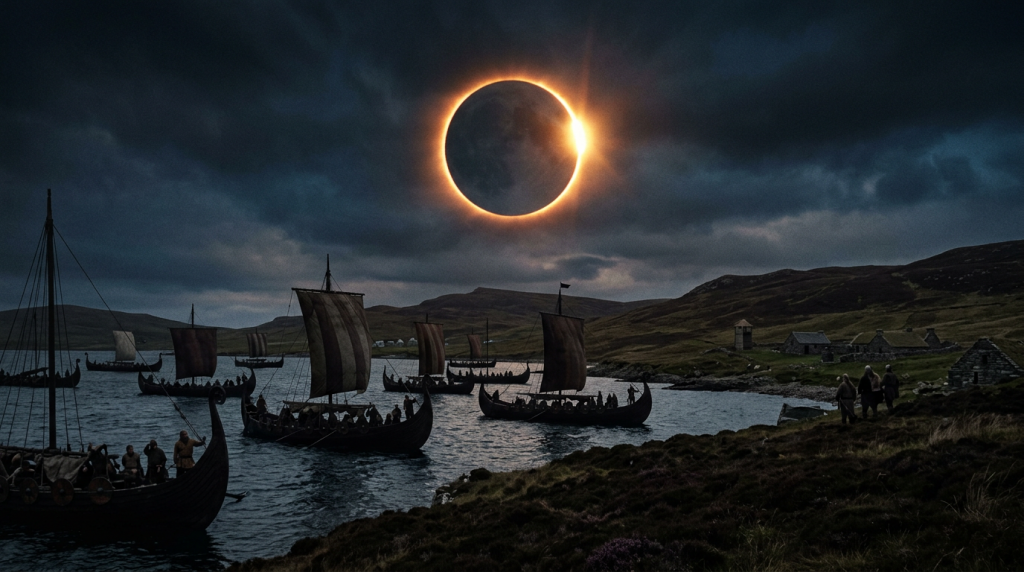
The kelpie is one of Scotland’s most feared supernatural creatures. It takes the form of a beautiful horse — pale, well-built, almost irresistible — and waits near deep lochs for an unwary traveller. The moment someone mounts its back, they are stuck fast. The kelpie then plunges into the depths, taking its victim with it.
However, the kelpie does have a weakness. Like many fairy creatures, it can be controlled through its bridle. Capture the bridle, and you capture the beast — along with the strength of ten horses. That knowledge, it seems, was not lost on the builder of St Vigeans Kirk.
A Hollow Hill and a Captured Kelpie
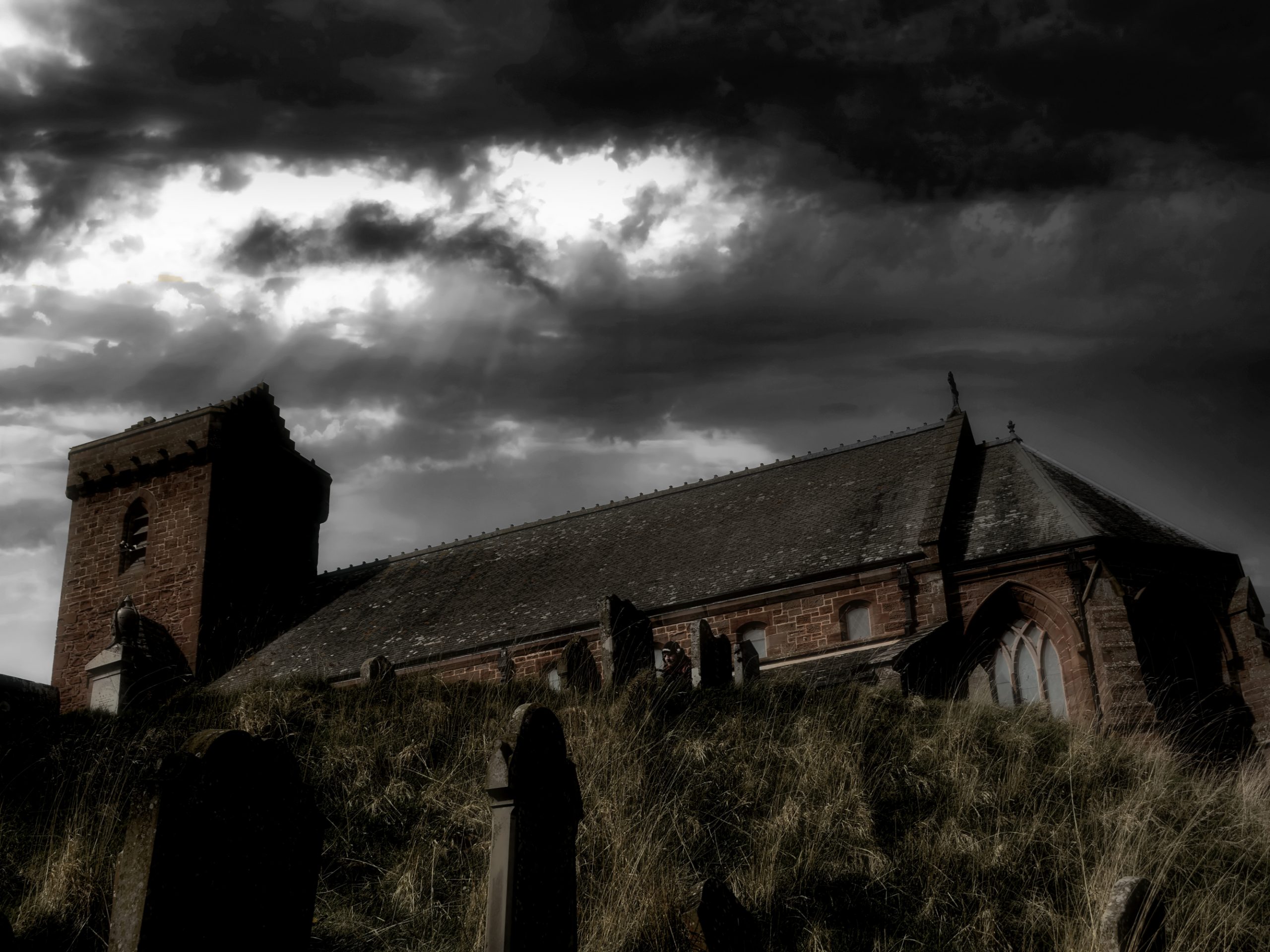
St Vigeans sits atop a prominent, steep-sided mound just north of Arbroath. The hill looks natural — and geologically, it probably is glacial in origin — but local legend tells a different story. According to folklore, the hill is hollow, held up by great iron bars, with a black loch hidden deep within. That loch was home to the St Vigeans Kelpie.
When a builder was tasked with constructing a kirk on the hill, he saw an opportunity. He descended into the hill, found the loch — stretching out before him like an endless dark mirror — and seized the kelpie by its bridle. The creature, unused to visitors, had no time to resist.
The builder put the kelpie to work. With its extraordinary strength, the beast hauled heavy stones from the base of the hill to the top. The kirk rose quickly — far faster than any ordinary horse could have managed. Once the work was done, the builder released the kelpie, apparently without a second thought.
The Curse
That was his mistake. Kelpies, like all fairy creatures, are proud. They are tricksters by nature, not accustomed to being tricked themselves. Before it vanished back into its loch, the kelpie placed a curse upon the kirk:
“When your congregation takes communion after your minister takes his life, this hill will fall in upon itself, and your church will crumble into the loch below.”
For generations, the curse was little more than a colourful local legend. Then, in the 1720s, tragedy struck. A minister at St Vigeans did take his own life. Suddenly, the old story didn’t seem so harmless. The congregation refused to take communion in the church for almost forty years.
Eventually, a new minister persuaded someone brave enough to try. When the day came, the entire congregation — hundreds of people — gathered outside to watch from a safe distance, fully expecting the church to collapse. It didn’t. St Vigeans Kirk still stands today, as solid as ever. Perhaps the curse had run its course. Perhaps, just perhaps, the kelpie took pity.
St Vigeans and the Pictish Stones
Beyond its kelpie legend, St Vigeans is remarkable for another reason entirely: it is home to one of the largest and finest collections of Pictish carved stones in Scotland.
The village of St Vigeans takes its name from Saint Féichín, an Irish saint who flourished in the 7th century. Though there is no record of Féichín himself visiting the area, followers of his cult may have established a monastery among the Picts here as early as the 8th century. The sheer number and quality of the carved stones suggest St Vigeans was an important Pictish religious centre.
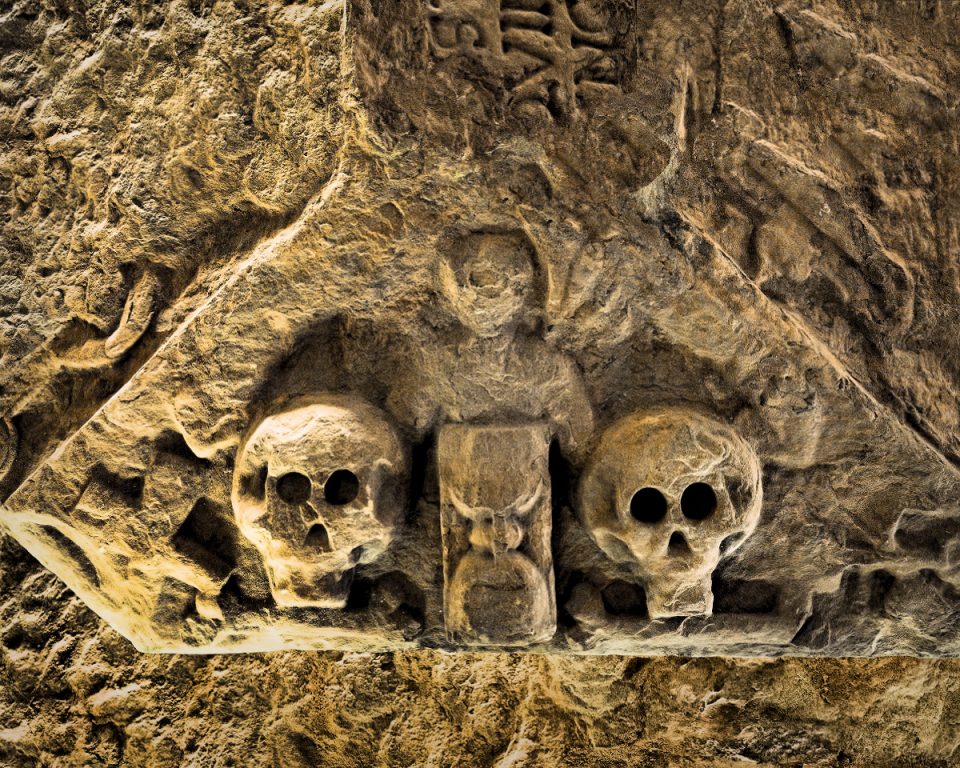
Over thirty elaborately carved stones — including cross-slabs, architectural fragments, and grave-covers — are now preserved in the St Vigeans Sculptured Stones Museum, housed in a converted cottage in the village (key available from Arbroath Abbey visitor centre). The stones date from the 8th to the 12th centuries. Most were recovered during 19th-century restoration work on the parish church, where they had been incorporated into the walls as building rubble during the Middle Ages. Furthermore, some fragments remain embedded in the church walls to this day.
Stones Worth Seeking Out
The Drosten Stone is the standout piece. Standing 1.75 metres tall, it bears a rare inscription in Latin, Pictish, and Old Irish — known as the Hiberno-Saxon inscription — and is carved with exceptional delicacy. It is one of the most studied Pictish stones in existence.
St Vigeans 7 is a forceful contrast. Savagely re-cut at some point in its history, it still retains a macabre scene: a man taking blood from a bull. It is raw, visceral, and entirely unlike the refined elegance of the Drosten Stone.
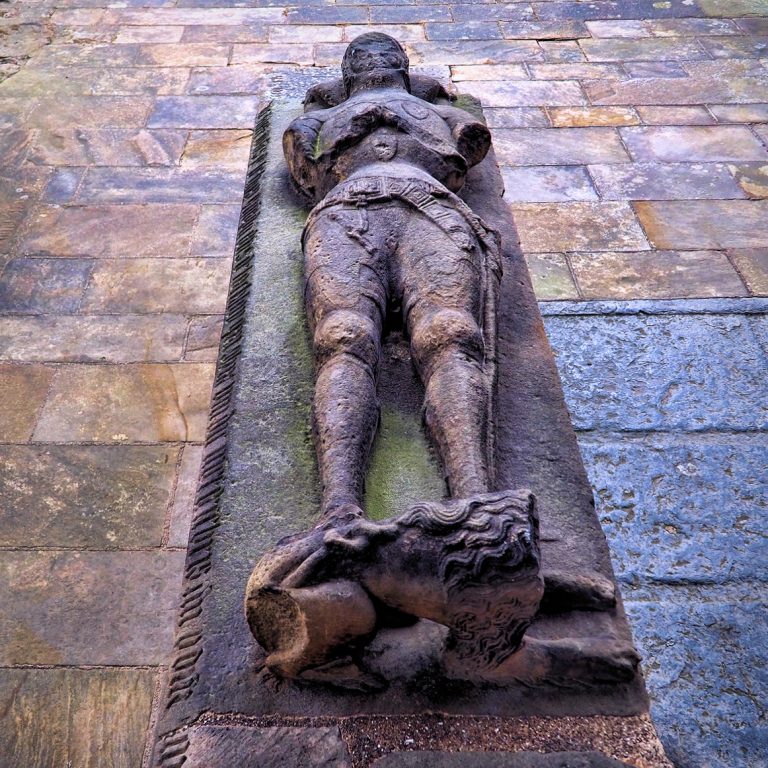
St Vigeans 8, 9, and 13 include a carved grave-cover showing a man consumed by beasts — most likely a warning of Hell, drawing on the visual language of early Christian patristic tradition.
A Place Worth Visiting
St Vigeans today is essentially a suburb of Arbroath, yet it remains a quaint and picturesque village that feels a world apart from the town beside it. The original village is a single street of attractive red sandstone cottages at the foot of the church mound. The Brothock Burn runs past, crossed by a bridge of 17th-century origin.
The parish church itself — built largely in the 15th century from local red sandstone, with parts dating to the 12th century — underwent an unfortunately heavy-handed restoration in the late 19th century. Nevertheless, it retains its original internal round-pillared arcades, and the kirkyard contains fine 18th-century headstones, regarded as notable examples of Angus folk art.
Whether you come for the kelpie story, the Pictish stones, or simply the charm of the village, St Vigeans rewards a visit. Just be careful near any deep lochs on the way.
Sources: Erin Farley, Angus Folk Tales; Historic Environment Scotland; Wikipedia: St Vigeans