Name pronunciation:
BOT-ach
General Information:
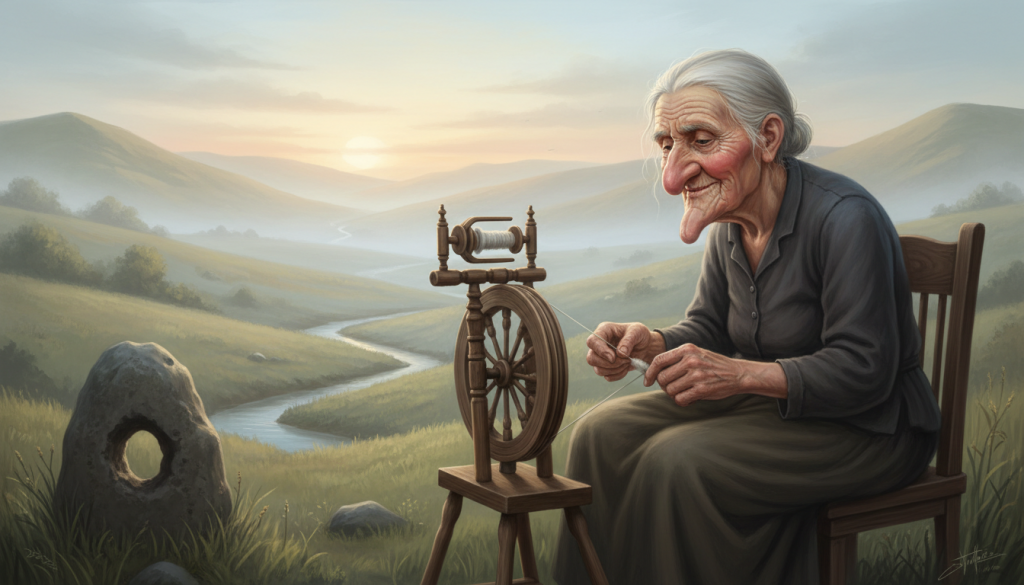
In Scottish Gaelic, the word Bodach can mean an old man, a spectre, or a ghost. It is used widely in Scottish folklore to describe a range of supernatural beings, from household spirits to death omens. Some of these include Am Bodach Ghoirtean, Bodach Cleocain Deirg, Bodach Lamh Dheirg and Bodach Sabhail. However, it is important to note that while there are many Bodachs across different stories and regions, there is also the Bodach, a specific figure who appears as the husband of the Cailleach, the Goddess of Winter and creatoress of Scotland. The Bodach of Glen Lyon belongs to this ancient pair, while other Bodachs represent local variations or later interpretations shaped by oral tradition, Christianity, and shifting cultural memory.
Appearance:
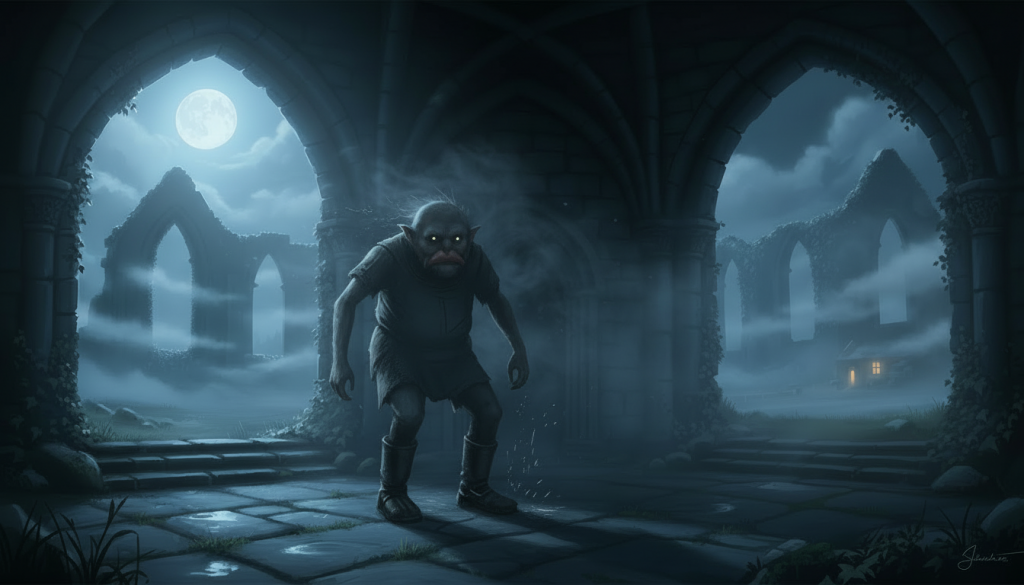
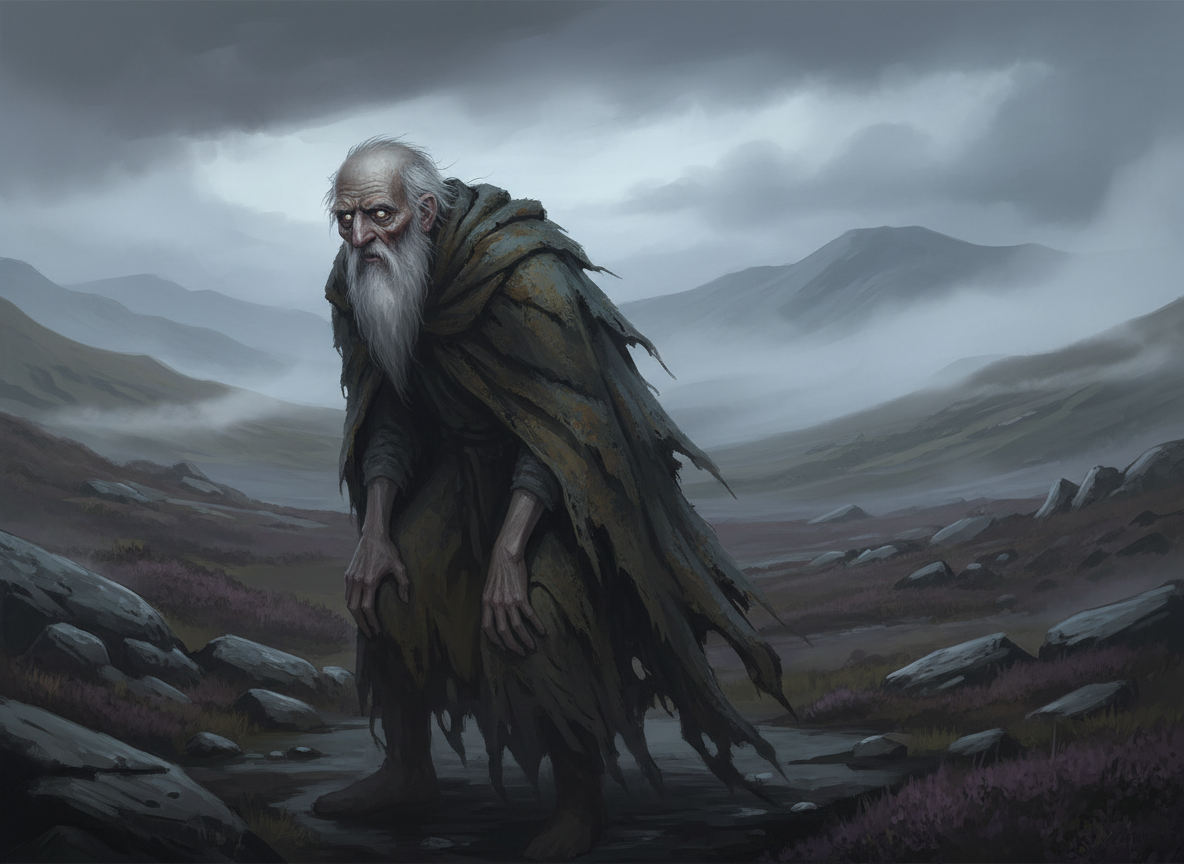
Bodachs are commonly described as elderly male figures with a stooped posture and long beard. Their features may appear weathered, wrinkled, or even goblin-like. Some traditions describe pointed ears, claws, and a hunched silhouette. They may appear in cloaked or disguised forms, which makes it difficult to recognise their true nature. The death-omen variant known as the Bodach Glas appears as a grey, ghostlike presence. In contrast, the Bodach linked to the Cailleach is represented at Tigh nam Bodach by a naturally sculpted stone, worn by water and less than a foot tall. This stone stands with the Cailleach and their Nighean, forming a family group.
Habitat:
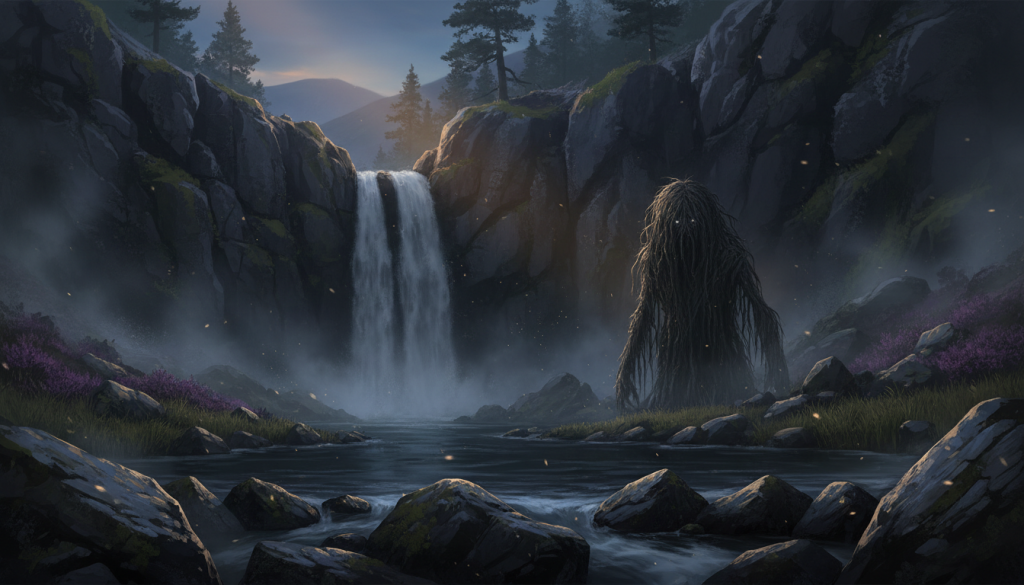
The Bodach is closely tied to the Scottish landscape. His most important physical site is Tigh nam Bodach in Gleann Cailliche, a remote glen within Glen Lyon, Perthshire. The glen features prehistoric sites, ancient carvings, and a long-standing tradition of seasonal rituals. Beyond this shrine, many landforms across Scotland bear the Bodach’s name. These include lochs, rocks, ridges, streams, and mountain peaks. These landforms are frequently paired with features named after the Cailleach, suggesting a long-standing cultural pattern that links the two figures throughout the landscape.
Behaviour:
Bodachs behave in different ways depending on the tradition. In many households, he was treated as a chimney bogeyman used to frighten children into good behaviour. He was said to slip down the chimney at night and pinch or scare misbehaving youngsters. Salt was put on hearths to keep him out. In other stories, he brings misfortune, chaos, or frightening illusions. The Bodach Glas appears before death. Yet in Glen Lyon, the Bodach, who is the Cailleach’s spouse, acts as a benefactor. When treated with respect, he is said to bring mild winters, warm summers, and abundant harvests. This variation shows how the figure evolved across time.
Shape-shifting Ability:
Many stories claim that the Bodach can change his form. He may move between the appearance of an old man, a ghostly figure, a shadow, or a disguised visitor. Irish traditions link certain Bodach figures to divine tricksters who tested mortals through riddles and unexpected appearances. This flexibility hints at an older mythic origin.
Variant:
The most notable variant is the Bodach Glas, meaning the Grey Spectre. This figure is a warning of imminent death. Sir Walter Scott used this tradition in Waverley, where the Bodach Glas appears to Fergus MacIvor before his execution.
Location in Scotland:
Many Scottish landforms bear the Bodach’s name. Examples include Loch nam Bodach on Lewis, Carraig nam Bodach on Mull, Sloc nam Bodach on Colonsay, Allt nam Bodach on Islay, Buaile nam Bodach on Barra, and Leanag nam Bodach on Arran. Mainland examples include Achadh nam Bodach in Aberdeenshire, Baile nam Bodach in Inverness-shire, Cadh a’ Bhodaich near Nigg, and Drumore-na-Bodach in Kintyre. Mountain peaks such as Am Bodach in the Mamores and the Cairngorms are often located near features named after the Cailleach. This pattern suggests that the Bodach and the Cailleach were once recognised as paired forces within Scotland’s mythic landscape.
Stories / Sightings or Experiences:
The Chimney Bodach
In domestic folklore, the Bodach was said to slide down chimneys at night to visit naughty children. He scared, pinched, or tormented them, and exceptionally naughty children were carried away. He was used in a similar way to Chrom Dubh na Nollaig. Salt on the hearth was believed to prevent his entry.
The Bodach Glas
Sir Walter Scott wrote about him as the Bodach Glas, who appears as a grey figure who signals impending death.
The Shrine of Tigh nam Bodach
Tigh nam Bodach is a miniature stone bothy in Gleann Cailliche. Inside are stones representing the Bodach, the Cailleach, their daughter, and several other family members. According to a local legend recorded by Dr Anne Ross, a giant man and woman sought shelter in the glen during a fierce snowstorm. The people welcomed them, and the land prospered during their stay. Before leaving, the pair promised continued fertility as long as the shrine was cared for. Each Beltane, the stones are placed outside the shrine. Each Samhain, they are returned inside for winter. A geas warns that removing or mishandling the stones brings severe misfortune. This long-held belief has helped preserve the shrine.
Purpose of the Myth or Legend:
The Bodach, who is the husband of the Cailleach, belongs to Scotland’s oldest mythic layer. Together they shaped the land, governed winter, controlled seasonal transitions, and protected communities that honoured them. Over time, as Christianity spread, the Bodach became a bogeyman or ghost, while the Cailleach was reduced to a winter hag. Despite this, their names remain fixed in the Scottish landscape. These place-names act as reminders of Scotland’s early beliefs and the deep cultural memory tied to glens, lochs, and mountain passes. He therefore, represents both an ancient seasonal force and a later folklore figure whose many forms echo Scotland’s long history of mythmaking.