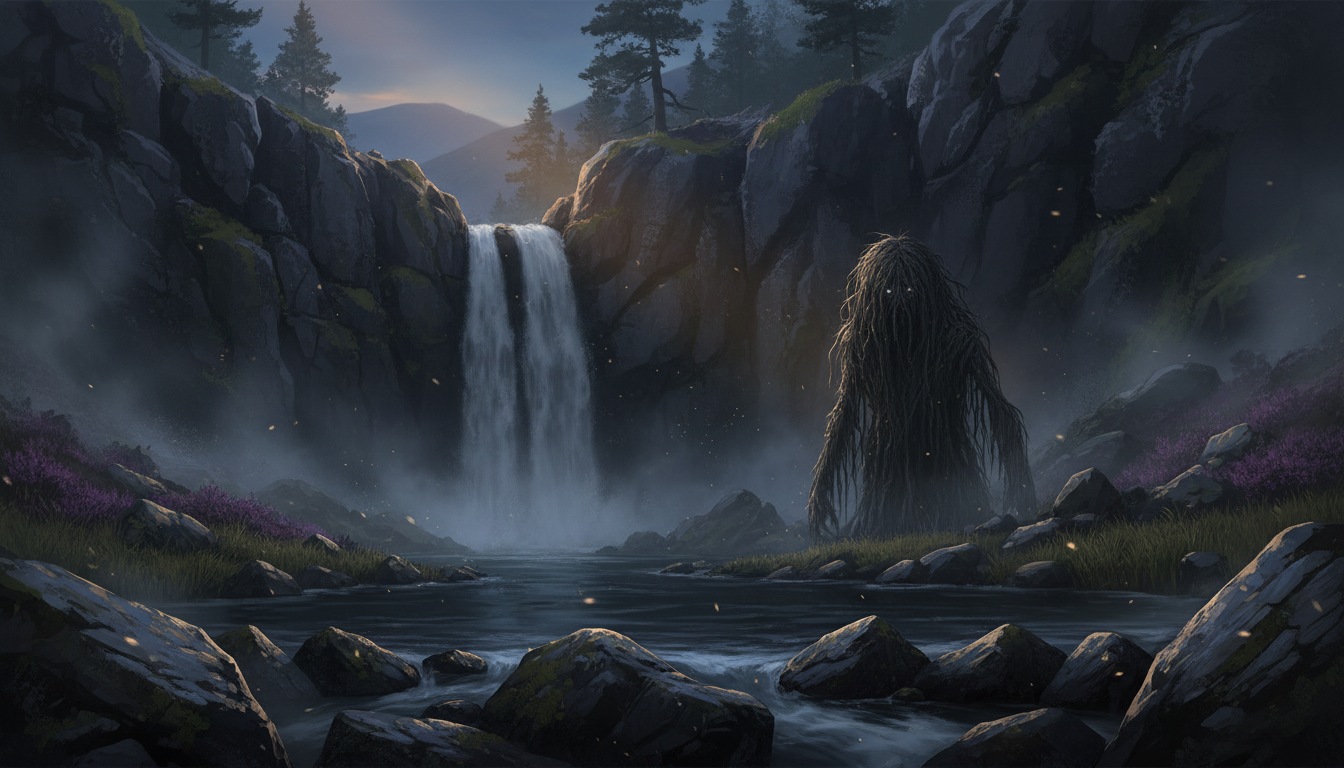
The Pellaidh was a powerful water spirit that haunted the streams and waterfalls of Perthshire, particularly around Aberfeldy. This shaggy creature belonged to the urisk family, a type of fuath or evil spirit in Scottish folklore. Moreover, the town of Aberfeldy itself takes its name from this ancient being, with “Aber” meaning river mouth and “Peallaidh” meaning shaggy in Gaelic.
Name pronunciation:
PYAL-ee (Pellaidh)
General Information:
The Pellaidh was considered the chief of the urisks in Breadalbane. Urisks were water spirits that inhabited lonely and sequestered places throughout Scotland. Some were harmless and even friendly to humans, whilst others proved hostile and dangerous. In Lewis, the name Peallaidh became synonymous with the devil himself. The creature was classified as a fuath, though not all fuaths were necessarily urisks.
Appearance:
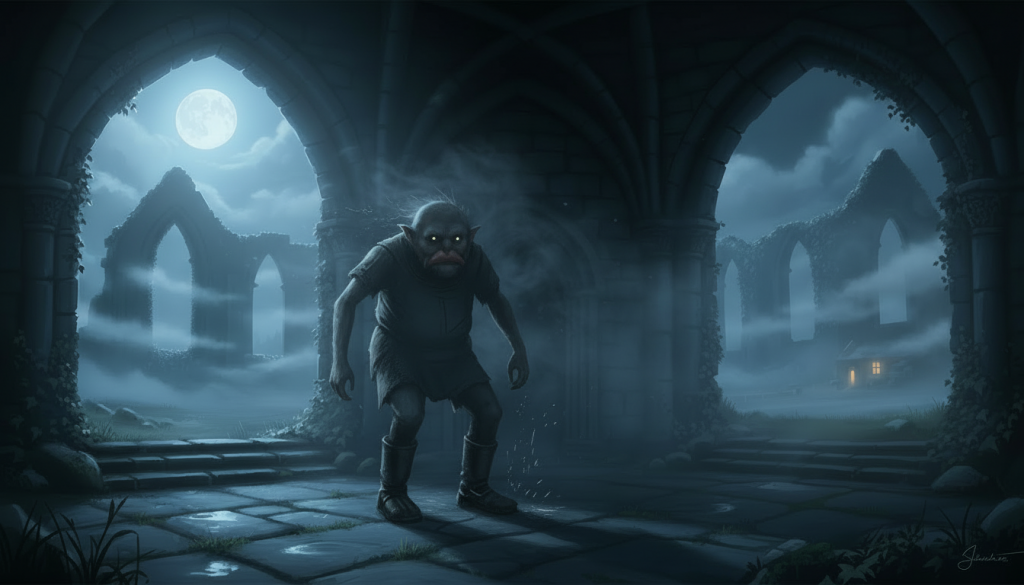
The name Pellaidh translates to “shaggy one” in Gaelic, suggesting the creature had long, untidy hair covering its body. Like other urisks, it was likely humanoid in form but wild and unkempt in appearance. The eastern Scottish and Lowland equivalent was known as the shellycoat, which wore a coat covered in shells that rattled as it moved.
Habitat:
The Pellaidh of the Spout made his home at the Upper Falls of Moness near Aberfeldy. His brother, Brùnaidh an Easain (Brownie of the Little Waterfall), lived in the same stream just above him in the Lower Falls. However, Brùnaidh an Easain is also said to haunt the Urlar Burn nearby. These water spirits preferred waterfalls, gorges, and rushing streams where they could remain hidden during daylight hours.
Behaviour:
The Pellaidh and his brother emerged at night to annoy the townsfolk of Aberfeldy. They were mischievous rather than purely malevolent. However, their behaviour could turn dangerous, particularly when they acted as water demons. People left offerings of milk in cup-marked stones near streams to placate these spirits and ensure safe passage.
Shape-shifting Ability:
There is no recorded shape-shifting ability for Pellaidh, though he shared characteristics with other water spirits who could change form.
Variant:
The Pellaidh is essentially a regional form of the urisk, a subspecies of the broader fuath family of spirits. While the urisk is found across the Highlands, the name Pellaidh is specifically applied to those with particularly long, shaggy hair. A traditional verse names the most famous ones in the Breadalbane area: “Peallaidh of the Spout and Brownie of the Little Waterfall, Babaidh of the Lochan and Brownie of the Island, Padarlan of Fearnan, Peadragan, Patragan, Black-trews from Fortingall, the Spectre of Coire Ghamhnain, Swift-foot of Leitir, Black Amhlagan, Grey-headed Little Cat and the Black Urisk of Amhlagan Falls.”
Location in Scotland:
The Pellaidh’s primary haunt was the Moness Falls near Aberfeldy in Perthshire. A footprint on a rock in Glen Lyon, called caslorg Pheallaidh, was reputed to be his. Additionally, a cataract called eas Pheaillaidh bore his name. The Urlar Burn and surrounding areas of Breadalbane were home to his relatives.
Stories/ Sightings or Experiences:
The Naming of Aberfeldy
The town of Aberfeldy owes its name to this ancient water spirit. Early records show the settlement as “Abrefrally” in 1526 and “Abirfeldy” in 1552. The Pictish word “aber” combined with the Gaelic “Peallaidh” literally means “mouth of the shaggy one’s river.” This demonstrates how deeply embedded the spirit was in local consciousness that an entire town carried his name for centuries.
The Brothers of Moness
Pellaidh and his brother Brùnaidh terrorised the people of Aberfeldy by emerging from their waterfalls after dark. They would venture into the town, causing mischief and disturbances. Local people learned to avoid the falls at night and to leave offerings near the water to keep the spirits content. The two brothers remained in their watery homes for generations, becoming the most famous urisks in all of Breadalbane.
The Footprint in Glen Lyon
A rock in Glen Lyon bears what locals claim is Pellaidh’s footprint, known as caslorg Pheallaidh. This physical mark suggests the spirit travelled beyond his waterfall home, roaming the glens and leaving his impression on the landscape. The footprint served as a warning to travellers that they were entering territory watched over by the chief of the urisks.
Purpose of the myth or Legend:
The Pellaidh legend served multiple purposes in Highland society. Firstly, it explained the dangerous nature of waterfalls and fast-flowing streams, warning children and adults to treat these places with respect. Secondly, it preserved ancient Pictish and Gaelic place names and their meanings. Finally, it maintained the tradition of leaving offerings at sacred sites, connecting Christian-era Scots with their pre-Christian ancestors who honoured water spirits.