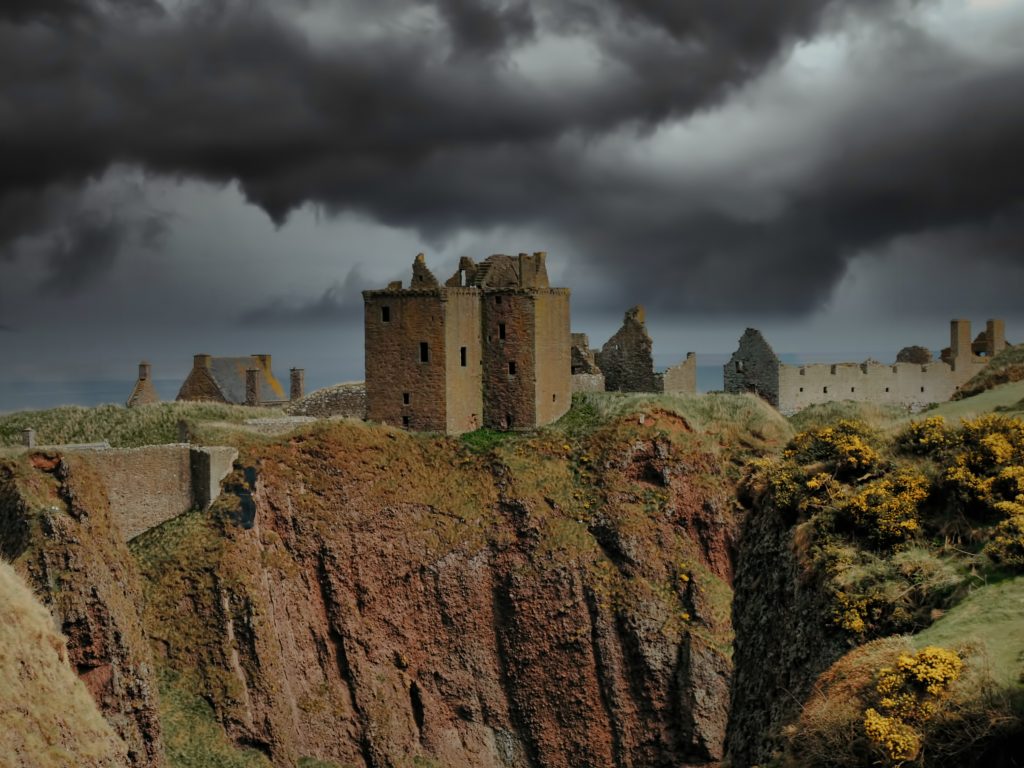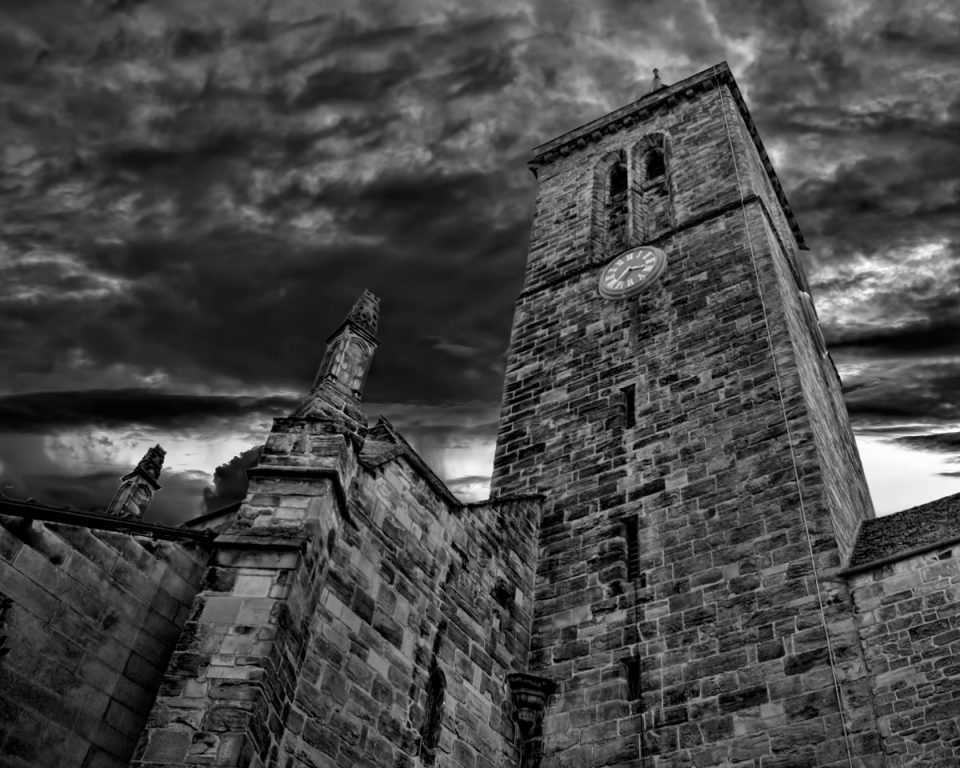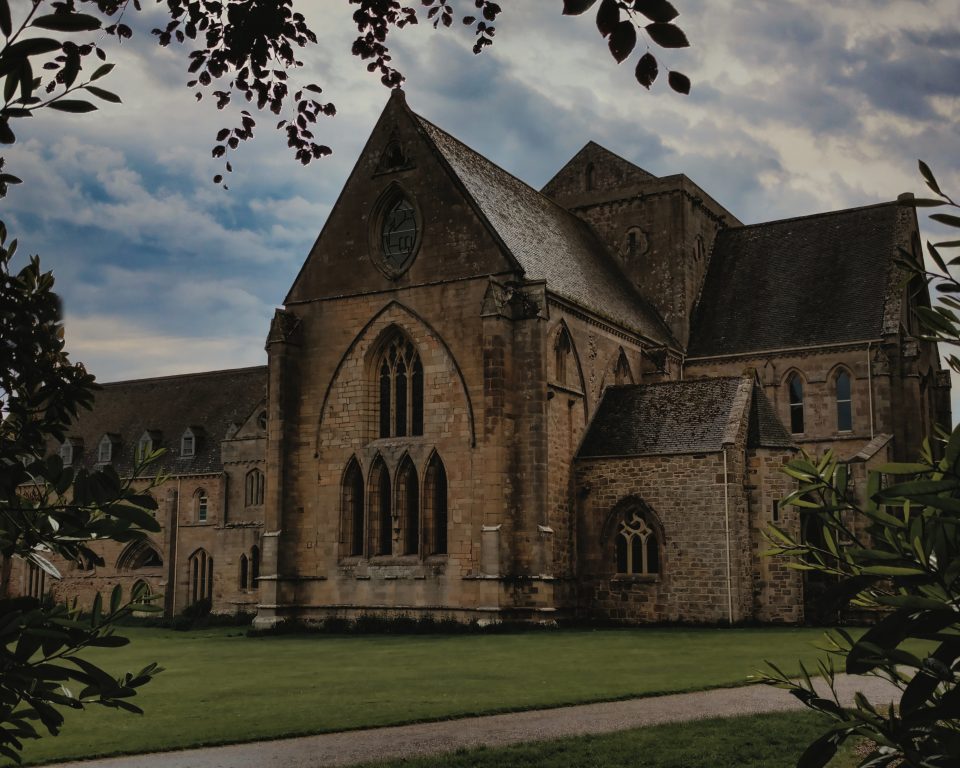
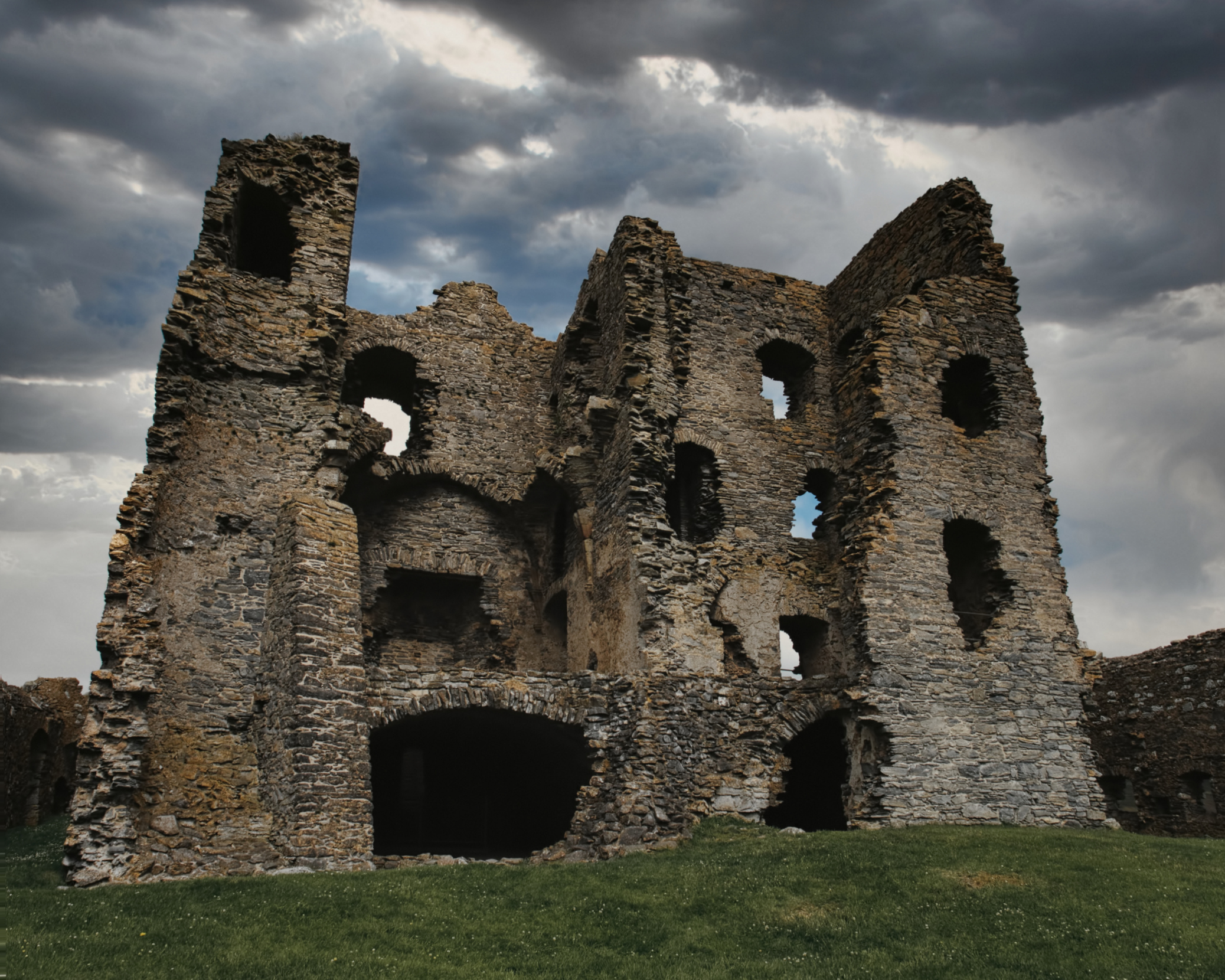
Auchindoun Castle is a stark, lonely ruin nestled in the foothills of the Cairngorms, overlooking the spectacular views of Fiddichside. In the late summer, the hills immediately behind the castle turn purple as the ling heather bursts into bloom. This adds to the stunning and yet bleak beauty of the setting. Located off the road between Dufftown and the Cabrach, this route is one of the first to close in winter. Consequently, the snow sweeps across the mountains with great ferocity. Its former occupants were clearly not faint-hearted but filled with Scottish toughness. They were as stubborn as the thistles which grow through the castle’s curtain walls. In the solitude of this haunting moorland, one wonders if its former occupants still roam its crumbling halls. Only the sheep and the crow remain to bear witness to their nightly visits.
Twenty miles to the south lies Corgarff Castle on the Lecht Road. This is Scotland’s other notorious route which closes with the first snowfalls. The building is not ruinous, yet it is perhaps less spectacular than Auchindoun. The tower house looks more like a large stately home than a traditional castle. However, it has been the victim of multiple burnings over the centuries. It served as a barracks for soldiers hunting Jacobites and later as a government base for hunting whisky smugglers. Here, the ghosts are not silent. The history of both castles is closely linked through a deadly clan feud. Their owners took opposing sides during the Scottish Reformation. Both strongholds have been set on fire, and both have inspired famous ballads.
The Origins of the Gordon and Forbes Feud
Auchindoun Castle was constructed around 1470 for John Stewart, Earl of Mar. It was built on the site of an Iron Age hillfort. Eventually, the castle passed to the Ogilvy family. In 1567, it was sold to Sir Adam Gordon. Adam was well connected as the son of the 4th Earl of Huntly, known as the “Cock o’ The North.” He was also a cousin to Mary, Queen of Scots. Because Gordon was Catholic, he was a staunch supporter of Mary’s claim to the crown. This led to direct conflict with the Protestant Forbes family of Corgarff Castle.
The feud between the Forbes and the Gordons actually pre-dates the Reformation. The Forbes claimed descent from the Kings of the Picts. Therefore, they saw themselves as one of the few authentically Celtic land-owning families in Aberdeenshire. They deeply resented Norman-French “incomers” like the Gordons and the Keiths. The 1520s were marred by murders on both sides. For instance, the killing of Seton of Meldrum was blamed on John Forbes. In retaliation, George Gordon devised a plot against the Master of Forbes. This resulted in the young man’s execution in 1537. Although the conviction was later reversed, the blood feud was firmly established.
The Reformation and the Rise of Edom o’ Gordon
The Reformation saw an escalation in these tensions. The Gordons remained Catholic while the Forbes embraced the new Protestant faith. In an attempt at reconciliation, the Earl of Huntly wed his daughter Margaret to the Master of Forbes. However, “Black” Arthur Forbes did his best to fuel the antagonism. He was a courageous and ambitious man who would not be easily bought. Meanwhile, the Gordons were becoming too powerful for the crown’s comfort. Mary, Queen of Scots, eventually came north to deal with the situation personally.
This culminated in the Battle of Corrichie in 1562. Huntly was taken prisoner and died shortly after. His son, Sir John Gordon, was executed in Aberdeen. Adam Gordon of Auchindoun was spared only because he was seventeen years old. Despite this early brush with death, he became one of Mary’s most faithful servants. He eventually took the role of lieutenant in the north with great gusto. By 1571, the two houses met at the Battle of Tullieangus. Adam Gordon hid his superior numbers to trick the Forbes into an ambush. It was here that Black Arthur Forbes met his fate, delivered by a fatal blow through a joint in his armour.
The Infamous Burning of Corgarff
The most harrowing chapter of this feud occurred in November 1571. Adam Gordon, or “Edom o’ Gordon,” sent his men to Corgarff while the Forbes men were away. Margaret Forbes refused to surrender the castle to the Gordons. In response, the attackers piled kindling against the walls and set the building on fire. Twenty-eight people, including Margaret and her children, were burnt to death. This atrocity is immortalised in the ballad Edom o’ Gordon. The lyrics capture the chilling moment the youngest son pleads for his life:
“Oh open the door and let me oot,
For this reek is choking me.”
“I wid gie up ma gowd,” she cried,
“Ma siller and ma fee,
For a blast o’ the whistling wind,
Tae blaw this reek frae me.”
The ballad further describes the tragic fate of the daughter:
“They rowed her in a pair o’ sheets,
And threw her ower the wa’,
But on the point o’ the Gordon’s sword,
She got a deidly fa’.”
Perhaps this event explains the ghostly screams that are heard in this castle. The barracks are said to be the most haunted part of the site.
The Burning of Auchindoun and the Final Ruin
Adam Gordon eventually fled to France in 1574 to escape the Regent’s forces. While there, he survived an assassination attempt by Arthur Forbes’ son. He returned to Scotland in 1575 but died only five years later. However, the violence did not end with his death. In 1591, Auchindoun Castle was attacked and badly damaged by the Mackintoshes. This was the result of a different quarrel, yet it mirrored the fiery fate of Corgarff. The ballad The Burning of Auchindoun records the event with a sense of grim satisfaction:
“As I gaed doon by Auchindoun,
On a May morning,
Auchindoun was in a bleeze,
An ‘oor before the dawning.”
The castle was subsequently repaired but eventually fell into dereliction by the early 18th century. Some of the stone was removed for use in other buildings. Today, the ruins of Auchindoun stand as a silent witness to the “Herod of the North.” Corgarff remains standing, though its walls still echo the tragic history of the Forbes family. Both sites remind us of a time when clan loyalty was paid for in fire and blood.