Name pronunciation:
Urisk
Scottish Gaelic ùruisg: roughly “OO-risk” (IPA often given as [ˈuːɾɯsk])
General Information:
Urisk is a solitary nature spirit from Scottish Gaelic tradition. Unlike the English brownie, who is usually linked to houses and hearths, the Urisk is tied to wild places. In particular, tradition places him at streams, waterfalls, corries, and lonely glens. Because of that, he often feels closer to the landscape than to the home.
At the same time, the Urisk is not simply a monster. Many accounts describe him as troublesome when untamed, yet helpful when treated well. He reflects a familiar Highland idea: the wilderness can feed you, but it can also humble you.
Several writers treat the Urisk as related to brownie traditions, but with a more outdoor, rough-edged character. John Gregorson Campbell is especially clear on this distinction. Moreover, later collectors and commentators expand the picture with stories from Lochaber, Breadalbane, and Perthshire.
Appearance:
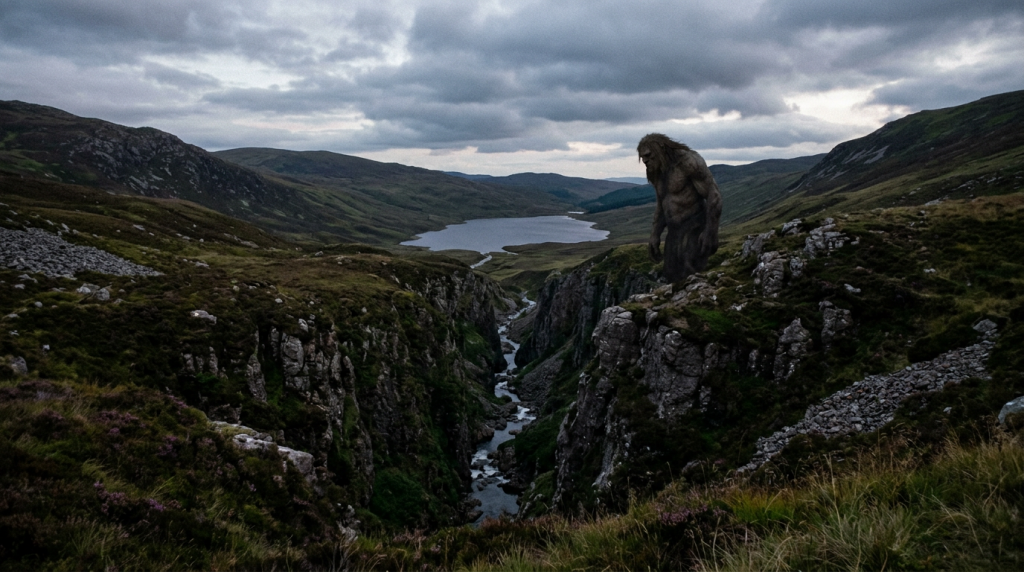
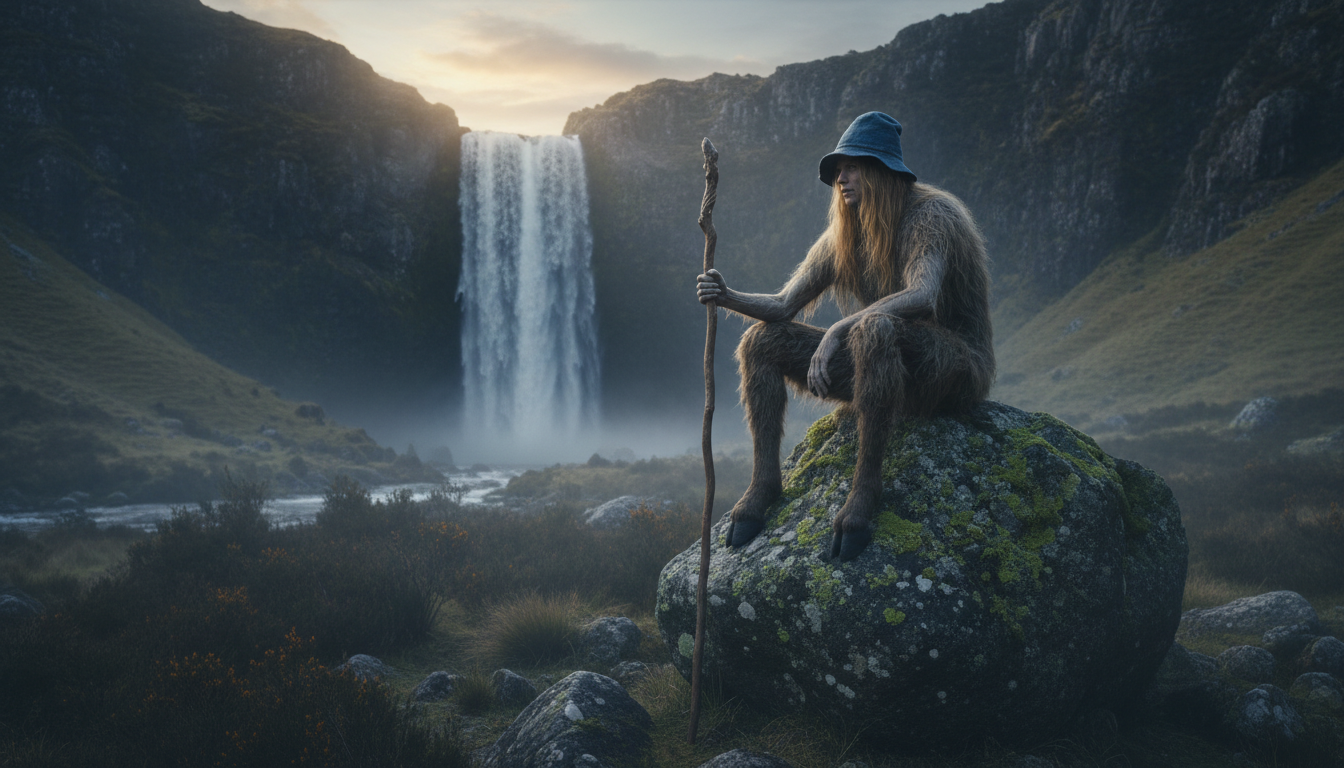
The Urisk is often described as half-man and half-goat. He is usually male in tradition, although some sources suggest both sexes exist. He may have hooves, goat legs, and heavy body hair. In addition, some descriptions mention long hair, long teeth, and long claws.
Some traditions give him a more human outfit as well. For example, he may be shown with flowing yellow hair, a broad blue bonnet, and a long staff. However, the most consistent detail is his shaggy, wild, unkempt look, which often scares people before he has done anything at all.
Habitat:
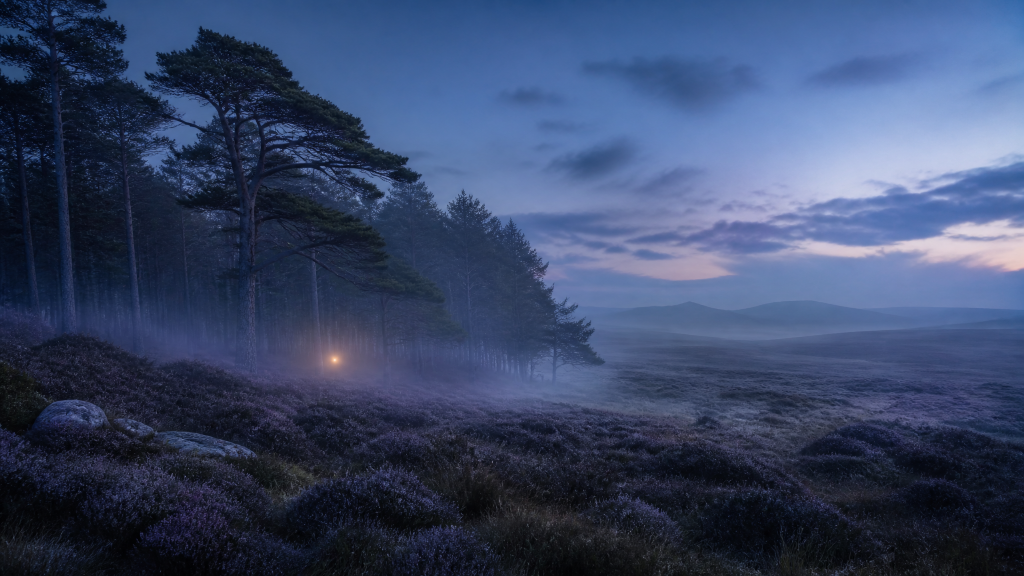
Urisk lore places him in remote Highland settings. He haunts mountain rivers, waterfalls, reedy lochs, and wooded burns. He is also linked to caves and rocky clefts. Because he is a creature of solitude, he is often seen on a boulder at dusk, watching passers-by.
Season matters in these stories. In summer, the Urisk tends to remain in the high, lonely places. In winter, he is said to come down into the straths. He may then visit farms at night, or even take shelter in a mill or outbuilding.
Behaviour:
The Urisk’s behaviour shifts depending on context. In the wild, he can be a vandal and a menace. Some accounts blame him for butchery, arson, and ravaging. Yet in other stories, he is harmless, if unsettling. He may simply stare from a rock, or move away slowly, keeping his distance.
Importantly, the Urisk can also be useful. When “domesticated” or treated kindly, he becomes loyal. He may help with farm drudgery such as grinding or threshing. His presence may even be taken as a sign of prosperity.
However, he has boundaries. Like brownies, he dislikes being given clothes. That gift can offend him and drive him away. So, if you want his help, you must show respect rather than control.
Shape-shifting Ability:
No clear shape-shifting power is consistently recorded for the Urisk. Instead, his “power” is more social and supernatural. He appears and vanishes at odd hours, and he sometimes avoids being seen unless he chooses.
Some traditions add that he is usually seen by those with second sight. Yet he can make himself visible to ordinary people as well.
Variant:
The Urisk has several related names and overlapping traditions.
- Ciuthach / Kewach: In some areas, similar beings are called ciuthachs. A story from Eigg places a ciuthach in a cave.
- Shellycoat: In parts of the Lowlands and east coast traditions, a water-spirit figure called a shellycoat overlaps with urisk-like lore.
- Peallaidh: Some accounts describe Peallaidh as a chief figure among urisks, with place-names and water-features linked to him.
- Triubh-dubh: One Perthshire urisk is described as black and is called Triubh-dubh (black trews).
These overlaps matter because Scottish folklore often blends beings by place and function. As a result, the Urisk can look like a brownie in one tale and like a water demon in another.
Location in Scotland:
Urisk traditions are strongly Highland. They appear in Lochaber, Breadalbane, and Perthshire. In addition, place-names preserve the belief. For example, a waterfall near Clifton at Tyndrum is called Eas na h-uruisg (the Urisk’s cascade). Other named locations include Coire nan uraisg and related passes, which are tied to gatherings or hauntings.
Campbell also notes traces in Tiree place-names. Yet he also suggests that the belief is less common in the Hebrides than on the mainland.
Stories/ Sightings or Experiences:
The Urisk of Eas Buidhe: “Myself and Myself”
In Glen Mallie, Lochaber, a ravine called Eas Buidhe was said to be an urisk refuge. Near it were summer pasture bothies used by dairymaids. One Urisk became a daily nuisance to a dairymaid, sitting by the fire, asking questions, and getting in her way. She wanted him gone, but she feared angering the rest.
When he asked her name, she told him it was “Myself and Myself.” Later, when he blocked her again, she let boiling whey spill onto his feet. He fled howling, and the other urisks rushed to ask who harmed him. He answered, “Myself and Myself.” Therefore, they decided no revenge was needed, since he had “burnt himself”.
This story is useful because it shows two things at once. First, the Urisk intrudes on dairy work, which fits his reputation. Second, it shows that clever speech can protect a human from supernatural retaliation. It shows similarities to the tales of the Brollachan and Brownie Clod.
Big Alastair and the Night Fishing
In another tale, Big Alastair fishes during misty rain and has the best catch of his life. Night falls before he notices. Then he realises an Urisk is fishing beside him, keeping pace trout for trout. Eventually, the Urisk insists it is time to stop and divide the fish.
The Urisk offers a method of division that ends with “the last big spratlum for me.” Alastair understands that he, Alastair, may be that “big spratlum.” So he delays, fumbling and recounting, until dawn. When the cock crows, the Urisk vanishes.
After that, Alastair never fishes that river after nightfall again. This tale frames the Urisk as a boundary creature. The night belongs to it, and the human survives by waiting for day.
The Urisk of Sgurr-a-Chaorainn: The Jeering Voice
At the foot of Sgurr-a-Chaorainn in Lochaber, an Urisk lived in a steep rock. It jeered at herdsmen passing by, calling out insults or taunts. One man endured it. Another, Donald Mòr, finally shouted back, “That is but the return you owe me.” After that, the Urisk stopped.
This is a smaller tale, yet it matters. It suggests that not every encounter requires trickery. Sometimes, a firm answer is enough.
The Miller’s Night Visitor
Thomas Keightley records a mill story where the mill runs at night without grain. A man keeps watch and sees a rough shaggy being, who gives his name as Urisk. The man calls himself “Myself.” When the Urisk falls asleep, the man throws hot ashes into his lap. The Urisk runs out screaming, and his companions ask who did it. He says, “Myself.” They reply, “Then put it out yourself.”
This closely echoes the “Myself” motif, which is important for folklore study. It shows the same trick travelling between tales.
Purpose of the myth or Legend:
Urisk stories do several jobs in Highland tradition.
First, they map danger onto landscape. Waterfalls, ravines, and lonely glens are beautiful, but they are also risky. The Urisk makes that risk feel personal. He becomes the “someone” who lives where you should not linger at dusk.
Second, the Urisk explains the uneasy relationship between farm and wilderness. He can help with drudgery, yet he cannot be owned. Therefore, the stories teach a kind of respectful caution. Offer food and kindness, but do not offer clothes. Ask for help, but do not assume it will come.
Third, the Urisk embodies otherness. He is half-human in shape and half-goat in body. That makes him familiar and strange at once. As a result, he becomes a figure for the boundary between the settled world and the wild.
Finally, these tales preserve social rules in entertaining form. Do not fish alone at night. Don’t wander into ravines at dusk. Do not provoke what you do not understand. Yet also, keep your wits. In Urisk stories, quick thinking saves lives.