
Name pronunciation:
GIG-el-or-um (also known as Giol-Daoram: gyol DARE-um)
General Information:
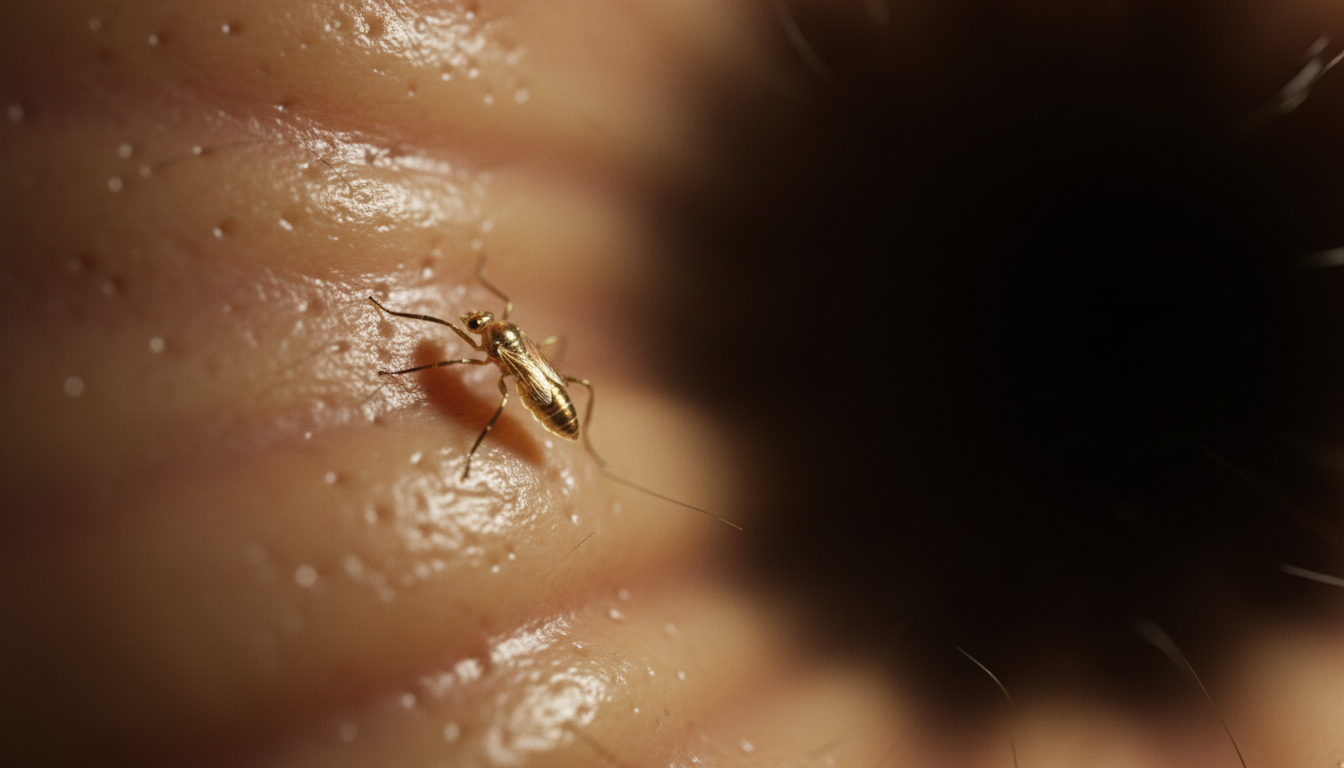
Gigelorum is said to be the smallest creature in Scottish folklore. In fact, it is so tiny that tradition claims it can live in the ear of a mite. Because the story is brief and odd, it often stands out in bestiary lists.
However, the Gigelorum is also controversial. Some writers treat it as a genuine folk belief, while others think it may be an invention. Ronald Black noted the lack of authoritative sources beyond John Gregorson Campbell’s account. So, the Gigelorum sits in that hazy space between folklore and possible literary flourish.
Appearance:
There is no detailed physical description of the Gigelorum. Still, it is generally described as insect-like, or at least “animalcule” small. Therefore, most accounts focus on its size rather than its shape.
Habitat:
The Gigelorum’s most famous habitat is also its strangest. It supposedly inhabits the ear of a mite. As a result, it is not linked to a particular Scottish loch, glen, or ruin in the way many other creatures are.
Behaviour:
The Gigelorum is defined by its near-invisibility. It can only be seen by people with excellent eyesight, if it can be seen at all. Consequently, it becomes a creature of whispers and claims rather than sightings.
Shape-shifting Ability:
No shape-shifting ability is recorded for the Gigelorum.
Variant:
The creature is also known as Giol-Daoram. In addition, it may be connected to the giolcam-daobhram, which John Gregorson Campbell described as the smallest insect visible to the naked eye. That said, the relationship is speculative rather than certain.
Location in Scotland:
The Gigelorum appears in Highland and Island folklore discussions, particularly through the writing of John Gregorson Campbell. Later commentary connects it to broader reflections on Scottish identity and storytelling.
Stories/ Sightings or Experiences:
The Creature in a Mite’s Ear
The defining tale of the Gigelorum is simple but memorable. It was believed to be so small that it could inhabit the ear of a mite. Because of that, it was often treated as the smallest imaginable living thing, rather than a beast you might hunt or flee.
The Question of Whether It Exists
A later strand of the story is about doubt. Ronald Black argued that he could trace no authoritative sources beyond Campbell, which raises a blunt question. Was the Gigelorum real folklore, or was it a clever invention that took on a life of its own? Either way, the Gigelorum has become a small legend about how legends are made.
Purpose of the myth or Legend:
The Gigelorum may have served as a way to talk about the limits of human sight and knowledge. It also works as a reminder that folklore is not always neat or verifiable. Sometimes, a tale survives because it is strange, small, and impossible to prove.