Name pronunciation: La-vellan (Scottish Gaelic: làbh-allan)
General Information:
Lavellan is a legendary creature from the folklore of northern Scotland, particularly associated with the regions of Caithness and Sutherland. While the name is used in Scottish Gaelic to describe real animals like the water shrew or water vole, the mythical version is far more sinister. Historically, naturalists like Thomas Pennant and John Fleming documented the deep-seated dread that locals felt toward this beast. It was often compared to the ermine or weasel in appearance but possessed a far more lethal reputation. Consequently, the creature became a symbol of sudden, unexplained illness among livestock in the Highlands.
Appearance:
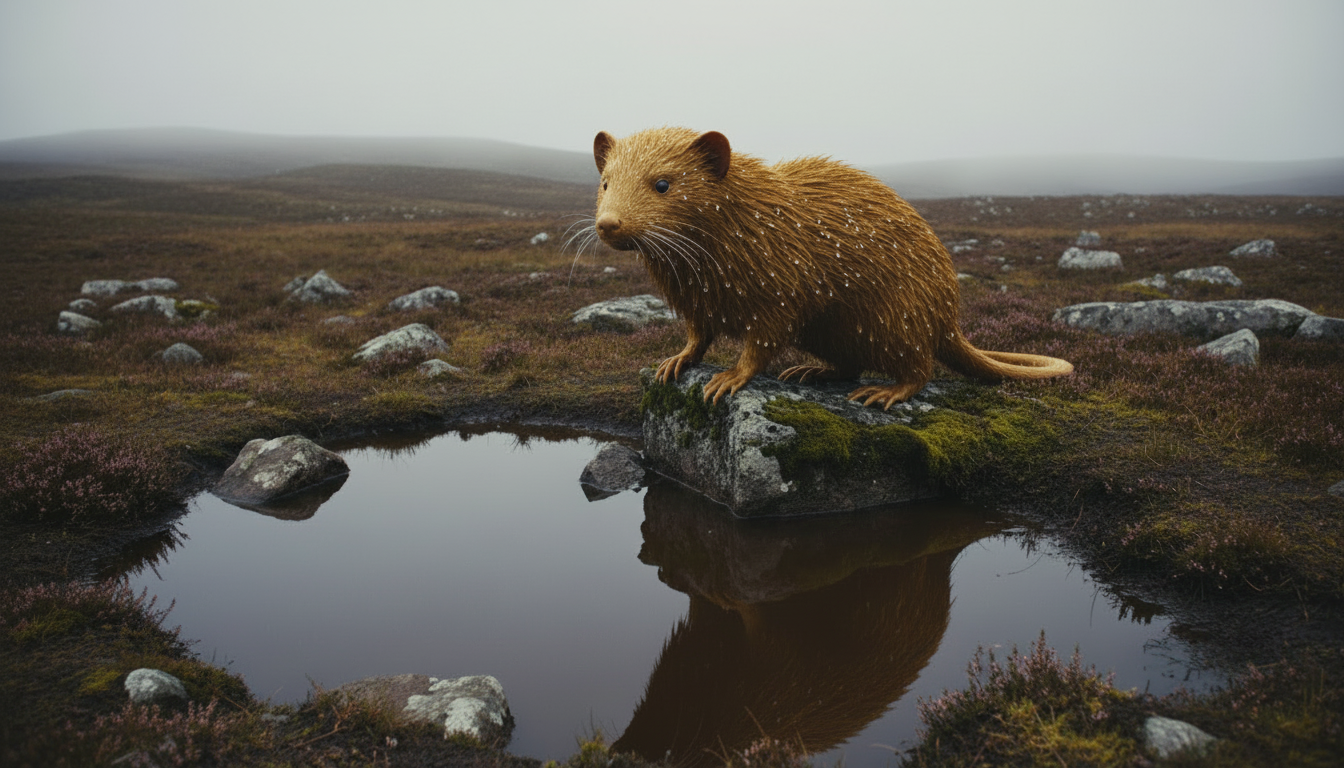
The physical form of the Lavellan is frequently described as being similar to a large water rodent or a weasel. According to Edward Dwelly’s dictionary, it is significantly larger than a common rat. It typically features a head resembling a pine marten or weasel with fur of a similar earthy colour. Some modern interpretations suggest it has sharp teeth and golden fur that may glow faintly in the dark. However, the most defining characteristic is its noxious nature rather than its size.
Habitat:
This creature primarily resides in the deep, still pools of Scottish rivers and marshy areas. It is a creature of the water, often found lurking in the mossy banks of the far north. Because it prefers secluded aquatic environments, it was rarely seen but frequently blamed for local misfortunes.
Behaviour:
The Lavellan is notorious for its extreme toxicity and aggressive aura. Legends claim that its breath or even its mere presence is enough to strike down cattle. Specifically, it was said to be able to injure animals from a distance of over one hundred feet. Therefore, farmers lived in constant fear of this tiny but potent monster. Despite its poisonous reputation, the creature also provided a paradoxical form of medicine.
Shape-shifting Ability:
There are no traditional records of the Lavellan possessing shape-shifting abilities. It remains firmly rooted in its rodent-like or mustelid form throughout Scottish folklore.
Variant:
In different parts of the Highlands, the creature is known by various Gaelic names such as làbh-allan, la-mhalan, or la-bhallan. In Sutherland, some locals referred to it as the “water mole.” While the names vary, the core belief in its poisonous breath remains consistent across the northern counties. A similar rodent -type creature from Scottish mythology is the Earth hound from Aberdeenshire.
Location in Scotland:
The myth is most prevalent in Caithness and Sutherland. Specifically, the naturalist Thomas Pennant recorded accounts of the creature while visiting Ausdale and Langwell. It is a monster uniquely tied to the rugged landscapes of the Scottish north.
Stories/ Sightings or Experiences:
The Healing Skin of Ausdale
During his travels in 1769, Thomas Pennant discovered a fascinating tradition in the village of Ausdale. He learned that the local people would actively hunt the Lavellan to preserve its skin. Although the living creature was deadly, its dried skin was considered a powerful talisman. When a cow or horse fell ill, the farmers would dip the skin into a bucket of water. They believed the water absorbed the creature’s essence and turned into a potent cure. After the sick animal drank this “Lavellan water,” it would reportedly recover its strength immediately.
The Satire of Rob Donn
The famous Sutherland poet, Rob Donn, mentioned the creature in his satirical work “Mac Rorie’s Breeches.” In this poem, he uses the Lavellan as a symbol of hidden danger. He warns the subject of the poem not to wander too far from the safety of the houses into the moss or woods. He suggests that if the man strays, the Lavellan might emerge from the shadows to “smite” him. This shows that the creature was a common cultural reference point in the 18th century.
Purpose of the myth or Legend:
The legend of the Lavellan likely served as a way for rural communities to explain sudden deaths or illnesses in their cattle. Since the water shrew is actually one of the few venomous mammals in the world, the myth has a small basis in biological fact. By creating a supernatural version of the animal, the Highlanders could categorise the invisible threats of the natural world. Additionally, the ritual of using the skin provided a sense of control and hope during agricultural crises.