Name pronunciation:
dʒaɪər ˈkɑːrlɪn/ (similar to “gyre car-in”)
General Information:
Gyre Carlin is a terrifying hag, witch, giantess and fairy queen from Scottish folklore, especially associated with the Lowlands and the east of Scotland. Her name combines Norse roots: gýgr (ogress) or geri (greedy) and kerling (old woman). In Scots, “carlin” simply means old woman, but in her case it suggests much more: a monstrous crone with a taste for human flesh and a command of powerful magic.
Sometimes she is considered to be the same crone figure as Nicnevin and as such becomes the Queen of Elphame, ruler of the Unseelie Court and the Crone Goddess of Samhain. Her name derives from Scottish Gaelic Nic an Neamhain, meaning “daughter of frenzy” or “daughter of the divine”. She is the Hecate of Scottish belief, riding on storms and marshalling wandering spirits under her grim banner. Yet she is also a figure of protection, divination and peace—a paradox that defines her nature. Sir Walter Scott described her as a “gigantic and malignant female”, yet modern magical traditions honour her as a guide through the veil between worlds.
She is also considered the be the Lowland equivalent of the Cailleach Beira, Goddess of Winter and creator of Scotland.
Appearance:
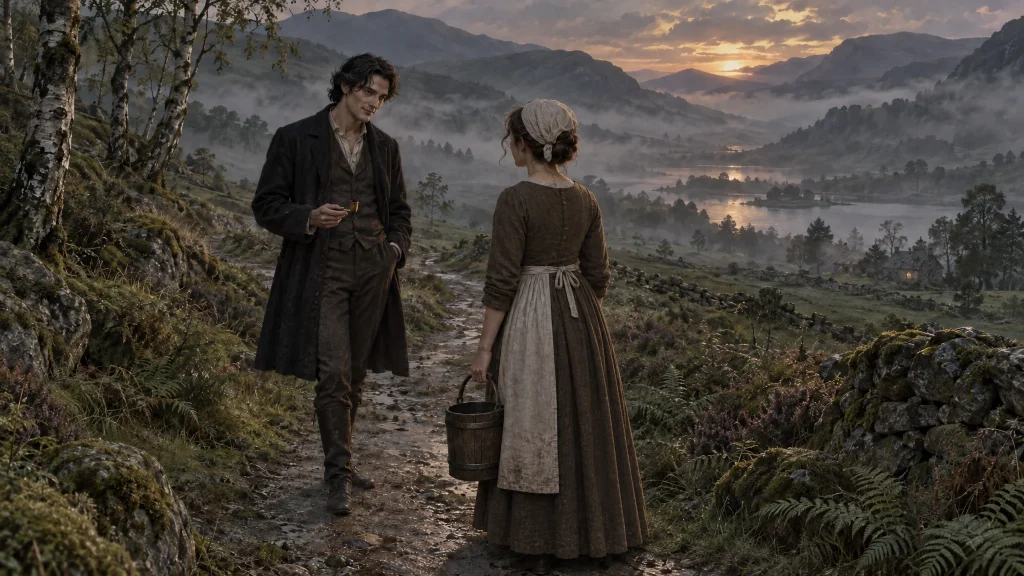
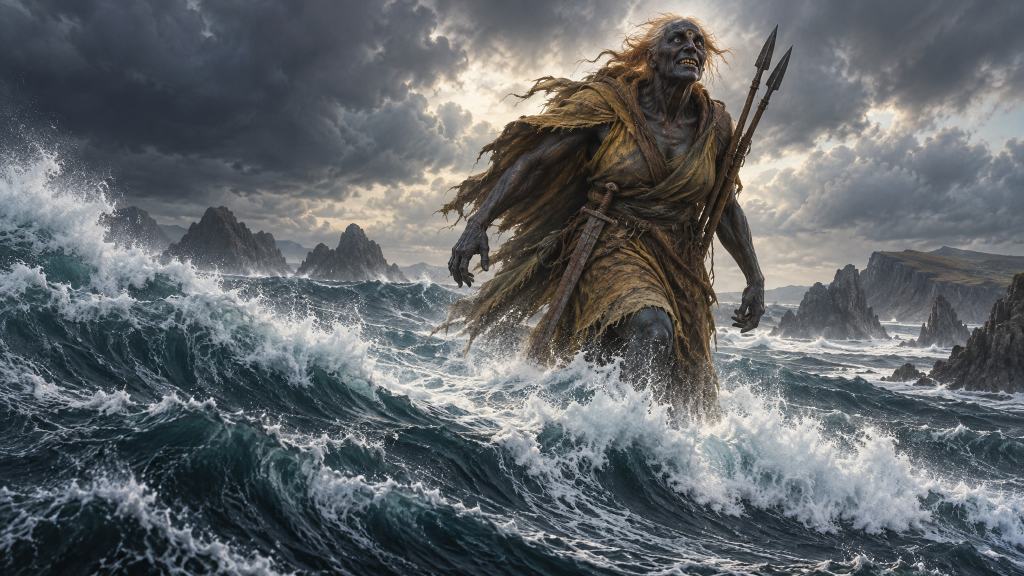
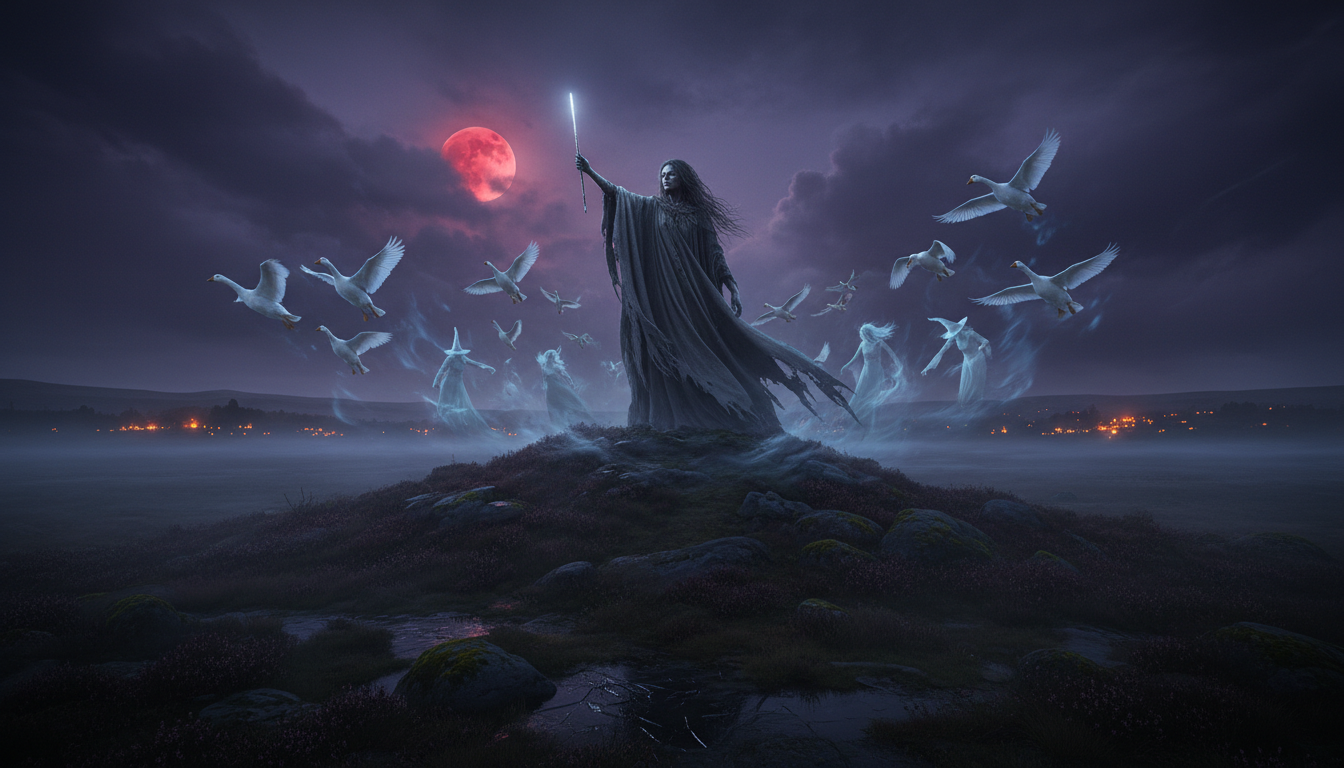
Gyre Carlin manifests in two distinct forms. As an old crone, she is a huge, withered figure wearing a long grey mantle. She carries a white wand or staff with terrifying power—capable of turning sea to solid land and water to rock. Her face is ancient and lined, her eyes bright with malice and cunning. In this guise she appears at spinning wheels and witch gatherings, towering over ordinary folk.
Yet she can also manifest as a beautiful young woman, equally striking and dangerous. This dual nature—hag and maiden—echoes the triple Goddess archetype. Her presence is often announced by the cackling of white geese, sacred birds that herald her arrival. When she rides through the night sky, she is accompanied by a retinue of witches and the honking of her geese, a sound that strikes terror into those who hear it.
Habitat:
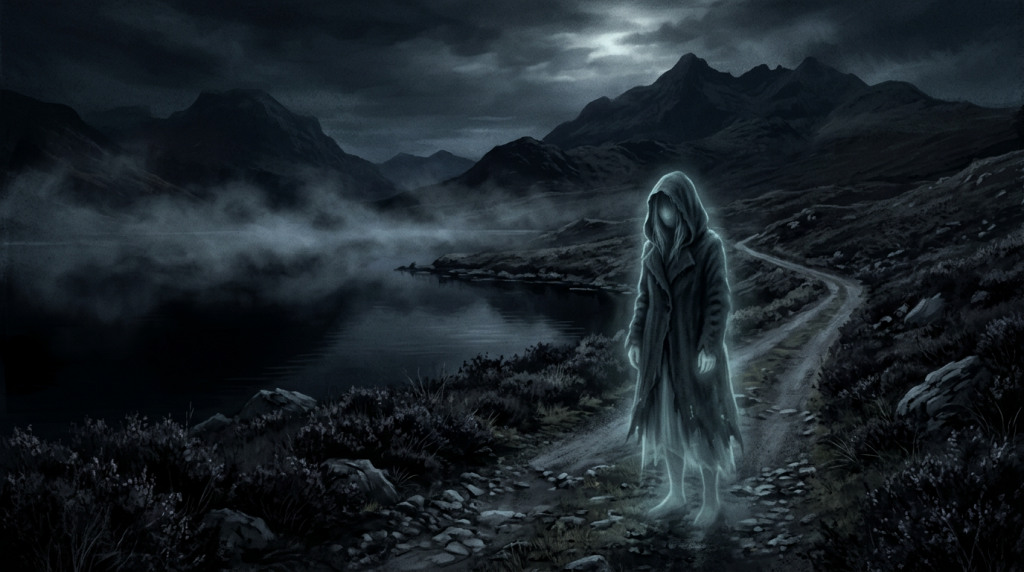
Gyre Carlin is strongly rooted in the landscape of southern Scotland. Her most famous haunt is Locharbrigg Hill, about four miles from Dumfries. Below this hill lies Lochar Moss, once an area of open water that, according to legend, she transformed into a vast bog. The moss long served as a natural moat for Dumfries, protecting the town and providing peat for fuel. Archaeological finds of boats in the drained moss suggest it really was once sea or loch, giving her legend an unsettling hint of truth.
Beyond Dumfriesshire, she is associated with Fife and the east of Scotland, where she watches over spinning and knitting work, and with other witch-haunted hills where gatherings were said to take place. On winter nights, people claimed to hear Gyre Carlins and fairies curling on frozen lochs, their shouts and the scrape of stones ringing across the ice. She dwells in the liminal spaces: between land and water, day and night, the visible world and Elphame.
Behaviour:
Gyre Carlin’s behaviour spans domestic interference and large-scale acts of magic. In Fife and Sutherland she is tied to spinning and cloth-making. If flax is left on the distaff at the turn of the year, or knitting is left unfinished at New Year, she may steal it. In some accounts she can also grant skill. A woman who respectfully asks her aid might manage three or four times as much spinning as her neighbours.
However, she is far from kindly. In the Bannatyne Manuscript she is “an grit Gyre-Carling” who lives upon Christian men’s flesh. She leads frightening processions at Halloween, presides over the Hallowmass Rades, and is “near a-kin to Satan himself”. The Carlin and her followers can stop travellers, overfill them with butter and barley husks, kidnap children and leave changelings, or drag the unwary into their wild rides. She combines the roles of fairy queen, witch-mother and cannibal ogress in one deeply unsettling figure.
Yet as Nicnevin, she also governs protection, divination and peace. On Samhain, the veil between worlds grows thin and she grants wishes and answers petitions. She is the guide for those seeking to communicate with spirits and ancestors. In this aspect she is honoured with feasts and toasting, and her wisdom is sought by those practising magic.
Shape-shifting Ability:
Gyre Carlin’s magic includes notable powers over shape and land. In one sixteenth-century poem she dwells in a tower, defending herself with an iron club against the King of Fairies and his elves. When she is finally forced to flee, she settles herself on a sow and rides away, changing both her own stature and the nature of her mount to escape.
Her wand or staff can alter the landscape itself. At Lochar Moss she is said to have struck the sea and turned open water into miles of bog. In a more subtle form of glamour, she can appear as an ordinary hag at the spinning wheel, a storm-rider in the clouds, a beautiful young woman, or the towering queen of a witch sabbath. These different guises allow her to move between cottage, hilltop and sky with ease. She can transform water into rocks and sea into dry land with a single gesture.
Variant:
Nicnevin is not merely a variant but maybe an alternative name and elevated aspect of Gyre Carlin. The name has several suggested meanings, including “daughter of heaven”, “daughter of frenzy” or a link to the Irish war goddess Badb (Nemhain). In this guise Nicnevin becomes the Queen of Elphame, ruler of the Unseelie Court and the Crone Goddess of Samhain itself.
As Nicnevin, she is sometimes conflated with Habetrot, another crone-like spirit known for magical powers of spinning, weaving and clothmaking. She may also appear as Habundia, the Hecate figure of Scottish fairy mythology. In legal records, women accused of witchcraft, such as Catherine Nevin of Crieff, carry surnames that may reflect association with this fearsome figure. Whether called Gyre Carlin, Nicnevin or another related form, she embodies the same dark, commanding presence.
Location in Scotland:
Gyre Carlin’s legend spans much of Scotland, yet several locations are especially important:
- Locharbrigg Hill and Lochar Moss, near Dumfries – scene of her dramatic land-changing magic and major witch gatherings.
- Fife and the East of Scotland – where she supervises spinning and knitting, and appears in satirical poems about bishops and healers.
- Dumfries and Galloway – where she is remembered as mother of glamour and ruler of the Hallowmass Rades.
- Sutherland – where she visits at Candlemas and Shrove Tuesday, working unattended spinning wheels through the night.
- Witch-linked towns such as Crieff and Bute – where names like Nevin or NicLevine appear in witch-trial records, echoing her presence.
- Elphame – the fairy realm over which she reigns as Queen, accessible only to those who know the hidden ways.
Stories/ Sightings or Experiences:
The Smiting of Lochar Moss
One of the most dramatic tales of Gyre Carlin explains the origin of Lochar Moss. During a grand gathering of witches on Locharbrigg Hill, several of her horses strayed down to the shoreline below. At that time the area where the moss now lies was open sea. A sudden high tide swept the horses away, enraging their mistress. In fury, Gyre Carlin raised her wand and struck the water. Instantly, the shining surface heaved and darkened, turning into a vast expanse of treacherous bog.
For centuries afterwards, Lochar Moss lay between two and three miles wide, forming a natural moat that guarded Dumfries. People cut peat there for fuel and told how the witch’s staff had frozen the sea. When engineers finally drained the moss in the eighteenth and nineteenth centuries, they uncovered the remains of boats beneath the peat. These finds suggested that the story carried a kernel of truth: where there was now land, there had once indeed been water, just as the legend claimed.
Walpurgis Night on Locharbrigg Hill
Locharbrigg Hill held a fearsome reputation as a meeting place for witches and warlocks, especially on Walpurgis Night, the 30th of April. On this night, Gyre Carlin stood just below Satan himself in rank. New members of the craft were brought before her, where she oversaw their initiation. After the rites, wild celebrations followed: dancing, feasting and spells cast against enemies or reluctant lovers.
Parallels soon grew between these gatherings and the wider idea of the Wild Hunt. People said that on some nights the witches and their leader did not remain on the hill. Instead, they rode through the sky, their passage marked by roaring wind and strange cries. Anyone caught in their path risked being swept up into the rushing host, carried far from home or forced to ride until dawn.
The Song of the Night Ride
A rhyme said to be sung by Gyre Carlin’s followers gives a chilling sense of the mood before a ride:
“When the grey owl has three times hooted,
When the grinning cat has three times mewed,
When the fox has yowled three times in the wood,
At the red moon cowering behind the cloud;
When the stars have crept deep in the mist,
Lest spells had picked them out of the air,
Up horses all, without more ado,
Ride, ride, for Locherbrigg hill!”
The verse sets a scene of watchful animals, a blood-red moon and stars hiding from enchantment. Only when these signs appear do the witches mount and ride. For listeners, it confirmed that nature itself responded to Gyre Carlin’s presence, drawing in light and sound before the storm of hooves overhead.
Mother of Glamour and the Hallowmass Rades
In Dumfries and Galloway, Cromek records that Gyre Carlin was “the mother of glamour, and near a-kin to Satan himself.” She presided over the Hallowmass Rades, terrifying Halloween processions when witches, fairies and restless dead swept across the countryside. Mothers frightened misbehaving children by threatening to give them to “M’Neven, or the Gyre Carline.”
These rides echoed the wider European Wild Hunt. People believed that the gusts and sudden squalls of late autumn might be the passing of her host. Those foolish enough to be out on such nights risked being blocked on the road, stuffed with butter and barley husks, or carried off entirely. Sensible folk stayed indoors, banked the fire and made sure no spinning or knitting was left unfinished, in case the Mother Witch herself came tapping at the door.
Nicnevin’s Samhain Ride
On Samhain (Halloween), Nicnevin makes herself visible as she flies through the air accompanied by a retinue of witches and honking geese. This is her sacred night, when the veil between worlds grows thin and she grants wishes and answers petitions. Unlike the terrifying Hallowmass Rades, this ride carries a different energy: one of magic, divination and communion with the dead.
Those who honour her on this night light pumpkins or turnips to illuminate the way for family spirits to join the celebrations. In Druidical tradition, Samhain was a time to rectify matters causing dissent. Nicnevin provides the magical power for this purpose. By writing grievances on white paper and burning them in hallowed fire whilst invoking her name, practitioners ask her to destroy negativity and restore peace.
The Gyre Carlin and Yule / Seasonal Rides:
Although Gyre Carlin is most famous for Walpurgis and Halloween, her influence stretches across the turning points of the year. Hallowmass marks the last great ride of autumn, when the veil between worlds is thinnest and her court roams most freely. At this time she is closest to Nicnevin, leading the unseelie host with the fairy king and queen riding at her side, as described by the poet Montgomerie.
In winter, she and related “Gyar Carlins” can be heard curling on frozen lochs, enjoying rough games on the ice. The sound of stones scraping and shouts echoing over the dark water was once taken as proof that the witches and fairies were out. Around the New Year, her connection to spinning becomes especially important. Households in Fife and beyond dreaded leaving knitting unfinished or flax on the distaff as the old year turned, fearing she would claim the work and perhaps the luck of the home.
Further north, her seasonal visits at Candlemas and Shrove Tuesday show another side of this cycle. She appears as an old woman with a child, demanding fresh water to bathe the infant and commandeering any spinning wheel left with its band in place. In this way, Gyre Carlin stands at several key thresholds: between sea and land, autumn and winter, work and idleness, human and otherworldly. As winter deepens, her presence grows stronger, and Samhain becomes her most powerful night.
Purpose of the myth or Legend:
Gyre Carlin myths serve several overlapping purposes in Scottish tradition. On a practical level, they enforce household discipline. By linking her to unfinished spinning or careless use of the wheel, the stories encouraged women to clear their work properly before festivals and year-end. Her power over land and sea reflects attempts to explain dramatic changes in the environment, such as the existence of wide bogs where there might once have been water.
On a deeper level, she personifies the dangerous side of female power and the harness of winter. As a cannibal giantess, witch and fairy queen, she embodies anxieties about witchcraft, the unknown forces behind storms, and the liminal times when the ordinary rules no longer hold. Her name turns up around witch trials, suggesting that real women were sometimes seen through her shadow.
Yet Nicnevin also represents protection, divination and the wisdom of the old ways. Following Scotland’s brutal witch trials, a former Goddess was reclassified as both fairy and demon. Modern magical practitioners have reclaimed her as a guide through the veil, a teacher of magic and a protector of those who honour the old festivals. In this way, Gyre Carlin and Nicnevin embody a paradox: terror and wisdom, destruction and healing, the hag and the Goddess, all contained in one powerful figure who stands at the threshold between worlds.