Name pronunciation:
/traʊ/ (rhymes with “cow”)
General Information:
The Trow is a dark fairy, spirit or elf from the folklore of Orkney and Shetland. Also known as trowe, drow or dtrow, the trow belongs to the same supernatural family as the Scandinavian troll, yet it has a distinct island character. In many tales the word “trow” is used almost interchangeably with “fairy”, although tradition often makes the trow the darker cousin. According to Saxby and Edmondston, the trow is more human-like than the troll and has a “morbid, melancholy mould”.
There are no true female trows in some strands of lore. Instead, trows marry human women who die soon after bearing a son. A trow does not marry twice and cannot die until his son is grown. However, many stories simply show trows behaving like Scottish fairies elsewhere: stealing cattle, kidnapping children or new mothers, and dancing wildly in the hills. Modern folklorists also suggest human roots for these legends. Some link them to Viking invasions or to men hiding from naval press-gangs in caves and ruins that later became known as trowie haunts.
Appearance:
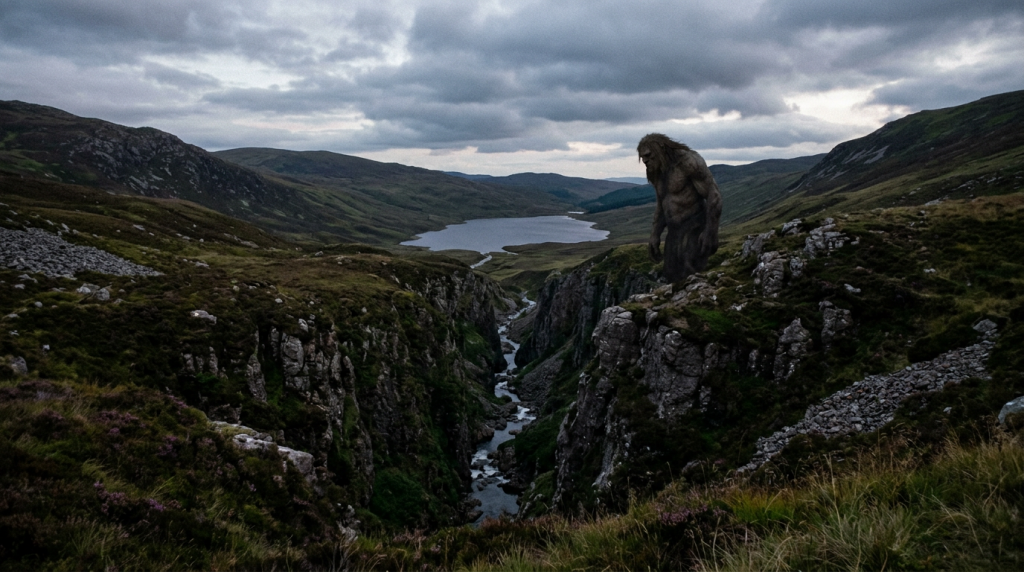
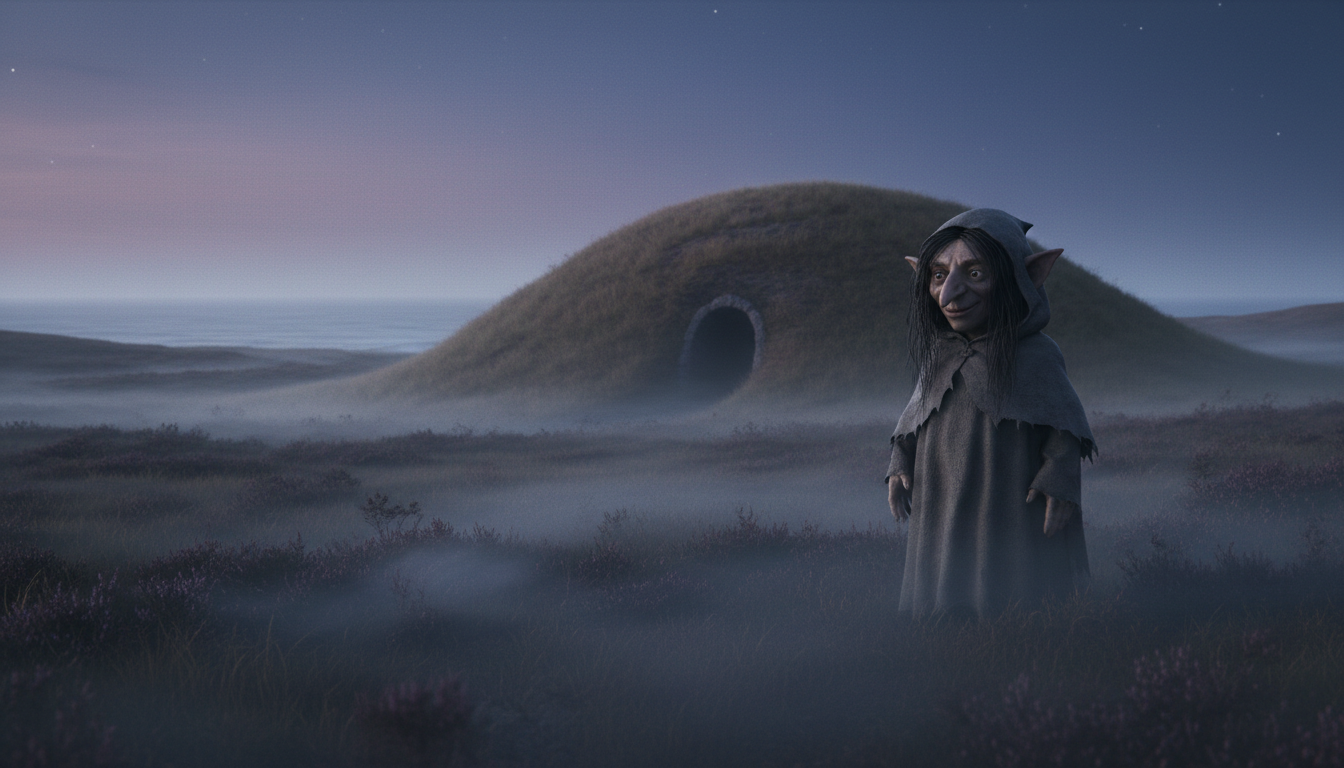
Trows are described in many ways, yet several details recur. They are often small, from a foot high to a little under human height, with dark hair, pointed features and bright, mischievous eyes. Some sources call them the “grey-folk”, always clad in sober grey. Others mention them in green clothing, like fairies elsewhere in Scotland. In Shetland, people spoke of “peerie folk” with straight black hair and sallow faces.
However, descriptions can shift. A few accounts show them almost human-sized, even wearing armour and fighting pitched battles between mounds. Sea-trows look stranger still. Dennison describes them as the ugliest beings imaginable, with monkey-like faces, huge limbs on a thin body, sloping heads and feet “round as a millstone”. They move with an awkward limp or “henk”, which gives names like Haltadans – the “Limping Dance”.
Habitat:
Trows live in earthen mounds known as “trowie knowes”, brochs, Neolithic tombs, ruined chapels and sea caves. Many of these places are real archaeological sites. In Orkney and Shetland, people often pointed to ancient brochs and grassy knolls and quietly said they belonged to the trows.
Trowie Glen on Hoy, with its natural mounds, was feared after dark. Long Howe in Tankerness and the knowes near Huip in Stronsay were also avoided. In Shetland, places like Konger’s Knowe, the Troils o Houlland or the Knowes of Catfirth were firmly linked with trows. Sea-trows haunt the foreshore and deeper waters, troubling fishermen and stealing fish from the lines.
Behaviour:
Trows are nocturnal. They cannot bear daylight and swarm out only after dark to dance, feast, play tricks and meddle in human affairs. Many tales stress their love of mischief rather than pure malice. They sour ale, turn butter rancid, send sparks flying from the hearth and tangle everyday tasks.
Yet they can be deadly. They steal cattle and leave wooden or sickly “stocks” in their place. They kidnap new mothers to nurse trow princes, or they swap human babies for changelings. People believed that sickly, ill-tempered children might actually be trow-bairns. Trows also press-gang human musicians, forcing them to play while the trows dance through the night. Time in their halls runs strangely. A fiddler may think he has played for an hour, only to find a hundred years have passed and his body crumbles to dust.
The Trows and Yule:
Yule was the most important season in the trow calendar. According to tradition, the trows gained full freedom from their underground homes for the seven days before Yule-day. This period began on Tulya’s E’en, when people prepared their houses carefully. Each member of the family washed from head to toe and put on clean clothes. Three live coals were dropped into the wash water to protect hands and feet.
During these nights the trows roamed freely, joining human revels in disguise. They especially loved the fires, drink and dancing of Yule gatherings. A chilling tale tells of two children left sleeping at home while their parents attended a party close by. As the music grew lively, the children appeared at the doorway and danced with astonishing skill. Only when their mother cried “Guid save me, the bairns!” did they vanish. At dawn their bodies were found in a snowdrift. The trows had borrowed their shapes, leaving the real children exposed to the winter night.
Food was also at risk. Trows stole hams and mutton unless protected with steel forks or knives. They raided houses for drink. In one Papa Stour story, a man hid in his own boat on Yule E’en and watched as trows rowed it across the sea, fetched kegs of whisky from a cave and carried off two more kegs as a “Yule dram”.
The trows’ presence ended on the twenty‑fourth night of Yule. On this night, doors were opened wide. People banged pots, swung firebrands and shouted to drive the trows back to their hills. As dawn broke, their freedom ended. According to Up Helly Aa tradition, the blaze and iron on display helped chase away any lingering trows, forcing them underground until the next winter.
Shape-shifting Ability:
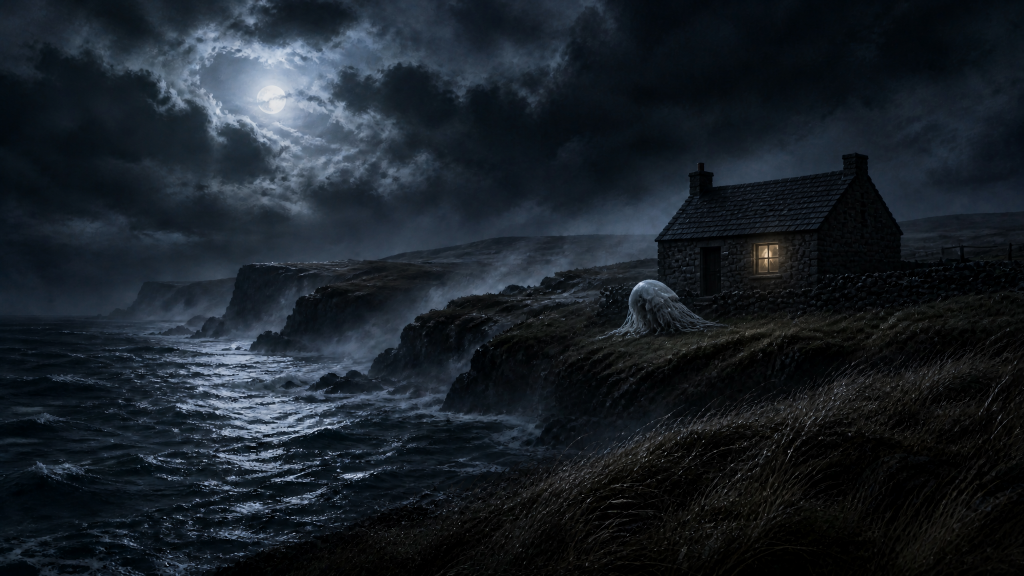
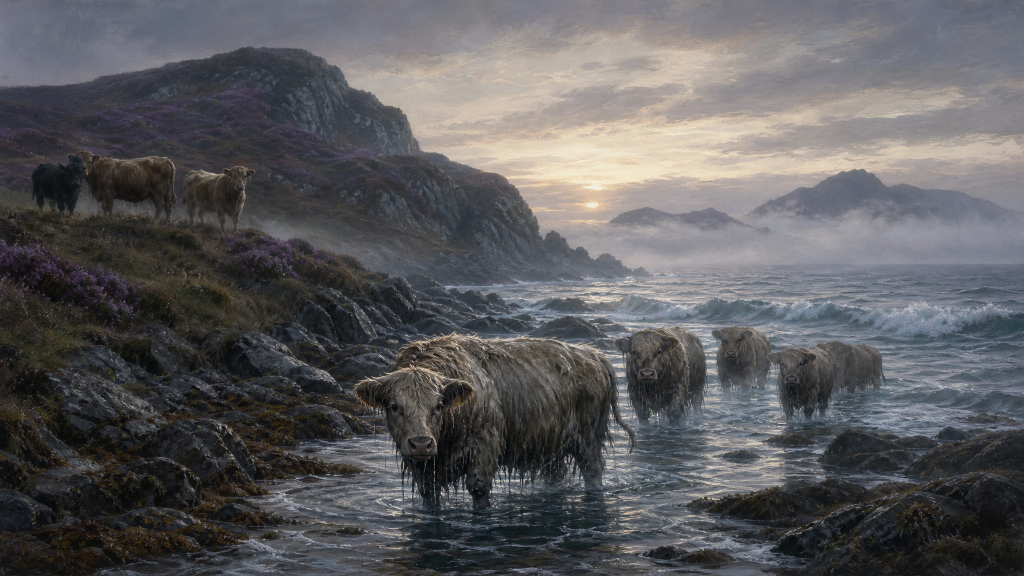
Trows show some capacity for changing form, especially the sea and water trows. Sea-trows can appear as great rolling creatures in the waves, as shaggy kelp-covered horse-like beings, or even as wailing women who herald misfortune. Some tales blur the edges between trows, selkies, nuckelavee and other sea spirits, suggesting shared shapes and roles.
On land, trows are more likely to use glamour than full shape-shifting. They can leave lifelike doubles of humans or cattle, tricking families into caring for empty shells. They also alter the look of houses and hills, hiding doors and passages. Trow items, such as swords, spoons or kettles, often seem ordinary at first, then shift into dung or vanish once the spell breaks.
Variant:
A notable variant is the Kunal-Trow or King-Trow of Unst in Shetland. This race is entirely male. Each Kunal-Trow takes one human wife in his lifetime. She bears him a son and almost always dies in childbirth. Afterwards, the Kunal-Trow abducts a human wet nurse to feed the child.
One powerful witch managed to survive such a marriage. She extracted the secrets of Trowland from her husband and gave birth to two uncanny beings: Ganfer, an astral body, and Finis, a death-omen who appears in the likeness of someone about to die. Her story shows how human magic can sometimes match or even outwit trow power.
They are closely related to the Hogboy or Hogboon.
Location in Scotland:
Trows are most closely linked with:
- Orkney – Trowie Glen on Hoy; Long Howe in Tankerness; brochs and mounds across the islands; the Mound of Dingieshowe in Deerness; Michael Beatty’s Cove in Skerries.
- Shetland – Unst, Yell, Papa Stour, Foula and many lesser knolls known locally as trowie sites. The Haltadans stone circle on Fetlar is said to be a ring of petrified trows.
- Caithness – The Mire of Trowskerry near Canisbay, a marshy landscape of mounds and hollows.
In many of these places, local people once altered their daily routines to avoid angering the trows, especially around Yule and after dark.
Stories/ Sightings or Experiences:
The Limping Dance of the Haltadans
One of the best‑known tales of the trows describes the stone circle on Fetlar called the Haltadans, meaning “Limping Dance”. According to local tradition, a group of trows were celebrating at the height of summer. They had dragged a human fiddler into their circle and demanded tune after tune. The dance grew wilder with every reel. The trows “henked”, hopping on bent legs with their hands locked tight between knees and calves. Their movements were strange to human eyes, yet they kept perfect time with the fiddle.
As the trows revelled, they failed to notice the first threads of dawn creeping up behind them. The fiddler saw the sky brighten, but he could not stop playing. At the moment the sun touched the hill, the entire circle froze. The trows turned to stone where they stood, caught mid‑step. The fiddler, trapped in the centre, became the lonely standing stone at the heart of the circle. Even now, people say the Haltadans carry an odd rhythm, as if the ground itself remembers the final beat of the trowie dance.
The Fiddler Who Lost a Hundred Years
Tales of musicians taken by trows appear across Orkney and Shetland. One story tells of Tam, a talented fiddler from Deerness. Walking home late one night, he met a tiny grey man with a long beard and sharp dark eyes. The stranger invited him to “come play a peerie tune”, and Tam, flattered, agreed. He followed the man through a hidden doorway in the great mound at Dingieshowe and down a steep tunnel lit with a soft blue glow.
Inside was a vast hall filled with trows dancing, drinking heather ale and shouting for music. Tam played like never before. Time passed strangely. Every tune seemed to melt into the next. When he finally left the mound, he expected to see the sun rising over the waves. Instead, he found an unfamiliar world. His home was a ruin. The people who lived nearby wore different clothes and spoke of events he did not recognise. A century had passed. Tam himself had not aged, but the weight of years returned all at once. His body crumbled to dust as he stepped over the threshold of his old home.
Trowie Tunes and the Musicians Who Learned Them
The trows’ love of music runs so deep that Shetland still preserves reels and airs said to have come from their halls. Many are grouped under the name “Trowie Tunes”. Some were learned by chance. A fiddler on Unst once claimed he heard trows playing inside a hill and waited in the darkness, repeating the melody until he knew it by heart. Another musician lying half‑asleep heard a company of trows crossing past his door before dawn, accompanied by a piper whose tune lingered like mist.
Not every encounter ended well. One man overheard a trow tune but was spotted. From that night on, his mind wandered. He babbled about the “peerie misty men” and scraped the same fragment of melody over and over. Yet others were rewarded. Jeems o’ Da Klodi played at a trow gathering and received a bag of threepenny pieces. The Fiddler of Flammister was promised that nine generations of his family would carry a fiddle, and they did.
The Witch Who Mastered Trowland
One remarkable tale concerns a witch who married a Kunal‑Trow. Human wives nearly always died after giving birth to trow sons, but she refused that fate. She bargained, teased and tricked her husband until he revealed every secret of Trowland. She learned their cures, their weaknesses and their hidden roads between hills.
When her child was born she survived, producing two strange beings: Ganfer, an astral form, and Finis, an apparition who appears as a warning of death. The witch’s mastery of trow knowledge allowed her to walk safely between their halls and the human world. Her story suggests that although trows hold great power, a determined human with cunning can win a place among them.
Trows at the Hearth and on the Hill
Everyday encounters also fill the folklore. In Northmavine, a small man once crept into a barn to warm himself beside the fire. The woman tending the corn dropped a few embers by mistake. The trow shrieked, fled outside and left behind a shoe so tiny she later used it as a snuff-box.
In Skerries, Michael Beatty’s wife kept losing oatcakes from the hearth. One night her husband hid and watched a hearth stone lift like a trapdoor. A trow hand shot up, grabbed a freshly baked cake, and vanished. The stone dropped silently back into place.
Even giants could not escape the trows. One giant in the Kaem hills complained that the little folk tugged at his eyebrows and crept into his ears while he slept. He tried to capture them in a huge straw creel to ferry them to Norway, but the plan collapsed when the bottom of the creel fell out. The trows spilled onto the moor “wiggling like sillocks”, dancing and singing in victorious mischief.
Purpose of the myth or Legend:
Trow legends warn against travelling at night, lingering around mounds, or ignoring the proper rituals at Yule. They explain sudden illness, failing cattle, changeling children and missing property. At the same time, they celebrate music, storytelling, and cunning.
Some folklorists believe tales of trows blend memories of dark-haired Picts hiding from Viking settlers. Others link them to men hiding from the press-gang or deserters living secretly in barns and caves. Over time, these hidden people became the trows.
Today, trow stories preserve a deep sense of place. They connect stone circles, brochs, caves and moorland burns to a living supernatural landscape. They offer both a warning and an invitation: respect the old sites, mind the dark, and never take strange music in the hills lightly. Quietly reading about the trows is safe enough. Calling to them from a trowie knowe might be another matter.