Name pronunciation:
BOH-gəl (also heard as BOG-əl in some areas)
General Information:
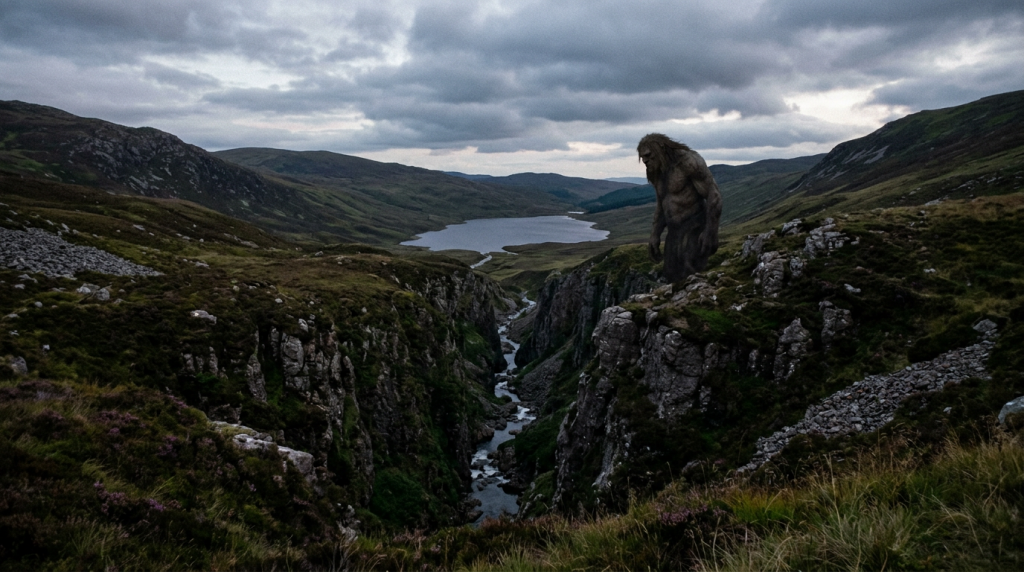
Bogle is a broad Scots, Northumbrian, and Cumbrian term for a ghost or folkloric being. However, it can also refer to a cluster of related creatures, including Shellycoats, Barghests, Brags, and the Hedley Kow. In addition, the word can connect to giant lore in some regions, where names such as ettin, yetun, or yotun appear.
Rather than existing to serve humans, or to kill them, a bogle is reputed to live for the simpler purpose of perplexing people. So, in many stories it is a psychological menace. It unsettles, confuses, and frightens, and it often does so with relish.
Appearance:
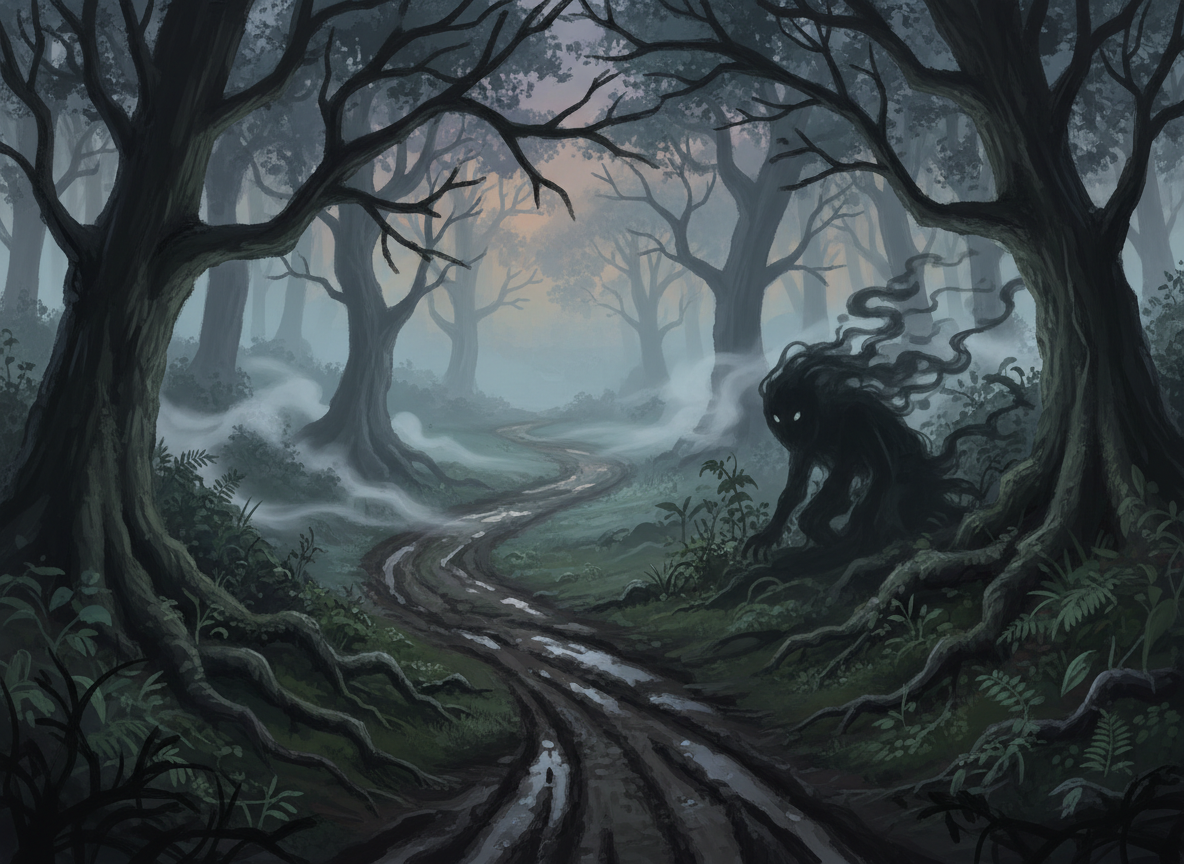
The Bogle’s appearance is famously inconsistent. Some witnesses describe a hunched shadow between gnarled trees. Others insist it looks like a scarecrow brought to life, with hollow eyes that follow too closely. Sometimes, it is said to be more like a blur, more suggestion than substance.
In some Scottish lore, the “Tattie Bogle” is depicted as scarecrow-like. That matters, because “bogle” has also been used historically as a term for “scarecrow” in parts of Scotland and England.
Habitat:
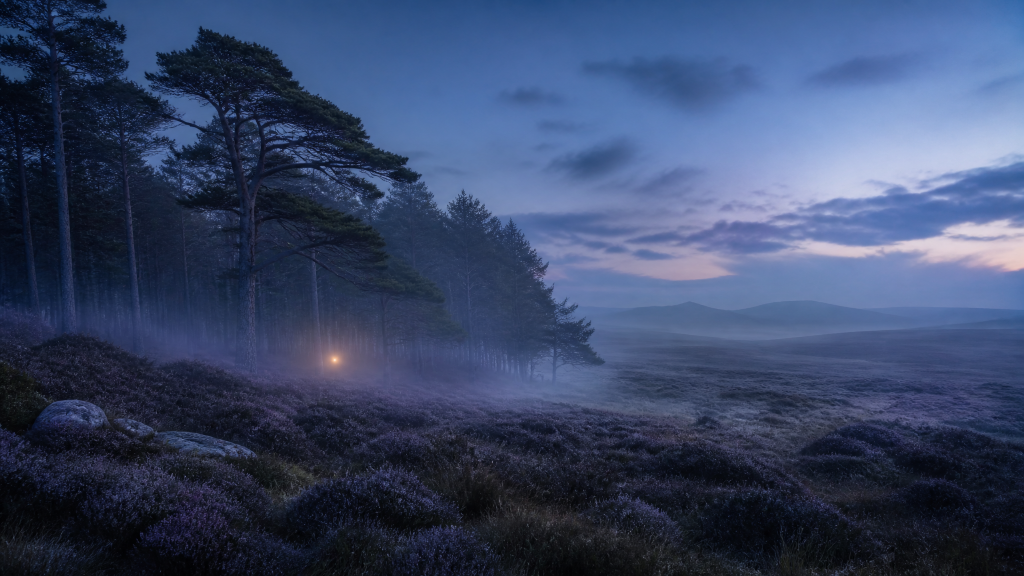
Bogles thrive in liminal places, where doubt grows quickly. For instance, they are linked to lonely woodland paths, old barns, and misty marsh ground. They also appear in tales set around farms and fields, especially where people work late and visibility is poor.
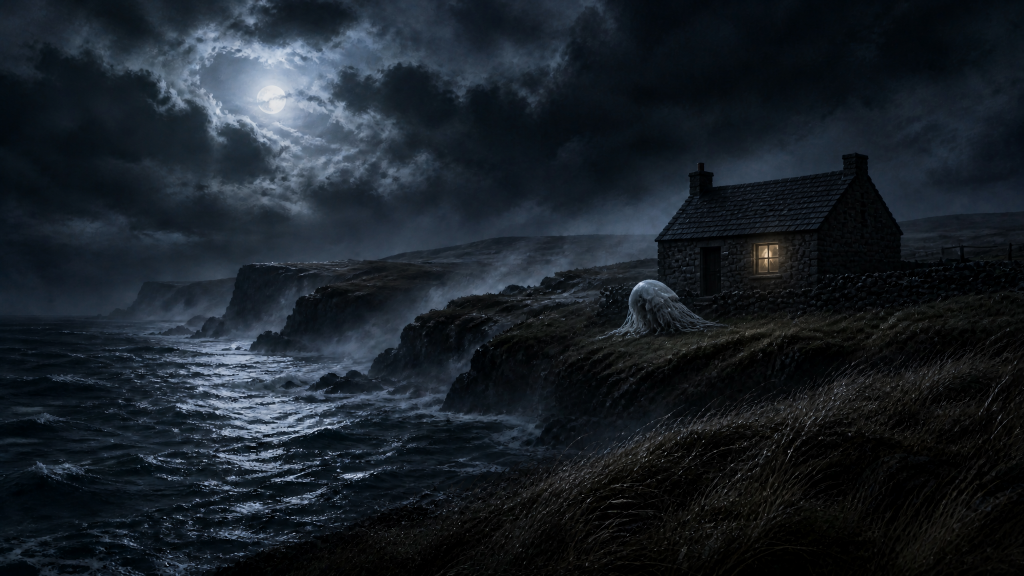
Yet, they can also turn up indoors. In particular, attics and cellars are common settings, especially when the place already feels uncanny or neglected.
Behaviour:
Bogles are tricksters. They startle and unsettle, and they enjoy doing it. For example, they may create unexplained knocking, whispers, or strange sounds in the dark. They can also lead travellers astray, turning a familiar route into a bewildering loop.
Importantly, many traditions stress that bogles are not primarily killers. Instead, they confuse, test, and embarrass. As a result, bogle stories often end with the victim shaken rather than harmed.
Shape-shifting Ability:
Many accounts describe the bogle as capable of taking on different forms. In other words, it can become whatever frightens you most, or whatever best suits the trick. It may also mimic voices, including cries for help, laughter, or a child calling from the bracken.
This is why bogle encounters feel personal. The creature’s strength is not brute force. Rather, it is disorientation.
Variant:
Several variants and related names appear across Britain and beyond. These include: boggle, bogill, Shellycoat, Barghest, Brag, and Hedley Kow. In addition, some traditions link the broader “bogle” label to giant tales through terms like ettin, yetun, yotun, etene, yttin, or ytene.
A famous Scottish variant is Tattie Bogle, a potato-field bogey associated with pranks and, in some tales, blight.
Location in Scotland:
Bogle lore is strongly associated with Scotland, including the Lowlands and the Highlands, although the term also appears in Northumbrian and Cumbrian usage. In Ayrshire in particular, the bogle has a strong cultural footprint due to local interest and literary references.
In addition, the bogle appears in Scottish Lowlands usage from around the mid-20th century as a common term for a ghost or bogeyman. Meanwhile, “Tattie-Bogle” was used as a scarecrow term among children.
Stories/ Sightings or Experiences:
1) Tattie Bogle in the Potato Fields
Tattie Bogle is one of the best-known Scottish bogle stories. It is often described as a scarecrow-like figure that hides in potato rigs and waits for the right moment. Then, it jumps out to frighten whoever is passing. Some versions go further and claim it could blight crops where it lurked.
However, there is another angle that makes the story even more interesting. It has been suggested the “Tattie Bogle” may have been a practical invention. In that reading, farmers used the tale to keep children out of the potato fields at dusk. Either way, the story shows how bogle lore can shape behaviour.
2) The Lost Shepherd and the Crying Child
In one chilling tale, a shepherd hears what sounds like a child crying in the brambles. Because the sound tugs at instinct, he follows. Yet, the path tangles, the land shifts, and he becomes hopelessly lost. Then, the bogle reveals itself, laughing in a way that turns the stomach cold, before vanishing like a bad dream.
The point is not gore. Instead, the story warns how easily compassion can be used against you when visibility is poor and you are alone.
3) Bogles in Ballygowan (1866)
Bogle stories are not only rural whispers. On 31 March 1866, the Larne Weekly Reporter in County Antrim, Northern Ireland, ran a front-page story titled “Bogles in Ballygowan.” The report described a house seemingly attacked by unseen forces. Stones and other missiles allegedly struck the property, breaking windows, and on one occasion even penetrating the roof.
Locals were terrified. Then, just as suddenly, the disturbances ceased. The explanation offered was folkloric: the house had been refurbished using materials from an older building said to be associated with the “little people,” and the bogles were taking offence.
Whether you read it as belief, hysteria, or community storytelling, the account is a rare and striking example of bogles moving from oral tradition into local newsprint.
Purpose of the myth or Legend:
Bogle stories function as social guidance, as well as entertainment. First, they warn against wandering alone in dangerous places, particularly at night or in poor weather. Second, they offer a way to explain misfortune, such as crop trouble or unsettling events, when no clear cause is visible.
Just as importantly, the bogle acts as a mirror for fear. It is the sound in the trees that becomes a voice, the shadow that becomes a figure, and the half-known path that becomes a trap. So, the legend reminds you that the mind can make a maze out of mist, especially when you are already uneasy.