General Information:
Fatlips is a name that emerged from the turbulent years following the 1745 Jacobite rising, representing a mysterious spectral helper in the Scottish Borders. This figure is primarily associated with the ruins of Dryburgh Abbey. Fatlips centres in the tragic life of a reclusive woman who lived there in the mid-18th century. Because the folklore is so localised, it offers a fascinating glimpse into how personal grief and regional quirks evolved into a lasting legend.
Appearance:
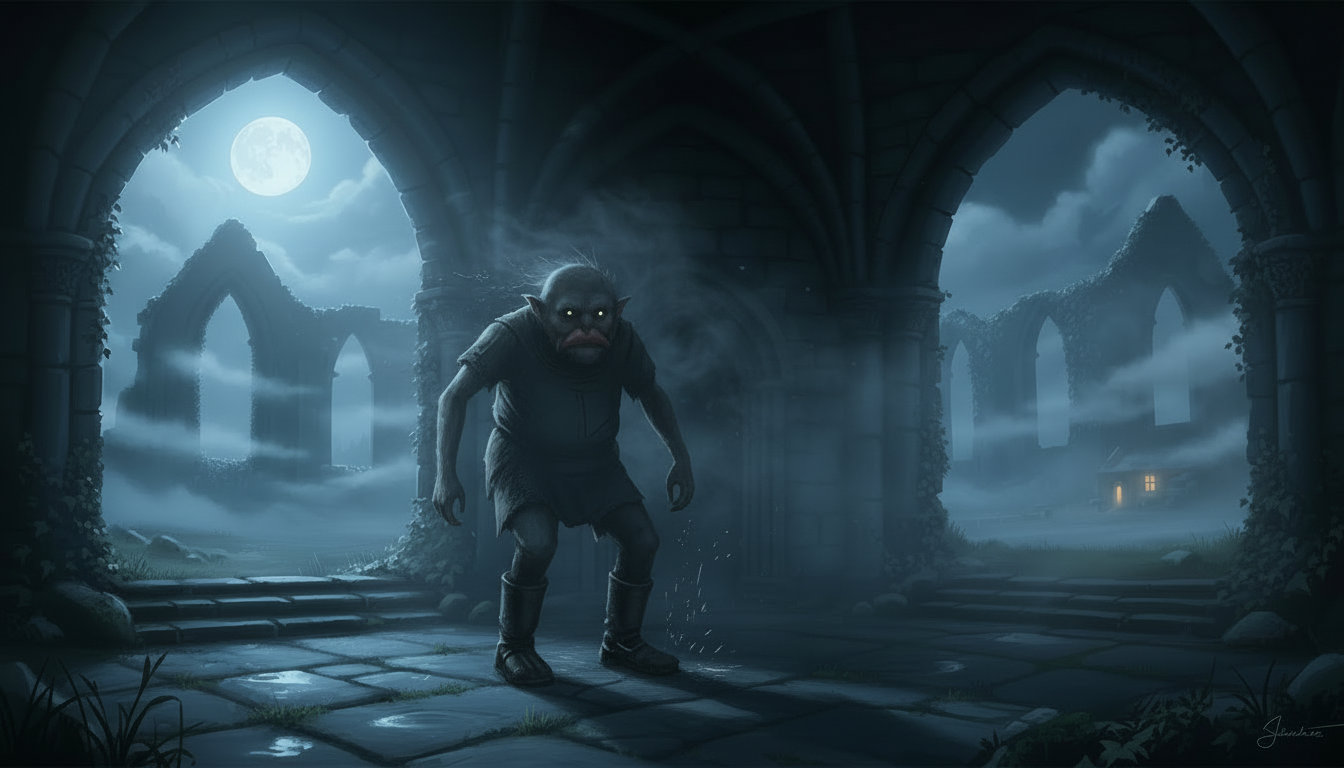
Witnesses and legends describe Fatlips as a “little man” or a small, stout being. He is most notably characterised by his heavy iron boots or shoes, which created a distinct clattering sound on stone floors. As the name suggests, he was said to have unusually thick or prominent lips. Some interpretations suggest he wore the rugged attire of a common labourer or a soldier from the mid-1700s.
Habitat:
The primary habitat for this spirit was the dark, damp vaults beneath the ruins of Dryburgh Abbey in Berwickshire. These subterranean dungeons provided a gloomy sanctuary for both the spirit and his human companion. In a broader sense, the “Fatlips” identity is also rooted in the rugged volcanic landscape of Minto Crags, where the eponymous castle stands.
Behaviour:
Fatlips exhibited the classic traits of a “brownie,” a type of household spirit known for performing domestic chores in exchange for peace or small offerings. He was remarkably industrious, reportedly tidying rooms, gathering firewood, and sweeping floors while his human companion was away. His most unique behaviour involved “stamping” the ground with his iron boots. This action was intended to dispel dampness and keep the stone floors of the abbey vault dry for the woman who lived there.
Shape-shifting Ability:
There are no historical records suggesting that Fatlips possessed shape-shifting abilities.
Variant:
Fatlips has been described as a spirit or a brownie.
Location in Scotland:
The legend is firmly rooted in the Scottish Borders. Key locations include Dryburgh Abbey near Melrose and Fatlips Castle on Minto Crags, situated between Jedburgh and Hawick.
Stories/ Sightings or Experiences:
The Hermit of Dryburgh Abbey
Following the defeat of the Jacobite rising in 1745, an unfortunate woman took up residence in a dark vault within the ruins of Dryburgh Abbey. She made a solemn vow never to look upon the sun until her lover returned from the war. Sadly, he never did. She only emerged from her cell at night to seek charity from local gentlemen. She claimed that while she was out, a spirit she called Fatlips would enter her vault to clean. He would use his heavy iron shoes to trample the clay floor, which supposedly kept the moisture away. Consequently, the vault became known as “Fatlips’ Floor,” and locals avoided the area out of fear of the iron-shod spirit.
Purpose of the myth or Legend:
The legend of Fatlips likely served several purposes within the Border community. Firstly, it provided a supernatural explanation for the survival of a tragic, deranged hermit, transforming her lonely existence into a story of ghostly companionship. Secondly, the “stamping” of the iron boots offered a rhythmic, auditory explanation for the natural sounds of a ruinous abbey at night. Finally, the various castle legends served to give a distinct identity to a fortification held by the Turnbulls, a family known for their fierce and rebellious nature.